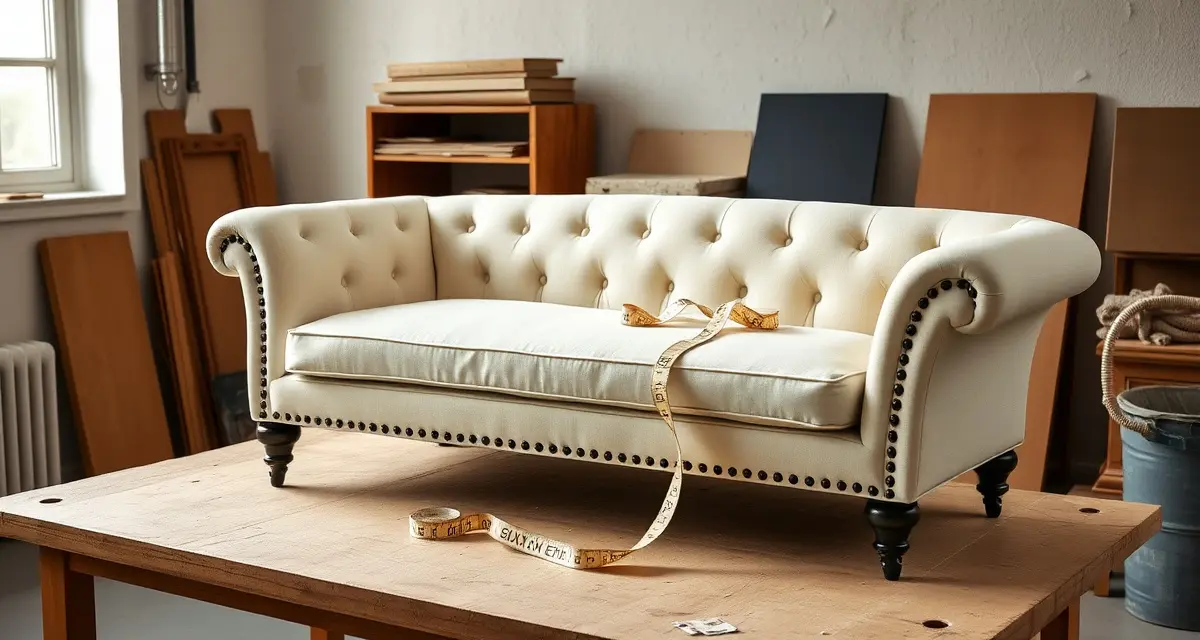
Chaise Lounge Reupholstery Yardage: How to Calculate This Tricky Piece
Chaise lounge estimates are wrong 35% of the time in shops that don't section the piece, the highest error rate of any single furniture type. That's not a coincidence. It's a systematic problem with how most shops approach chaise yardage calculation.
This guide explains why chaises are harder to estimate than sofas and how to break them into sections for accurate chaise lounge reupholstery yardage every time.
TL;DR
- Chaise yardage depends on fabric width, construction details, pattern repeat, and nap direction.
- Plain 54-inch fabric requires a baseline calculation plus 10-15% waste allowance for a standard chaise job.
- Patterned fabric adds 20-35% to base yardage depending on repeat size and the number of cutting zones that must align.
- Directional fabrics add 15-25% over plain fabric because layout optimization is restricted by nap direction.
- Always verify fabric width before finalizing yardage; COM fabric often comes in non-standard widths.
- Calculating yardage at the quote stage, not mid-job, eliminates reorders and protects your profit margin.
Why Chaises Are Different From Sofas
On the surface, a chaise lounge looks like a sofa with a long seat and a shorter arm on one end. But the geometry is fundamentally different, and using sofa calculation logic on a chaise leads to consistent underestimates.
The key differences:
Extended leg rest: This isn't just extra seat length. It's a distinct section with its own depth, its own front boxing panel, and its own deck fabric. Shops that calculate a chaise as "sofa seat + extra length" miss 2-3 yards that the leg rest requires.
Asymmetrical arm configuration: Most chaises have one full arm and either a very low arm or no arm on the leg rest end. The asymmetry means you can't use symmetric arm calculations.
Back pitch variation: Chaise backs are often angled more shallowly than standard sofa backs, which changes the back panel dimensions, usually making the back section taller and wider in the cutting plan than a sofa back of equivalent visual height.
The Section-by-Section Method
The right approach is to treat a chaise as four distinct zones. How many yards for a chaise lounge using this method? Let's work through each zone.
Zone 1: The Back
Measure the inside back (height × width), outside back (height × width), and back wings if present. The back section typically requires 3-4 yards on a full-length chaise.
Zone 2: The Seat
The seat section on a chaise is wider and deeper than on a standard sofa seat. Measure top, deck, and front boxing. For a chaise with a cushioned seat: add cushion top, bottom, and boxing. Seat section: typically 3-4 yards.
Zone 3: The Arm(s)
Full arms: inside arm, outside arm, arm front boxing. Calculate each arm separately. Rolled or scroll arms add 0.75-1.25 yards over track arms. One arm only: half this range, roughly 0.75-1.5 yards depending on style.
Zone 4: The Leg Rest
This is the most commonly missed section. The leg rest needs:
- Top surface fabric (depth × width)
- Front boxing panel
- Side boxing panels
- Deck fabric if there's a cushion
- Bottom/underside panel
The leg rest alone typically requires 1.5-2.5 yards depending on its length. Most shops estimate it as "just a bit more seat" and skip calculating it separately.
Yardage Ranges by Chaise Style
| Chaise Style | Estimated Yardage |
|---|---|
| Armless lounge (fainting couch style) | 10-12 yards |
| One arm, tight back | 12-14 yards |
| One arm, pillow back (2 cushions) | 14-16 yards |
| Full rolled arm, tight back | 14-16 yards |
| Full scroll arm, pillow back | 16-19 yards |
| Tufted chaise, rolled arm | 17-21 yards |
All figures for 54-inch solid fabric. Add pattern repeat waste on top.
The 35% Error Rate: What's Behind It
Why are chaise estimates wrong 35% of the time? Research from professional upholstery shops points to three consistent errors:
- Using a sofa template: Shops apply their sofa calculation logic and simply extend the seat length. This misses the leg rest as a distinct zone and often miscalculates the arm on the chaise end.
- Ignoring the deck on the leg rest: Even if there's no cushion on the leg rest, there's still deck fabric: the fabric that covers the interior structure between the seat and the bottom. It's not a big piece, but it's real yardage.
- Underestimating the arm(s): A rolled or scroll arm on a chaise uses 1-1.5 more yards than a track arm. Shops that use a generic "arm allowance" miss this.
Use the fabric yardage calculator chaise to input each zone separately and get an accurate section-by-section total.
Pattern Repeats on Chaises
Chaises are long pieces. A 13-inch pattern repeat that adds 2 yards to a sofa can add 3-4 yards to a chaise because the additional leg rest section creates an additional matching point.
For any patterned fabric, calculate the pattern waste as if the chaise were a very long sofa: it's more accurate than using a standard sofa multiplier.
FAQ
How many yards to reupholster a chaise lounge?
Most chaise lounges require 12-19 yards of 54-inch fabric depending on arm style and configuration. Armless styles at the low end, fully rolled-arm pillow-back chaises at the high end. Tufted chaises can push to 21 yards. The best approach is to calculate each section (back, seat, arm, leg rest) separately and sum the totals.
Why are chaise lounges harder to estimate than sofas?
Chaises have three complications that sofas don't: an asymmetric arm configuration, an extended leg rest that functions as a distinct fourth section, and a back pitch that doesn't match standard sofa templates. Shops that apply sofa calculation logic to a chaise consistently underestimate by 2-4 yards because they miss the leg rest zone and the arm-style-specific waste on the chaise arm.
What is the best fabric for a chaise lounge?
Performance fabrics work well for chaises used as primary lounging furniture. If the chaise is in a formal sitting room or bedroom, velvet or chenille are popular choices, but plan for considerably more yardage due to pile direction requirements. For a bedroom chaise, linen is a classic choice. Avoid very loose weaves or fabrics that pill easily, as chaises see heavy sliding friction from regular use.
What is the biggest factor in yardage variation for this piece?
Pattern repeat is the biggest source of yardage variation. On plain fabric, the baseline calculation plus a 10-15% waste buffer is usually sufficient. Add a 13-inch pattern repeat and you may need 15-20% more. Add a 27-inch pattern repeat and the additional yardage can be 25-35% over the plain fabric calculation. Nap direction is the second-largest factor, typically adding 15-25% over plain fabric because layout optimization is restricted.
What should I do if I run short on fabric mid-job?
Stop cutting immediately when you realize you may run short. Calculate exactly how much additional fabric you need before contacting the supplier or client. If reordering from the same dye lot is possible, do so as quickly as possible because dye lots change. If a dye lot match is not available, contact the client before proceeding; visible dye lot differences on the same piece are unacceptable and must be disclosed. Document the situation and response in writing.
Sources
- National Upholstery Association
- Association of Master Upholsterers and Soft Furnishers (AMUSF)
- Upholstered Furniture Action Council (UFAC)
- Furniture Today (trade publication)
Get Started with StitchDesk
Getting yardage right on chaise jobs is the difference between a profitable quote and an expensive reorder. StitchDesk's fabric calculator accounts for all the variables that cause errors: pattern repeat by zone, nap direction, fabric width, and cushion configuration. Start a free trial and see how accurate yardage calculation affects your bottom line.