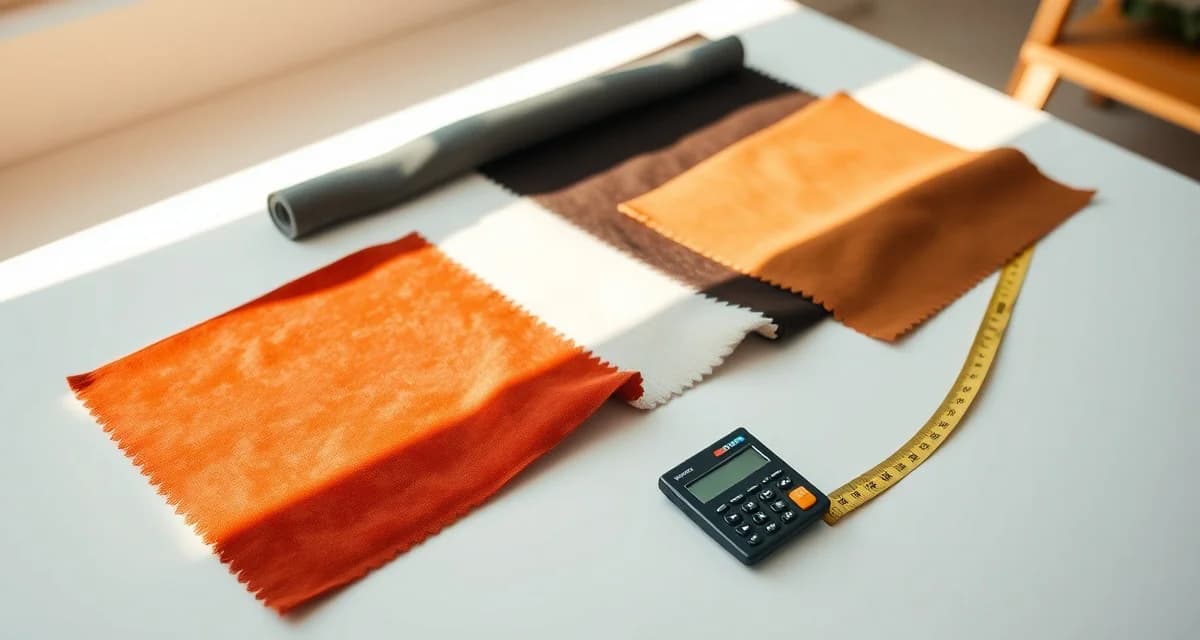
Upholstery Fabric Calculator: Different Rules for Different Materials
Using a 10% generic waste factor for velvet costs shops 0.5-1 extra yard per job from shortfalls. Not because the calculation is hard, because the calculator is wrong for the material.
Velvet needs 20% waste. Linen needs 15% plus a shrinkage buffer. Leather doesn't work in yards at all, it converts to hides. Every material has its own rules, and an upholstery fabric calculator by material type accounts for all of them automatically.
TL;DR
- Understanding calculator bytype properties helps you select the right material for each client's specific use case and budget.
- Durability ratings (double-rub count) are the standard measure of upholstery fabric longevity: 15,000+ for light use, 30,000+ for heavy residential, 100,000+ for commercial.
- Fabric cleaning codes (W, S, WS, X) determine what cleaning methods are safe and should be communicated to every client at handoff.
- Pattern repeat, nap direction, and fabric width are the three variables that most affect yardage requirements on any piece.
- COM fabric should always be verified for rub count and cleaning code before acceptance.
- Fabric performance in real use depends on the application: a fabric rated for light residential use will fail quickly in high-traffic settings.
Why Material Type Changes the Calculation
Generic fabric calculators use one waste factor for all fabric types, usually 10%. This is approximately right for tight-weave cotton and polyester. It's wrong for almost everything else.
The material dropdown in a proper calculator switches waste factor automatically:
- Velvet: 20%
- Linen: 15% (plus shrinkage buffer)
- Leather: 18% (hide conversion required)
- Microfiber (suede): 12%
- Microfiber (smooth): 8%
- Chenille: 15-22% (depending on pile)
- Cotton (tight weave): 8-10%
- Cotton (loose weave): 16-18%
- Velvet with tufting: 25-30%
- Outdoor/marine vinyl: 10-15% (grain matching adds more)
These aren't guesses, they're based on the actual cutting requirements of each material type.
Material-by-Material Breakdown
Velvet
Velvet's high waste factor comes from two requirements: nap direction consistency (all pieces must run the same way) and seam allowance at pile-compression points. Both require cutting fabric that doesn't make it into the finished piece.
Using 10% waste factor for velvet means every velvet job is 0.5-1 yard short. On a $45/yard velvet, that's a $22-45 emergency order for every single job.
Correct waste factor: 20% for standard pile, 25% for high pile.
Linen
Linen needs 15% waste factor for standard cutting, plus a 3-5% shrinkage buffer depending on the installation climate. The shrinkage buffer is the part almost all calculators skip, it's the part that causes puckering 6 months after the job is complete.
Correct waste factor: 15% cutting waste + 4% shrinkage buffer = 19% effective.
Leather
Leather doesn't calculate in yards at all. It calculates in hides. The waste factor for leather comes from irregular hide shape, the belly, leg, and perimeter areas that are unusable for primary pieces. Average hide waste: 18-25% of total hide area.
For leather, the calculator should convert your square footage requirement to hide count rather than applying a percentage to a yard figure. A "leather waste calculator" that just applies 18% to a yardage number is doing it wrong.
Microfiber
Smooth microfiber is one of the most efficient upholstery materials to cut, no nap, no shrinkage, clean edges. Waste factor of 8% is sufficient. Suede-finish microfiber needs 12% due to directional cutting requirements. Don't apply velvet-level waste factors to suede microfiber, they're directional but not as wasteful as true pile fabrics.
Boucle and Chenille
Both are pile-like fabrics with seam compression and directional shading issues. Chenille waste runs 15-22% depending on pile height. Boucle waste runs 18-25% depending on loop size. Neither should use the generic 10% factor.
How Seam Allowance Affects Yardage
The waste factor and the seam allowance work together. A wider seam allowance means each panel is cut slightly larger than the finished dimension, which consumes more fabric per piece.
Standard seam allowance: 3/8 inch. This is the 10% waste factor's assumed seam allowance.
At 1/2 inch seam allowance (required for chunky boucle and high-pile chenille): the effective fabric width consumed per seam increases. On a sofa with 30+ seams, this adds 0.5-1 yard to the total.
The material calculator should account for seam allowance adjustment by material type, not just apply a waste percentage without considering seam width.
A Practical Example: Same Sofa, Five Materials
Standard 3-cushion Lawson sofa. Base yardage in a solid, tight-weave fabric: 13 yards.
| Material | Waste Factor | Final Order |
|---|---|---|
| Smooth polyester | 10% | 14.3 → 14.5 yards |
| Tight-weave cotton | 10% | 14.3 → 14.5 yards |
| Suede microfiber | 12% | 14.6 → 15 yards |
| Linen (+ shrinkage) | 19% | 15.5 → 16 yards |
| Velvet (medium pile) | 20% | 15.6 → 16 yards |
| Chenille (mid-pile) | 20% | 15.6 → 16 yards |
| High-pile velvet | 25% | 16.25 → 16.5 yards |
| Chunky boucle | 25% | 16.25 → 16.5 yards |
The same sofa ranges from 14.5 yards to 16.5 yards depending on material. A calculator that gives 14.5 yards for every material will leave you 2 yards short on velvet or boucle, consistently, on every single job.
Related Articles
FAQ
What waste factor should I use for velvet upholstery?
Use 20% for standard to medium-pile velvet. Use 25-30% for high-pile velvet or tufted velvet work. The generic 10% waste factor that most calculators use for all fabrics is wrong for velvet, it ignores nap direction cutting waste and the wider seam allowances needed at pile compression points. On a sofa, the difference between 10% and 20% waste factor is approximately 1.5-2 yards.
Does fabric type change how much yardage I need?
Yes, considerably. The same sofa can need anywhere from 14.5 yards in a smooth polyester to 16.5 yards in high-pile velvet. Fabric type affects yardage through three mechanisms: cutting waste (directional fabrics can't be nested as efficiently), seam allowance requirements (pile fabrics need wider seam allowances), and special factors like linen's shrinkage buffer. Always specify the material type in your yardage calculation, not just the furniture dimensions.
How do I calculate leather upholstery differently from fabric?
Leather is calculated in hides, not yards. Start by calculating your total square footage requirement from all cut pieces. Add 20% for hide waste (irregular edges, belly areas). Divide by 40 square feet (conservative usable area per standard hide). Round up to the next whole hide. A standard sofa typically needs 3-4 full hides. Don't apply a percentage waste factor to a yardage figure for leather, convert to hides with the square footage method for accurate results.
How do I explain fabric choices to a client?
Start with use case: how the piece will be used, who will use it, and whether pets or children are factors. Then narrow by durability requirement (rub count) and cleaning preference (cleaning code). Once practical requirements are set, move to aesthetics: color, texture, pattern. Clients who understand why certain fabrics are recommended are more confident in their choices and less likely to question cost differences between options.
How do I verify fabric quality before accepting a COM order?
Check the fabric label or request a spec sheet from the supplier. Verify: double-rub count (for durability), cleaning code (for maintenance), width (for yardage calculation), and whether the fabric is dry-clean only or has any special handling requirements. For velvet or nap fabrics, confirm the nap direction and whether the fabric is prone to crushing. Document your findings in the job record before beginning work.
Sources
- National Upholstery Association
- Association of Master Upholsterers and Soft Furnishers (AMUSF)
- Upholstered Furniture Action Council (UFAC)
- Furniture Today (trade publication)
Get Started with StitchDesk
Helping clients choose the right fabric is a core part of the job, and having accurate yardage calculations and fabric records at hand makes those conversations faster and more confident. StitchDesk keeps fabric data, yardage calculations, and client records in one place so you spend less time on paperwork and more time on the work itself. Try StitchDesk free.