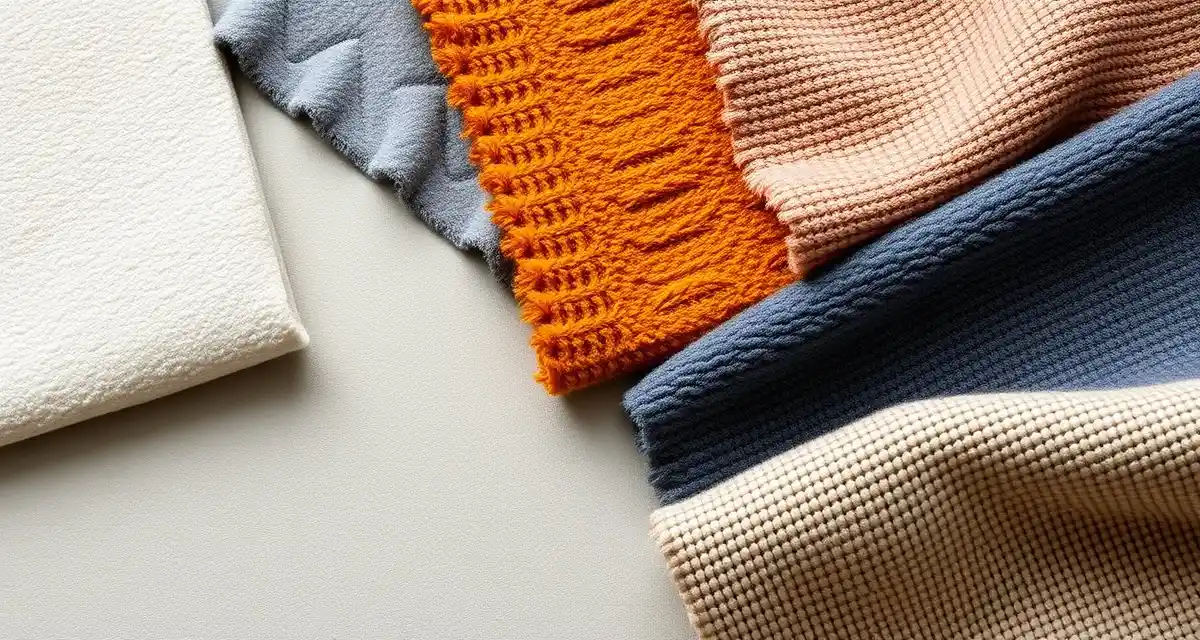
Upholstery Fabric Texture Guide: Smooth Pile and Woven Options
Texture is what clients feel when they touch a fabric sample. It's often what makes them say yes or no to a recommendation. But texture also affects how the fabric behaves in the shop, at the seam, on the tufting form, around tight curves, and some textures add yardage requirements that smooth fabrics don't.
Here's how the main texture categories behave in upholstery work, and where texture intersects with yardage.
TL;DR
- Understanding texture properties helps you select the right material for each client's specific use case and budget.
- Durability ratings (double-rub count) are the standard measure of upholstery fabric longevity: 15,000+ for light use, 30,000+ for heavy residential, 100,000+ for commercial.
- Fabric cleaning codes (W, S, WS, X) determine what cleaning methods are safe and should be communicated to every client at handoff.
- Pattern repeat, nap direction, and fabric width are the three variables that most affect yardage requirements on any piece.
- COM fabric should always be verified for rub count and cleaning code before acceptance.
- Fabric performance in real use depends on the application: a fabric rated for light residential use will fail quickly in high-traffic settings.
Smooth Fabrics
Examples: Plain weave polyester, tight-weave performance fabric, smooth vinyl, tight linen, standard cotton canvas
Smooth fabrics are the baseline for calculation purposes. No pile direction. No texture that frays at seams differently. Standard seam allowance applies.
Yardage impact: None beyond base calculation. No pile direction buffer, no texture-specific allowance.
Cutting behavior: Most forgiving of the texture categories. Fabric doesn't shift during cutting the way pile fabrics can. Seams lie flat. Best for beginners and for high-volume cutting.
Wear behavior: Flat weaves show wear differently than pile fabrics. High-traffic areas develop a shiny "glazed" appearance over time as the weave surface flattens. Less visible than the matted, directional wear on pile fabrics.
Cut Pile Fabrics
Examples: Velvet, cut velvet, chenille, some microfiber
Cut pile fabrics have fiber tufts that are cut at the top, creating a soft, dense surface. The pile has a direction, run your hand against it and you feel resistance; with it and you feel smoothness.
Yardage impact: Pile direction adds 10 to 20 percent to yardage calculations compared to a non-directional fabric for the same piece. Every panel must run nap in the same direction. You cannot rotate a panel to fit a tighter layout.
Cutting behavior: Pile fabrics can be difficult to cut cleanly, the pile can shift under the blade and cause slight inconsistency at the cut edge. Cut in the direction of the pile when possible. For velvet, sharp rotary cutters are preferred over scissors.
Seam behavior: Cut pile seams can be bulky. Press seam allowances open carefully, steam can crush pile. Some upholsterers use a soft brush to restore pile direction at seams after pressing.
Wear behavior: Shows wear at high-contact areas (seat fronts, arm tops) as pile flattens and loses direction. Directional wear looks matted rather than glazed. Regular brushing extends the life of pile fabric.
Loop Pile Fabrics
Examples: Bouclé, loop velvet (uncut velvet), some commercial carpet-weight fabrics used decoratively
Loop pile fabrics have fiber loops that stand up from the base weave. The loops can be uniform height or varied. They give the fabric a textured, dimensional appearance.
Yardage impact: Similar to cut pile, pile direction often applies, adding 10 to 15 percent to calculation.
Cutting behavior: Loops can catch on cutting equipment. Rotary cutters with sharp blades work best. Sharp scissors. Avoid dragging the fabric against cutting surfaces.
Seam behavior: This is where loop pile is challenging. Looped pile fabric like bouclé frays at seams twice as fast as flat weaves, requires wider seam allowance every time. Standard 0.5-inch seam allowance is not enough. Use 0.625 to 0.75-inch seam allowance and finish seam edges carefully. The wider seam allowance adds a small amount to yardage calculations on complex pieces.
Wear behavior: High-traffic areas cause loops to catch and pull. This is called snagging, an individual loop gets pulled and creates a line of distorted fabric. Snagging is why loop pile fabrics are not recommended for pet households or high-traffic commercial use.
Woven Textured Fabrics
Examples: Jacquard, brocade, tapestry, some twills and herringbones
Woven textures are created by the weave structure itself, not by pile. The face of the fabric has a three-dimensional texture from the pattern of interlaced threads, but there's no pile direction.
Yardage impact: No pile direction buffer. However, woven patterned fabrics (jacquard, brocade) have pattern repeats that add yardage for matching. Texture from weave structure alone (herringbone, diagonal twill) doesn't add yardage beyond the base calculation.
Cutting behavior: Woven textured fabrics behave well under cutting, no pile to shift. However, loose weave structures (some tapestries, some decorative jacquards) can fray heavily at cut edges. Seal cut edges with seam sealant on loose-weave materials.
Seam behavior: Tight woven fabrics produce very clean seams. Loose woven fabrics need wider seam allowance and edge treatment. The difference in seam allowance between tight and loose woven fabrics can affect yardage slightly on complex pieces with many seams.
Texture and Tufting
When a client wants tufting on a textured fabric, the interaction matters:
Cut pile (velvet) with tufting: The most dramatic look, and the hardest to execute. The pile direction at the button pull point changes as the fabric is gathered, this is inherent and unavoidable. Button size needs to be appropriate to the pile density so the button doesn't disappear into the pile.
Loop pile (bouclé) with tufting: The loops snag during the tufting pull if not done carefully. Requires gentle, even tension. The loops can distort around the button face.
Smooth fabric with tufting: The cleanest result technically. The crisp folds of diamond tufting read very clearly on smooth fabric. No pile direction complications.
For the full technical picture on how fabric selection connects to durability and client satisfaction, see the fabric selection guide.
Frequently Asked Questions
What is the best texture for upholstery fabric?
For durability and ease of use, smooth or tight-weave fabrics are the most practical. For appearance and client preference, cut pile fabrics like velvet are extremely popular but require more careful calculation and cutting. Loop pile fabrics like bouclé are fashionable but not appropriate for pet households or high-traffic settings. The best texture depends entirely on the use case.
Does fabric texture affect yardage calculation?
Yes, if the texture has a pile direction. Cut pile and loop pile fabrics require 10 to 20 percent more yardage than equivalent smooth fabrics because every panel must run in the same pile direction. Woven textures without pile direction don't add to the base yardage. Loose-weave fabrics that need wider seam allowances may add slightly more yardage on complex multi-panel pieces.
How do different fabric textures wear over time?
Smooth flat-weave fabrics develop a glazed surface sheen at high-contact points. Cut pile fabrics mat and flatten at wear points, with directional change visible. Loop pile fabrics can snag and pull at wear points, which is more visually disruptive than either smooth or cut pile wear. For long-lasting appearance, performance fabrics in smooth or tight-cut pile are the most consistently reliable.
How do I explain fabric choices to a client?
Start with use case: how the piece will be used, who will use it, and whether pets or children are factors. Then narrow by durability requirement (rub count) and cleaning preference (cleaning code). Once practical requirements are set, move to aesthetics: color, texture, pattern. Clients who understand why certain fabrics are recommended are more confident in their choices and less likely to question cost differences between options.
How do I verify fabric quality before accepting a COM order?
Check the fabric label or request a spec sheet from the supplier. Verify: double-rub count (for durability), cleaning code (for maintenance), width (for yardage calculation), and whether the fabric is dry-clean only or has any special handling requirements. For velvet or nap fabrics, confirm the nap direction and whether the fabric is prone to crushing. Document your findings in the job record before beginning work.
Sources
- National Upholstery Association
- Association of Master Upholsterers and Soft Furnishers (AMUSF)
- Upholstered Furniture Action Council (UFAC)
- Furniture Today (trade publication)
Get Started with StitchDesk
Helping clients choose the right fabric is a core part of the job, and having accurate yardage calculations and fabric records at hand makes those conversations faster and more confident. StitchDesk keeps fabric data, yardage calculations, and client records in one place so you spend less time on paperwork and more time on the work itself. Try StitchDesk free.