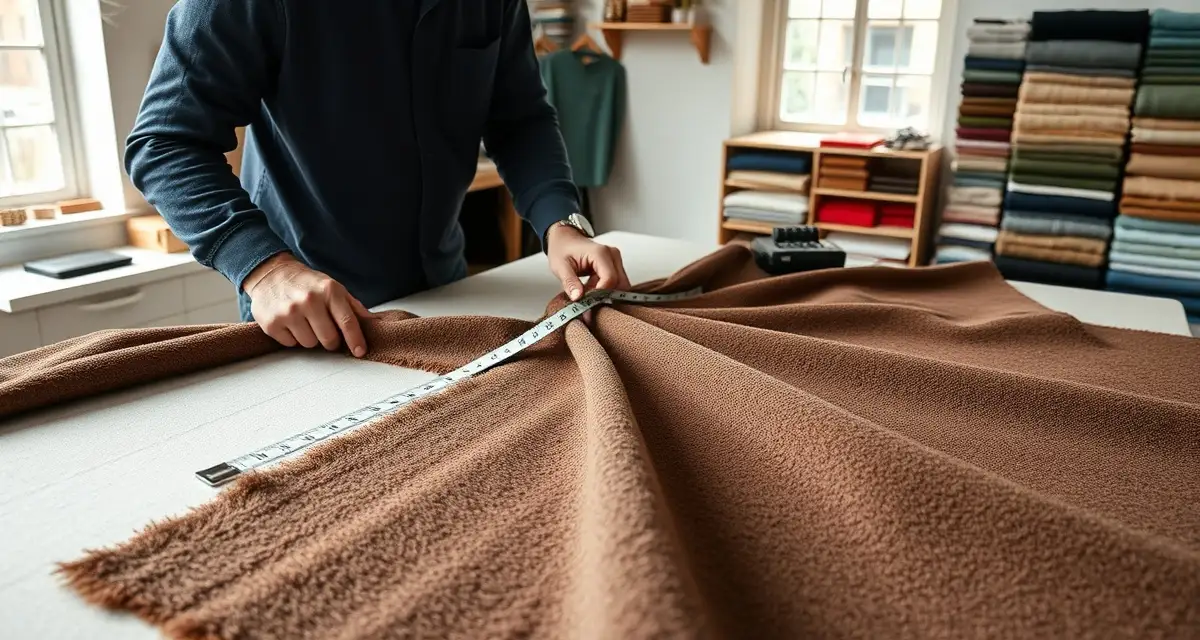
Microfiber Fabric Yardage Calculator for Upholstery: Pile and Width Guide
Microfiber is one of the most practical upholstery fabrics out there, durable, cleanable, and affordable. But suede-finish microfiber has a directional sheen that shows at 10 feet if cut wrong. It's subtler than velvet pile, which is part of the problem. You often don't notice the error until the piece is in the client's home under natural light.
The microfiber fabric yardage calculator you need accounts for pile direction on suede-finish microfiber and width variation between 54-inch and 60-inch rolls. Both factors affect your final order quantity.
TL;DR
- Accurate yardage calculation for microfiber fabric jobs prevents costly fabric shortfalls and over-ordering that erode margin.
- Pattern repeats are the most common source of yardage errors; always calculate each cutting zone separately, not as a flat percentage.
- Nap-direction fabrics (velvet, chenille, mohair) require 15-25% more yardage than the same job in plain fabric.
- Fabric width significantly affects yardage: the difference between 54-inch and 60-inch fabric can be 1-2 yards on the same piece.
- Always add a 10-15% buffer on plain fabric and 15-20% on patterned fabric to account for cutting waste.
- Entering measurements accurately at the quoting stage eliminates the need to reorder mid-job.
Suede-Finish vs Smooth Microfiber: Different Rules Apply
Not all microfiber is the same. There are two main types relevant to upholstery:
Smooth microfiber: woven or knit construction with no pile or directional finish. This is the easiest microfiber to work with. No directional concerns, lower waste factor, easy to cut efficiently. Think of it like a very fine polyester.
Suede-finish microfiber: has a soft nap or pile direction created by brushing or splitting the microfiber strands. This is what most clients mean when they say they want "microfiber." It looks and feels like suede, but it has a directional quality that must be respected in cutting.
Suede vs smooth mode changes cutting direction recommendations and waste factor. Suede-finish microfiber should be treated more like velvet in terms of cutting discipline.
The Pile Direction Problem on Suede Microfiber
Unlike velvet, where pile direction is easy to feel and see, suede microfiber's directionality is subtle. You can't always tell from looking at the bolt. You need to run your hand across the fabric surface in both directions. One direction will feel smooth; the other will feel slightly rough. The smooth direction is the "with the nap" direction, and all pieces should be cut to run that way.
The challenge is that the difference in appearance between correctly and incorrectly oriented pieces can be hard to spot in your shop under overhead lighting. But in a client's living room with natural side lighting, mismatched pieces show as areas of different sheen or color depth. Callbacks happen.
Cutting Protocol for Suede Microfiber
- Unroll a test section and run your hand across it to determine pile direction
- Mark an arrow on the bolt selvedge indicating the "with grain" direction
- Cut all pieces with the marked direction consistent
- Check each piece in raking light before final cutting
Use the same approach as you would for velvet: decide direction before cutting anything.
Width Variation: 54-Inch vs 60-Inch
Microfiber comes in both 54-inch and 60-inch widths more commonly than most other upholstery fabrics. The wider width can make a meaningful difference on larger pieces.
For a standard 3-cushion sofa:
- At 54 inches: approximately 13-14 yards (smooth) or 14.5-16 yards (suede)
- At 60 inches: approximately 11.5-12.5 yards (smooth) or 13-14.5 yards (suede)
That's a savings of 1-2 yards by using 60-inch fabric, which on a $20/yard microfiber translates to $20-40. Verify the width of the specific fabric you're ordering. Don't assume.
Microfiber Yardage by Furniture Type
| Furniture | Smooth Microfiber (54") | Suede Microfiber (54") | Suede Microfiber (60") |
|---|---|---|---|
| Dining chair | 1-1.2 yards | 1.2-1.4 yards | 1-1.2 yards |
| Accent chair | 5-6 yards | 5.5-7 yards | 5-6.5 yards |
| Loveseat | 8-9.5 yards | 9.5-11 yards | 8.5-10 yards |
| Sofa | 13-14 yards | 14.5-16 yards | 13-14.5 yards |
Use the microfiber upholstery guide for piece-specific cutting tips, especially on sofas with rolled arms where the suede direction needs to wrap continuously around the arm shape.
When You Can Pair Pieces From the Same Bolt
One advantage microfiber has over velvet is that color variation between cuts from the same bolt is minimal. You can cut multiple jobs from the same 60-inch bolt and pieces will match reasonably well, which makes remnant use more practical.
For pattern-free microfiber, using remnants from a previous job for a dining chair seat pad or a small ottoman is workable, as long as the pile direction is consistent. Check the fabric yardage calculator for remnant-aware yardage calculations.
FAQ
Is microfiber a good fabric for upholstery?
Microfiber is an excellent upholstery fabric for most household applications. It resists staining, cleans easily with a damp cloth, holds up well to everyday use, and is soft underhand. Suede-finish microfiber is particularly popular because it looks premium while being practical. It's not ideal for very formal settings where natural fibers are expected, but for family rooms, kids' rooms, and pet households, it's one of the best choices available.
How much microfiber do I need to reupholster a sofa?
A standard 3-cushion sofa needs 13-14 yards of smooth microfiber at 54-inch width, or 14.5-16 yards of suede-finish microfiber at the same width. If your microfiber is 60 inches wide, subtract 1-2 yards from those estimates. Always confirm the width before calculating. Microfiber fabric width varies more than most other upholstery fabrics.
Does microfiber have a nap direction?
Smooth microfiber does not have a nap direction and can be cut in any orientation. Suede-finish microfiber has a directional pile that must be consistent across all cut pieces. Run your hand across the fabric surface. One direction will feel smooth, one will feel slightly rough. Cut all pieces so the smooth direction faces the same way. Inconsistent pile direction on suede microfiber shows as subtle color or sheen differences visible in natural light.
Should I add a buffer to calculated yardage?
Yes. A 10-15% buffer is standard on plain fabric to account for cutting waste and minor errors. On patterned fabric, use 15-20% above the pattern-adjusted calculation. For COM fabric that cannot be reordered if you run short, some upholsterers increase the buffer to 20-25%. The cost of a modest buffer is far lower than the cost of sourcing additional fabric after cutting has begun.
Sources
- National Upholstery Association
- Association of Master Upholsterers and Soft Furnishers (AMUSF)
- Upholstered Furniture Action Council (UFAC)
- Furniture Today (trade publication)
Get Started with StitchDesk
Getting yardage right on microfiber jobs is the difference between a profitable quote and an expensive reorder. StitchDesk's fabric calculator accounts for all the variables that cause errors: pattern repeat by zone, nap direction, fabric width, and cushion configuration. Start a free trial and see how accurate yardage calculation affects your bottom line.