Velvet Upholstery Complete Guide: Working with Cut Pile Fabric
Velvet nap direction errors cause $300-600 remake costs, the most expensive single-fabric error in upholstery. Working with velvet requires precise technique at every stage: layout, cutting, sewing, and installation. Done right, it produces some of the most impressive finished work in residential upholstery. Done wrong, the piece has to come apart.
This guide covers the complete process for professional velvet upholstery work.
TL;DR
- Velvet has specific performance characteristics that make it well-suited for certain applications and less suitable for others.
- Always check the double-rub count before specifying velvet for a particular use; ratings vary widely between products.
- The cleaning code (W, S, WS, X) for velvet determines what maintenance clients can safely perform and should be communicated at delivery.
- Pattern repeat, nap direction, and fabric width all affect yardage requirements and should be verified before calculating a quote.
- COM velvet from clients should be inspected for rub count, cleaning code, and width before acceptance.
- Proper installation technique for velvet differs from standard fabric; follow manufacturer guidance for any specialty material.
Understanding Velvet: Pile, Nap, and Why They Matter
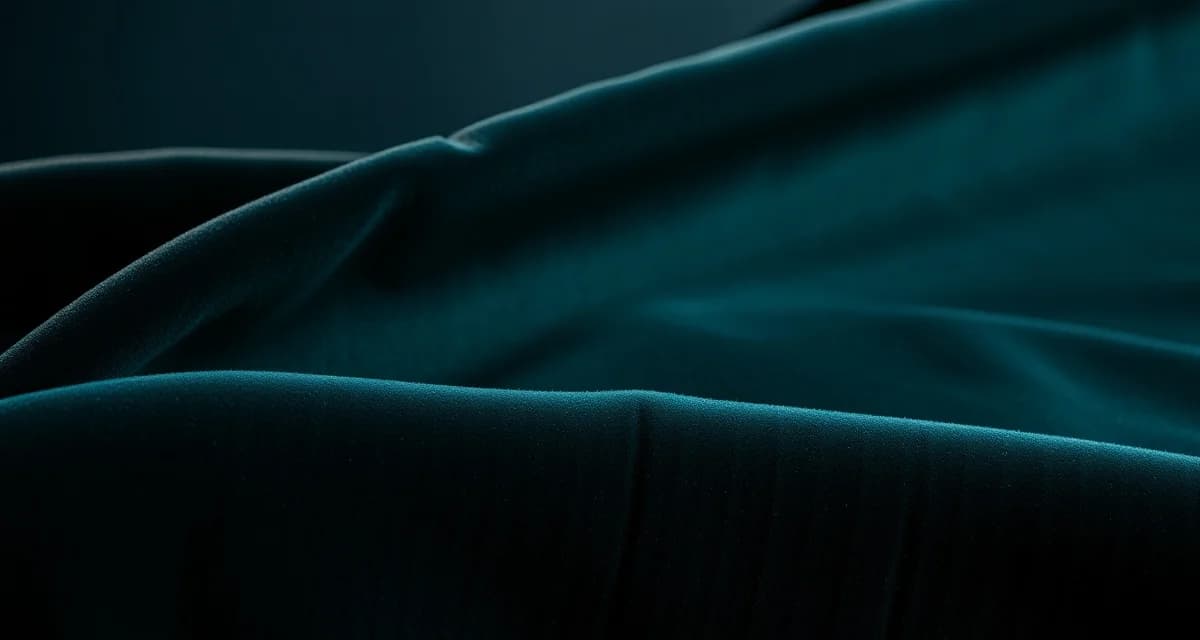
Velvet is a cut pile fabric. The surface is made of loops of fiber that are cut to create an upright pile. Light reflects differently depending on which direction the pile is oriented. Look at velvet from one end and it appears one color; look at it from the other end and it appears a shade lighter or darker.
This directional quality, called the nap, must be consistent across an entire piece of furniture. If the inside back has nap running up and the seat cushion has nap running down, the piece will look two different colors in the same room light. Clients notice immediately. This is the source of most velvet callbacks.
The rule: On upholstered furniture, velvet nap should run from top to bottom and from front to back. When you sit on a piece and look at it, the nap runs toward you on vertical surfaces and away from you on horizontal ones. This produces the deepest, richest color.
The 5 Velvet Mistakes (Ranked by Cost)
Mistake 1: Mismatched nap direction across panels (most expensive, $300-600 remake)
Every panel must be cut with nap running in the same direction. Mark the direction on the back of each cut panel before it leaves the cutting table. A simple arrow with a chalk pencil prevents this error.
Mistake 2: Puckering at seams ($100-250 repair cost)
Velvet's pile creates tension at sewn seams that flat woven fabrics don't have. Sewing too fast, using the wrong presser foot, or not using a walking foot causes the top layer to creep forward while the bottom stays put. The result is a puckered seam that's visible from across the room.
Prevention: Use a walking foot or roller foot for all velvet seams. Sew at reduced speed. Use slightly longer stitch length (3.0-3.5mm) than you would with woven fabric.
Mistake 3: Pile compression at staple lines ($50-150 repair cost)
Where fabric wraps around the frame and is stapled, the pile gets compressed against the wood and stays compressed. This creates a visible line on the finished surface.
Prevention: On edges that will show, wrap the fabric with a layer of thin batting between the fabric and the frame. This cushions the pile at the fold line and prevents the compression mark.
Mistake 4: Velvet cuts that don't follow grain ($75-200 re-cut cost)
Cutting velvet off-grain produces panels that look correct on the table but pull diagonally on the piece. The pile direction stays consistent but the panel geometry fights the installation.
Prevention: Pull a yarn to establish grain before cutting any panel. Cut with the grain, not just by ruler measurement.
Mistake 5: Seam pressing (varies)
Pressing velvet seams with an iron crushes the pile permanently. Velvet seams should be finger-pressed or pressed over a velvet board (a board covered with velvet pile-up that cushions the seam surface). Never apply a flat iron directly to velvet.
Yardage for Velvet
Velvet requires more yardage than solid woven fabric for two reasons:
- Nap direction: Panels can't be rotated to fit more efficiently on the roll. Every panel must be cut with nap running the same direction, so you're cutting from the roll in one orientation only.
- Pile matching on tufted work: Tufted velvet requires extra yardage for the fabric pulled into each button point.
For velvet, add 15-20% above a standard solid-fabric yardage estimate for a non-tufted piece. For tufted velvet, add 20-30%.
For a standard sofa that takes 14 yards in solid woven fabric, budget 16-17 yards in velvet. If tufted, budget 17-18 yards.
Cutting Technique
Use fabric scissors or a rotary cutter with a sharp blade. A dull blade crushes the pile at the cut edge rather than slicing cleanly. Replace blades more frequently when cutting velvet than when cutting woven fabric.
Cut velvet pile-down on a cutting mat to avoid disturbing the pile on the face side. Mark cuts on the back of the fabric only.
For shaped cuts (curved panels, barrel chair backs), cut in smooth continuous movements rather than short snips. Jagged cuts on curved velvet edges create visible irregularities when the panel is installed.
Sewing Velvet
Set your machine with these adjustments:
- Walking foot or roller foot
- Stitch length: 3.0-3.5mm
- Reduced presser foot pressure if adjustable
- Needle: size 90/14 sharp needle, not a ballpoint
Seam all velvet with consistent direction, always sew in the direction of the nap (with the pile, not against it). This prevents the top layer from creeping forward relative to the bottom layer.
For welt cord on velvet, use matching yarn or a cord that matches the pile color closely. Standard welt cut from velvet should be cut on the bias to wrap smoothly around corners.
Installation
Pull velvet taut during stapling, but not so tight that the pile is under visible tension. Velvet installed too tight looks strained and may show staple lines on the surface.
At corners and tight curves, clip the seam allowance close to the fold line and work the excess into small pleats or folds. Velvet pleats well, small folds at inside corners disappear when the pile falls back over them.
Check nap direction after each panel is installed, from across the room, in the same light the piece will be displayed in. Correct any inconsistency before moving to the next panel.
Working with Different Velvet Types
Cotton velvet: The most traditional and the most delicate. Crushes easily during installation. Handle less during the job.
Silk velvet: Expensive and difficult. The pile is extremely fine and crushes permanently from slight pressure. Use for formal pieces with experienced clients who understand maintenance requirements.
Synthetic (polyester) velvet: More forgiving than natural fiber velvets. Good resilience, easier to install, more resistant to pile crushing. Most residential velvet is polyester or a poly/cotton blend.
Performance velvet: Polyester velvet with a performance fiber backing. Handles better than natural velvet and resists stains. Increasingly popular for family rooms.
Crushed velvet: The pile runs in multiple directions intentionally. Nap direction consistency matters less, but cutting technique and seam quality remain just as important.
For velvet yardage calculation specific to your piece, see the velvet fabric yardage calculator. For nap direction guidance by fabric type, see the nap direction fabric calculator.
Frequently Asked Questions
How do I cut velvet for upholstery?
Cut velvet pile-down on a cutting mat using sharp fabric scissors or a fresh rotary blade. Mark all cuts on the back side of the fabric only. Pull a grain yarn before cutting to establish true grain, and cut with the grain rather than just by ruler measurement. Mark the nap direction on the back of each cut panel with a chalk arrow immediately after cutting. Replace cutting blades more often than with woven fabric, a dull blade crushes velvet pile at the cut edge.
What nap direction should velvet run on a sofa?
Nap should run from top to bottom on vertical surfaces (inside back, outside back, arms) and from front to back on horizontal surfaces (seat deck, top of arm). Viewed from where a person sits and looks at the sofa, nap runs toward the viewer on vertical surfaces. This orientation produces the richest, deepest color and is consistent across all visible panels. The most important thing is consistency, all panels in the same orientation, verified from across the room in natural light before the job is finished.
How do I prevent velvet puckering at seams?
Use a walking foot or roller foot on your sewing machine. Reduce the presser foot pressure if your machine allows it. Sew in the direction of the nap (with the pile, not against it) at reduced speed. Use a stitch length of 3.0-3.5mm, slightly longer than for woven fabric. Always press seams over a velvet board or with finger pressure, never with a flat iron directly on the pile. These four steps together eliminate most velvet seam puckering.
How durable is this fabric for everyday residential use?
Durability depends on the specific product's double-rub count. For everyday residential use, look for a minimum of 15,000 double rubs for light use and 30,000+ for heavy residential use. Always check the manufacturer's specification rather than the fabric category alone, as durability varies significantly within any fabric type depending on construction and finishing.
What is the yardage impact of using this fabric with a pattern?
Pattern repeats add yardage proportional to the repeat size and the number of cutting zones on the piece. A 13-inch repeat adds roughly 10-20% over plain fabric on most pieces. A 27-inch repeat can add 25-35% or more depending on the piece type and number of cushions. Calculate yardage zone by zone for any patterned fabric rather than applying a generic percentage buffer.
Sources
- National Upholstery Association
- Association of Master Upholsterers and Soft Furnishers (AMUSF)
- Upholstered Furniture Action Council (UFAC)
- Furniture Today (trade publication)
Get Started with StitchDesk
Helping clients choose the right fabric is a core part of the job, and having accurate yardage calculations and fabric records at hand makes those conversations faster and more confident. StitchDesk keeps fabric data, yardage calculations, and client records in one place so you spend less time on paperwork and more time on the work itself. Try StitchDesk free.