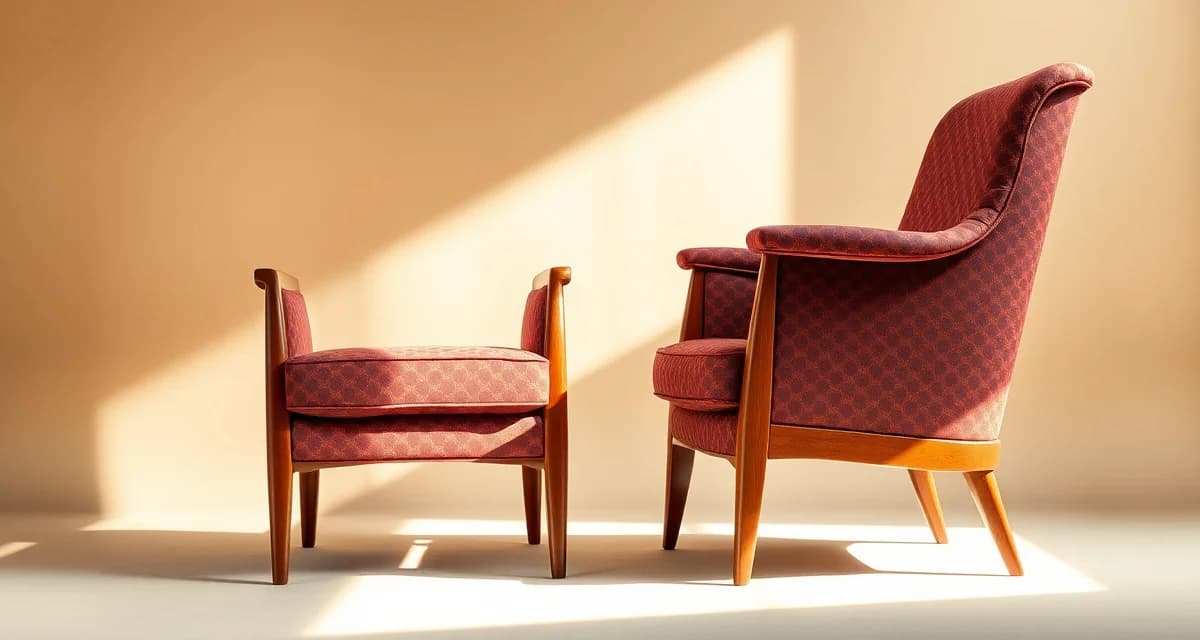
Vintage Furniture Upholstery Guide: 1930s-1970s Pieces
Correct period fabric on a vintage piece doubles its design impact. The wrong fabric, a 1960s Knoll-style chair in a heavy chenille that never would have been used in that era, makes a potentially valuable piece look cheap, regardless of the quality of the upholstery work itself.
Vintage furniture reupholstery sits at the intersection of craft and design history. Clients who bring in mid-century or antique pieces have often chosen them specifically because of their period character. Recommending the right fabric for each decade, and knowing how to assess and address the frame issues that come with age, is what makes this category of work special.
TL;DR
- This guide covers the specific techniques, measurements, and decisions that determine quality outcomes in upholstery work.
- Planning and preparation before cutting begins is the most reliable way to avoid costly errors on any upholstery job.
- Fabric selection, yardage calculation, and structural assessment are the three decisions that most affect the final result.
- Experienced upholsterers develop consistent workflows that ensure quality and efficiency across every job type they handle.
- Documenting job details, material specifications, and client approvals protects both the shop and the client.
- The right tools, materials, and techniques for each job type make a measurable difference in quality and profitability.
Frame Assessment: Before You Recommend Anything
Before discussing fabric with a vintage furniture client, assess the frame. A piece that's structurally compromised needs frame work before reupholstery, covering a failing frame with expensive fabric creates an expensive problem.
Check these points on any vintage piece:
- Leg joints: Are the mortise-and-tenon or dowel joints solid? Rack the frame gently by hand. Any movement indicates a joint that needs re-gluing.
- Spring system: For pieces with coil springs, check whether springs are tied or loose, and whether any springs have broken or shifted. Saggy spring systems produce saggy upholstery regardless of fabric choice.
- Frame material: Is the frame hardwood, softwood, or (for some 1960s-70s pieces) plywood or particleboard? Softwood and composite frames hold staples less securely and may need additional blocking.
- Existing webbing or deck: Worn-through webbing should be replaced entirely before reupholstering. Partial replacement creates uneven support.
Quote frame repairs separately from upholstery. This prevents confusion about what the total project cost covers.
1930s Art Deco Pieces
Art Deco furniture is characterized by geometric forms, stepped profiles, and the materials associations of the period: mohair velvet, cut velvet, leather, and woven damasks in deep, saturated colors (emerald, burgundy, navy, black).
Frame characteristics: Many 1930s pieces use solid hardwood frames with traditional mortise-and-tenon joinery. Frames are typically sound if they've been maintained, though joints may need re-gluing.
Appropriate fabrics for period authenticity:
- Mohair velvet or mohair blend velvet (the signature Art Deco fabric)
- Cut velvet in geometric patterns, the era's enthusiasm for geometric design extends to fabric
- Leather in dark or jewel tones
- Satin-backed fabrics for accent pieces
Foam: Original 1930s furniture used horsehair, cotton batting, and (in cheaper pieces) tow fiber. For reupholstery, use a medium-density HR foam core with a horsehair layer for pieces intended to closely replicate the original feel. For a contemporary approach to the piece, standard HR foam with a Dacron wrap produces a cleaner profile that suits the geometric lines of Art Deco design.
1940s and Early 1950s Transitional Pieces
Post-war furniture bridges the Art Deco period and the mid-century modern movement. The aesthetic is more restrained than 1930s pieces, with simplified forms and fabrics that prioritize durability alongside aesthetics.
Appropriate fabrics:
- Wool upholstery fabric in muted tones, charcoal, tan, forest green
- Tweed and herringbone wool blends
- Cotton damask for more formal pieces
- Early nylon and rayon blends (reflective of the period's enthusiasm for new synthetic materials)
1950s-1960s Mid-Century Modern
Mid-century modern is the most searched vintage upholstery category and, in the US market, the most common vintage furniture type clients bring in for reupholstery.
MCM furniture is defined by organic forms, tapered legs, and a philosophy of democratic design. The fabrics of the period were influential, Boucle and textured weaves in camel, mustard, orange, avocado, and earth tones are distinctly period-appropriate.
Appropriate fabrics for MCM authenticity:
- Boucle in period colors: camel, oatmeal, warm gray, gold, deep teal
- Textured weave fabrics with organic surface character
- Solid flat-weave wool in period colors
- Leather (brown, saddle tan, black) for pieces that had leather originally
What to avoid on MCM pieces: Heavy traditional patterns (damask, floral), contemporary performance fabrics in modern colors, and any fabric that looks too "now" or too "then", the goal is period-appropriate, not costume.
Foam: 1950s-60s pieces originally used latex foam, which breaks down significantly over decades. Replace with HR foam. For MCM pieces with seat cushions designed to maintain a specific profile, use HR foam at the density that matches the original sitting height and compression rate.
1960s Mod and Pop Art Pieces
The bold, graphic aesthetics of 1960s Pop Art design found their way into furniture: bright colors, bold geometric patterns, plastic elements, and fabrics that reflected the optimism of the period.
Appropriate fabrics for 1960s mod pieces:
- Bold solid colors in primary and secondary palettes: tangerine, cobalt, lime, white
- Geometric woven patterns, repeating circles, abstract graphic prints
- Vinyl (in glossy, bold colors) for pieces that suit it aesthetically
- Heavy cotton canvas in solid bold colors
Caution: These pieces are often the most tempted to "improve" with modern fabric choices. A 1960s plastic-framed chair that belonged in a graphic design studio doesn't benefit from a subtle natural linen, it benefits from the bold color or graphic pattern that made it interesting to begin with.
1970s Pieces
1970s furniture divides into two major aesthetic categories: the earth-tone naturalist movement (macramé, earth tones, rough textures) and the formal continuation of 1960s Modernism into more traditional upholstered furniture.
For 1970s naturalist pieces:
- Earth-tone velvet (chocolate, rust, avocado, harvest gold)
- Textured weave fabrics in warm browns and greens
- Corduroy for casual pieces
For 1970s formal pieces:
- Wool or wool-blend in neutral tones with subtle texture
- Leather in tan and chocolate brown
- Muted geometric patterned fabrics
Charging for Vintage Work
Vintage furniture reupholstery warrants a premium for several reasons: frame assessment and potential repair time, sourcing period-appropriate fabric (often smaller suppliers), and the extra care required to preserve original frame elements clients may want retained.
Quote frame assessment separately. Quote fabric sourcing time if you'll spend significant time locating a specific period-appropriate material. The total premium for vintage work is typically 20-40% over a contemporary piece of similar size and complexity.
Related Articles
- Automotive Upholstery Guide: Seats Headliners and Door Panels
- Automotive Upholstery Fabric Guide: Leather Vinyl and Alcantara
FAQ
What fabric is correct for 1960s furniture reupholstery?
For mid-century modern 1960s pieces, boucle in camel, oatmeal, or period earth tones is the most authentically appropriate choice. Bold solid colors and graphic geometric patterns in primary and secondary palettes suit the more graphic, Pop Art-influenced 1960s pieces. Avoid heavy traditional patterns like damask or florals, which weren't used on MCM furniture. For commercially produced 1960s formal furniture (not Modernist), wool or wool-blend upholstery in muted tones is appropriate. When in doubt, research the original fabric of the specific piece or designer before recommending fabric.
How do I reupholster a vintage mid-century sofa?
Start with a thorough frame assessment: check leg joints for play, inspect the spring system, and evaluate the existing webbing or deck support. Address any structural issues before cutting fabric. Replace original latex foam (which degrades significantly) with HR foam at a density that maintains the original cushion profile. Select a period-appropriate fabric, boucle, textured weave, or solid wool in earth tones for most MCM pieces. Follow the fabric's specific cutting and sewing requirements. Replace any hardware (buttons, zippers) with period-appropriate equivalents.
Is vintage furniture worth reupholstering?
Vintage furniture with solid hardwood frames is typically worth professional reupholstery, the frame quality often exceeds that of contemporary furniture, and a quality vintage frame can last another 50 years with good fabric. The exceptions: pieces with particleboard or softwood frames (common in 1960s-70s mass-market furniture) that hold fasteners poorly, pieces with significant structural damage that would cost more to repair than the piece is worth, and pieces where the original design is too compromised to benefit from reupholstery. The rule of thumb: if the client wouldn't buy the piece new at the cost of reupholstery, it may not be worth it. If they would, it usually is.
What are the most common mistakes to avoid in this type of work?
The most common mistakes are underestimating material requirements, starting work before the frame is fully assessed and repaired, and skipping the centering and alignment checks before cutting. Each of these is far more expensive to correct after cutting has begun than to prevent at the planning stage. Taking an extra 15-30 minutes at the assessment and planning stage pays dividends throughout the job.
How do I get the best results from a professional upholsterer?
Come to the consultation with clear measurements, photos of the piece, and an idea of the room's color scheme and intended use. Be specific about how the piece will be used: high traffic, pets, children, or outdoor exposure all affect fabric recommendations. Provide fabric samples or accept guidance on appropriate options for your use case. Approve the proof carefully and ask to see the fabric on the piece before final installation if you are uncertain about a pattern or color choice.
When should I consult a professional rather than doing the work myself?
Consult a professional when the piece has structural issues beyond simple fabric replacement, when the piece has significant financial or sentimental value, or when the fabric or technique (tufting, pattern matching, hand-tacking) requires skills you have not developed. A professional assessment before you begin is free at most shops and can prevent costly mistakes on a piece worth preserving.
Sources
- National Upholstery Association
- Association of Master Upholsterers and Soft Furnishers (AMUSF)
- Upholstered Furniture Action Council (UFAC)
- Furniture Today (trade publication)
Get Started with StitchDesk
Running a successful upholstery shop means getting the details right on every job. StitchDesk gives you purpose-built tools for quoting, fabric calculation, job tracking, and client communication, all in one place designed specifically for the trade. Start a free trial and see how StitchDesk supports quality work from intake to delivery.