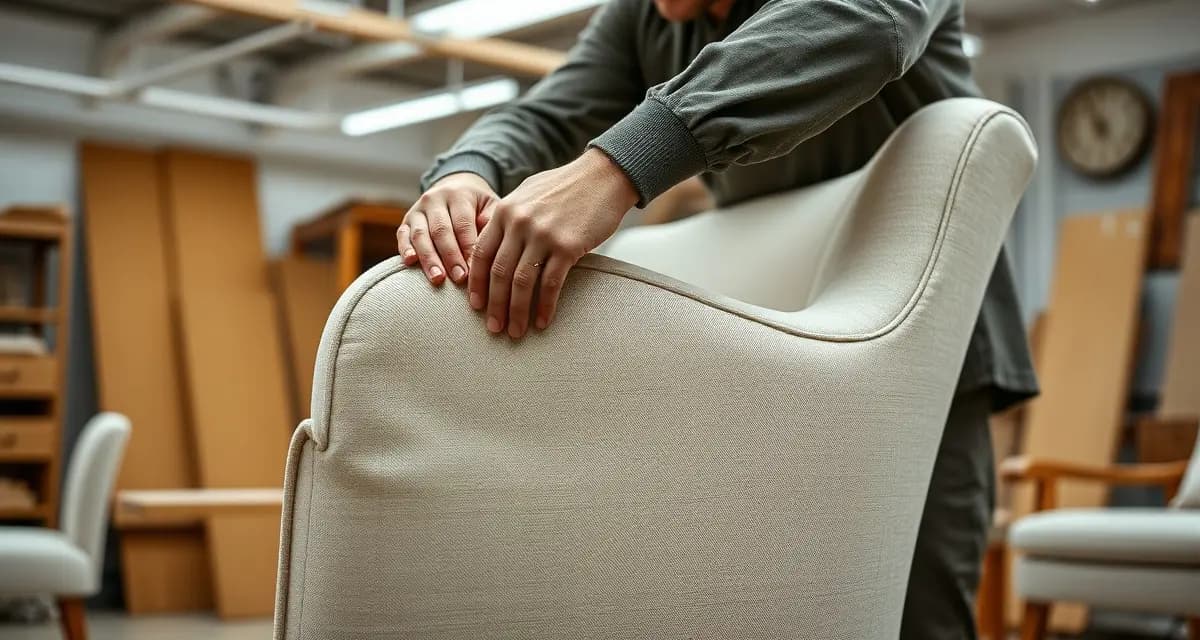
Upholstery Shop Quality Control: 10-Point Check Before Delivery
Shops with a formal QC checklist have 50% lower callback rates than shops that approve jobs informally. Informal approval means you look at the piece, it looks fine, you move it to staging. A formal checklist means you look at 10 specific things systematically, and at least two of those things reveal issues that the informal look missed.
The 10-point QC checklist isn't about distrust in your work or your team's work. It's about the reality that human attention is selective, and a systematic check catches what the eye naturally skips when it's looking at the piece as a whole rather than at each specific element.
TL;DR
- This guide covers the specific techniques, measurements, and decisions that determine quality outcomes in upholstery work.
- Planning and preparation before cutting begins is the most reliable way to avoid costly errors on any upholstery job.
- Fabric selection, yardage calculation, and structural assessment are the three decisions that most affect the final result.
- Experienced upholsterers develop consistent workflows that ensure quality and efficiency across every job type they handle.
- Documenting job details, material specifications, and client approvals protects both the shop and the client.
- The right tools, materials, and techniques for each job type make a measurable difference in quality and profitability.
How to Use This Checklist
Complete the checklist on every finished job before staging for pickup. For shops with employees doing the covering work, the owner or lead upholsterer should complete the QC check rather than the person who did the work, fresh eyes catch more.
Mark each item pass, adjustment needed, or rework required. Any rework required items must be addressed before the job moves to staging.
The 10-Point Pre-Delivery Checklist
1. Welt and Piping Alignment
Welt cord (piping) should run in a straight, consistent line on every surface where it's applied. Look for:
- Waviness in what should be a straight line
- Points where the welt stands away from the fabric surface
- Joining point quality where welt begins and ends
- Consistent welt width throughout (not narrowing or widening at corners)
Stand 6 feet back and check the welt from distance, small waves that are invisible up close read clearly from normal viewing distance.
2. Corner Sharpness and Consistency
Upholstery corners define the quality of the work from a distance. Check:
- Are all corners the same sharpness? Mismatched corners are immediately visible
- Are the corner folds clean, with no visible fabric bunching?
- On pleated corners, are the pleats the same size and spacing on both sides?
3. Fabric Tension Evenness
Fabric should be pulled to the same tension across the full surface of each panel. A rippled or slightly slack section reads as poor fit from across the room. Check each panel by pressing lightly with the flat of your hand and looking for variations in how the fabric responds.
Pay particular attention to the inside back panel and seat surfaces, where tension variation is most visible.
4. Pattern and Grain Direction Consistency
For any patterned or directional fabric:
- Is the pattern centered where it should be?
- Does the pattern continue correctly across seams?
- For pile fabrics (velvet, chenille, microfiber), is the pile direction consistent across all panels?
Step back 8-10 feet and look at the piece in its entirety. Pattern or pile direction inconsistencies that aren't visible up close often become obvious at distance.
5. Button Placement and Tension (Tufted Pieces)
For any tufted work:
- Are all buttons at consistent depth?
- Are the diamond shapes consistent in size and regularity?
- Is the tufting centered on the panel?
- Are all buttons firmly attached?
Pull each button lightly to test attachment. A button that pulls free easily will fail during normal use.
6. Seam Straightness and Consistency
Seams should be straight and consistent in width. Check visible seams from both close inspection and distance:
- Is the seam line straight?
- Is the seam allowance consistent throughout (not wide in some areas, narrow in others)?
- Are there any skipped stitches or tension variations visible in the seam line?
7. Zipper Function and Position
On any piece with removable cushion covers:
- Does the zipper open and close smoothly throughout its full length?
- Is the zipper positioned consistently (typically at the back of a seat cushion, or along the bottom of a back cushion)?
- Is the zipper pull accessible and does it open with a normal pull?
- Is the zipper tape hidden when closed?
8. Fabric Surface Inspection
In good lighting, look across the full fabric surface for:
- Snags or pulled threads
- Any small cuts or tool marks on the fabric face
- Staining from staples or handling
- Any areas where the pile is permanently compressed or flattened (on pile fabrics)
Check under daylight-balanced lighting, defects invisible under fluorescent often show under daylight-spectrum bulbs.
9. Bottom Finish (Dust Cover)
Inspect the cambric dust cover on the underside:
- Is it pulled taut with no sagging?
- Are the edges folded cleanly?
- Is it stapled at consistent intervals (no gaping between staples)?
- Does the stapling pattern look intentional and even?
The dust cover is often the last thing you do on a job and the thing most likely to be rushed. But clients do look at the underside, and an impeccable dust cover signals the same care applied to every part of the work.
10. Overall Symmetry Check
Stand 6-8 feet directly in front of the piece and look at it as a whole:
- Do the two sides appear symmetrical?
- Is the piece square (not twisted or racked to one side)?
- Do any individual elements draw the eye due to inconsistency?
Then check from each side and from directly above. Symmetry issues visible from only one angle can still be the first thing a client sees when the piece arrives in their home.
Documenting the QC Check
Note the QC check in the job record with date and name of reviewer. For jobs where adjustments were needed, note what was adjusted. This creates a record that shows your quality process was followed and provides data on which issues appear most frequently.
The upholstery shop management guide covers how to integrate QC documentation into your job management workflow.
Related Articles
FAQ
What should I check before delivering reupholstery?
Ten specific things: welt and piping alignment, corner sharpness and consistency, fabric tension evenness across all panels, pattern and grain direction consistency, button placement and tension on tufted pieces, seam straightness and width consistency, zipper function and position on removable cushions, fabric surface for snags or damage, dust cover installation quality, and overall symmetry of the finished piece viewed from distance. Address any issues before staging the piece for pickup. A systematic checklist catches what an informal look misses, which is why shops with formal QC checklists have significantly lower callback rates.
How do I do quality control on upholstery jobs?
Complete the 10-point checklist on every job before it moves to staging. For employee-completed work, have someone other than the person who did the work complete the QC check, fresh eyes catch more. Check each item specifically rather than looking at the piece generally. Note the results in the job record with date and reviewer name. Address any items requiring rework before the job is staged. Document recurring issues to identify which skills or processes need improvement in your shop.
What are the most common upholstery quality issues?
The most common issues caught on pre-delivery inspection, in approximate order of frequency: uneven fabric tension causing slight rippling on seat or back panels, corner inconsistency (one side more pleated than the other), welt that wavers slightly in long straight runs, pattern or pile direction inconsistency visible at distance, buttons at uneven depth on tufted work, and dust cover stapling that's too sparse and allows sagging. Most of these are invisible during the production process and only visible after the piece is assembled and viewed as a whole, which is why the post-assembly QC check is essential.
What are the most common mistakes to avoid in this type of work?
The most common mistakes are underestimating material requirements, starting work before the frame is fully assessed and repaired, and skipping the centering and alignment checks before cutting. Each of these is far more expensive to correct after cutting has begun than to prevent at the planning stage. Taking an extra 15-30 minutes at the assessment and planning stage pays dividends throughout the job.
How do I get the best results from a professional upholsterer?
Come to the consultation with clear measurements, photos of the piece, and an idea of the room's color scheme and intended use. Be specific about how the piece will be used: high traffic, pets, children, or outdoor exposure all affect fabric recommendations. Provide fabric samples or accept guidance on appropriate options for your use case. Approve the proof carefully and ask to see the fabric on the piece before final installation if you are uncertain about a pattern or color choice.
When should I consult a professional rather than doing the work myself?
Consult a professional when the piece has structural issues beyond simple fabric replacement, when the piece has significant financial or sentimental value, or when the fabric or technique (tufting, pattern matching, hand-tacking) requires skills you have not developed. A professional assessment before you begin is free at most shops and can prevent costly mistakes on a piece worth preserving.
Sources
- National Upholstery Association
- Association of Master Upholsterers and Soft Furnishers (AMUSF)
- Upholstered Furniture Action Council (UFAC)
- Furniture Today (trade publication)
Get Started with StitchDesk
Running a successful upholstery shop means getting the details right on every job. StitchDesk gives you purpose-built tools for quoting, fabric calculation, job tracking, and client communication, all in one place designed specifically for the trade. Start a free trial and see how StitchDesk supports quality work from intake to delivery.