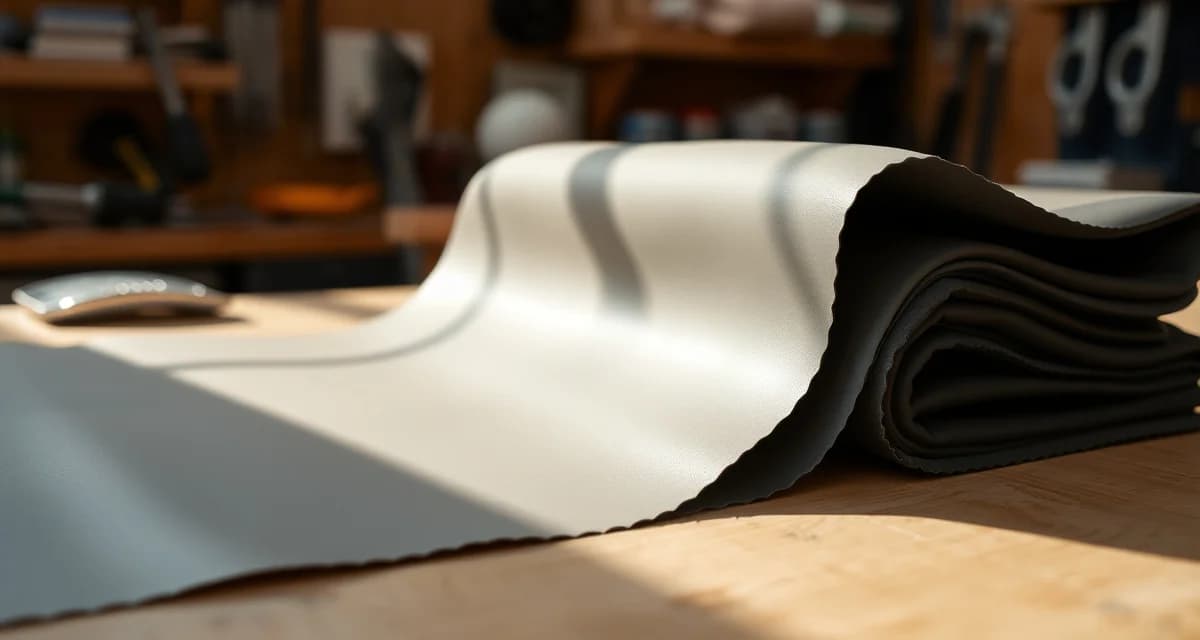
Vinyl Upholstery Guide: Commercial Marine and Residential Applications
Marine vinyl without a UV inhibitor loses surface integrity within 2 seasons. That's the most common marine upholstery callback: a vinyl that looked correct when installed but cracked, faded, or became sticky within 18 months because the wrong grade was specified.
Vinyl is the dominant fabric in commercial, marine, and healthcare upholstery because it's easy to clean, durable under high-use conditions, and available in grades engineered for specific environments. But "vinyl" is not a single material. The grade differences between contract vinyl, marine vinyl, and residential PU-coated vinyl are significant enough to determine whether a job lasts 5 years or 15.
TL;DR
- Vinyl has specific performance characteristics that make it well-suited for certain applications and less suitable for others.
- Always check the double-rub count before specifying vinyl for a particular use; ratings vary widely between products.
- The cleaning code (W, S, WS, X) for vinyl determines what maintenance clients can safely perform and should be communicated at delivery.
- Pattern repeat, nap direction, and fabric width all affect yardage requirements and should be verified before calculating a quote.
- COM vinyl from clients should be inspected for rub count, cleaning code, and width before acceptance.
- Proper installation technique for vinyl differs from standard fabric; follow manufacturer guidance for any specialty material.
The Three Main Vinyl Categories
Contract Vinyl (Embossed Commercial Grade)
Contract vinyl is engineered for commercial seating: restaurants, offices, healthcare, and hospitality. The construction is typically a PVC topcoat over a knit or woven backing, heat-embossed with a leather or texture pattern.
Key specifications to look for in contract vinyl:
- Rub count: Minimum 100,000 double rubs for commercial use. Healthcare and high-traffic applications should target 200,000+.
- Breaking strength: Typically 50-60 lbs/inch for standard contract vinyl.
- Fire rating: Most commercial contract vinyl is CAL 117 rated. Healthcare applications often require CAL 133 or NFPA 260.
- UV stability: Contract vinyl used near windows needs UV inhibitor content listed in the spec sheet.
Embossed contract vinyl doesn't railroad easily, the embossed pattern has a clear direction that must be maintained consistently across panels. Check with the manufacturer before assuming a contract vinyl can be railroaded.
Marine Vinyl
Marine vinyl is engineered for outdoor and saltwater exposure. The key differences from contract vinyl:
- UV inhibitor: Marine-grade vinyl contains UV stabilizers that prevent surface degradation from direct sun. Without this, the vinyl's plasticizers break down, making the surface sticky and then crack.
- Mold and mildew resistance: Marine vinyl is specifically treated against the mold that grows in humid, enclosed boat interiors.
- Anti-microbial surface: Most marine vinyl has surface treatment that resists the bacterial growth that contract vinyl may not.
- Flexibility in cold temperatures: Marine vinyl maintains flexibility at lower temperatures than standard contract vinyl, which can become stiff and crack in cold ambient conditions.
Marine vinyl without a UV inhibitor loses surface integrity within 2 seasons of direct sun exposure. This is the spec detail that separates a professional marine upholstery job from a callback job.
When specifying marine vinyl, always confirm the UV inhibitor content in the technical data sheet. Look for a minimum of 600 hours UV resistance per AATCC test method 16.
Residential PU-Coated Vinyl
Residential-grade vinyl uses a polyurethane topcoat rather than PVC. The result is a softer, more supple hand that feels closer to leather than commercial contract vinyl.
PU-coated vinyl is appropriate for residential furniture pieces where the leather look is desired at a lower price point. It's not suitable for commercial use, rub counts are typically 30,000-50,000 double rubs, far below commercial thresholds.
The softness that makes PU vinyl feel good is also what makes it more susceptible to abrasion under high-use commercial conditions. Don't use residential PU vinyl on restaurant seating, even if the client requests it to save cost. The callback will cost both parties more than the savings.
Cutting Vinyl: What's Different
Vinyl cuts cleanly with a rotary cutter or sharp shears. Unlike fabric, vinyl doesn't fray at cut edges, which simplifies edge finishing. However, vinyl is less forgiving of cutting errors, you can't ease in a slight miscut the way you can with woven fabric.
Temperature matters. Cold vinyl (below 60°F in the shop) is stiffer and more likely to crack under bending stress during installation. Vinyl stored in a cold environment should be brought to room temperature before cutting. Allow at least 2 hours of acclimation time.
Marking: Mark vinyl on the back with chalk or a non-permanent marker. Avoid ballpoint pen, the oil in the ink can migrate through to the face over time. For textured vinyl where marking from the front would damage the surface, use a tailor's chalk on the face and test on a scrap first.
Cutting against bias: Unlike woven fabric, vinyl has no bias and no grain to respect. But the embossed texture on contract vinyl may have a directional appearance. Check before cutting large pieces that a direction preference is applied consistently.
Seam Technique for Vinyl
Machine Stitching
Use a medium-heavy needle (size 16-18) with a stitch length of 4-6 stitches per inch. Shorter stitches perforate vinyl and create tear lines along the seam. Longer stitches leave too much vinyl between needle holes, reducing seam strength.
Thread choice: polyester. Cotton deteriorates in the conditions where vinyl is often used (marine environments, outdoor-adjacent spaces).
Walking foot: Vinyl's non-porous surface creates significant friction against the presser foot. Use a walking foot or Teflon foot to prevent the vinyl from sticking and shifting during sewing. Without one, seam creep is almost inevitable.
Avoid pinning. Pin holes in vinyl are permanent. Use binder clips, Wonder clips, or double-stick tape to hold seam pieces in position before sewing.
Seam Finishing
Unlike fabric, vinyl seam allowances don't need serging. The edges don't fray. For a cleaner interior finish, you can fold the seam allowance toward one side and topstitch through both layers to hold it flat.
For marine applications where water intrusion at seams is a concern, use a seam sealer on the inside of all seams. This prevents water from tracking along the seam thread channels into the foam and backing.
Welding vs. Sewing
Heavy-gauge commercial vinyl (marine and outdoor applications) can be RF (radio frequency) welded rather than sewn. RF welding creates a molecular bond between the vinyl layers that is stronger than any sewn seam and completely waterproof.
RF welding requires specialized equipment and is used primarily in high-volume commercial production. For shop-scale marine and commercial work, sewn seams with seam sealer are the standard.
The Vinyl Fabric Yardage Calculator
Vinyl yardage for upholstery uses the same square-footage calculation as fabric, but vinyl is often sold in wider widths (54-60 inches for contract, up to 60-66 inches for marine). A wider roll means fewer seams and less waste, which changes your yardage estimate relative to 54-inch fabric.
Input your actual piece dimensions and the roll width you're using. The upholstery fabric selection guide includes vinyl in the fabric comparison for different commercial and marine applications.
Related Articles
FAQ
What vinyl is best for commercial upholstery?
Embossed contract vinyl with a minimum 100,000 double rub count is the standard for restaurant, office, and light commercial seating. For healthcare applications, specify 200,000+ double rubs and confirm fire rating compliance (CAL 117 minimum, CAL 133 for high-risk environments). For outdoor-adjacent or marine applications, specify marine-grade vinyl with UV inhibitor and mold/mildew resistance. Never use residential PU-coated vinyl for commercial applications, its rub count is too low for commercial use patterns.
How do I cut vinyl for upholstery?
Use a rotary cutter or sharp shears, vinyl cuts cleanly without fraying. Mark on the back surface using chalk, never ballpoint pen. Avoid pinning; use binder clips or Wonder clips instead, as pin holes are permanent in vinyl. Allow cold-stored vinyl to acclimate to room temperature for at least 2 hours before cutting, cold vinyl cracks under installation stress. For embossed contract vinyl, check whether the embossed texture has a visible directional pattern and apply it consistently across all panels.
What is the difference between marine vinyl and regular vinyl?
Marine vinyl contains UV inhibitors that prevent surface degradation from prolonged direct sun exposure. Standard contract or residential vinyl lacks these stabilizers, and direct sun exposure breaks down the plasticizers that keep vinyl supple, causing stickiness and cracking within 1-2 seasons. Marine vinyl also has mold and mildew resistance for enclosed humid environments and maintains flexibility at lower ambient temperatures. If a client is upholstering outdoor furniture, boat cushions, or anything in a sun-exposed location, always specify marine-grade vinyl and confirm the UV inhibitor content in the technical data sheet before ordering.
How do I care for upholstery covered in this fabric?
Follow the cleaning code on the fabric label: W (water-based cleaners safe), S (solvent-based cleaners only), WS (either), or X (vacuum only). For spot cleaning, always test in an inconspicuous area first. Blot spills immediately rather than rubbing, which spreads the stain and can damage the fabric structure. Provide clients with a written care card at delivery specifying the cleaning code and any special maintenance recommendations.
What is the yardage impact of using this fabric with a pattern?
Pattern repeats add yardage proportional to the repeat size and the number of cutting zones on the piece. A 13-inch repeat adds roughly 10-20% over plain fabric on most pieces. A 27-inch repeat can add 25-35% or more depending on the piece type and number of cushions. Calculate yardage zone by zone for any patterned fabric rather than applying a generic percentage buffer.
Sources
- National Upholstery Association
- Association of Master Upholsterers and Soft Furnishers (AMUSF)
- Upholstered Furniture Action Council (UFAC)
- Furniture Today (trade publication)
Get Started with StitchDesk
Helping clients choose the right fabric is a core part of the job, and having accurate yardage calculations and fabric records at hand makes those conversations faster and more confident. StitchDesk keeps fabric data, yardage calculations, and client records in one place so you spend less time on paperwork and more time on the work itself. Try StitchDesk free.