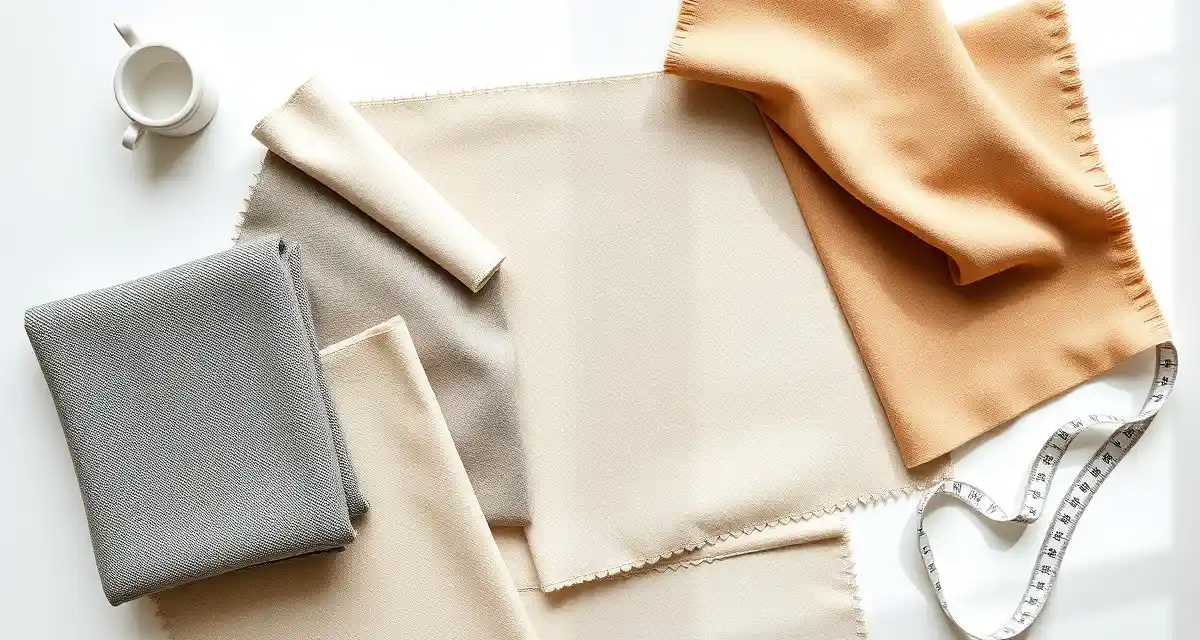
How to Calculate Yardage for 60-Inch Upholstery Fabric
60-inch fabric doesn't automatically mean fewer yards. That's the assumption most people make, wider fabric means more panels per row means fewer yards total. It's true for some pieces and not true for others, and knowing the difference before you order is what matters.
60-inch upholstery fabric is common in designer and commercial grade lines. Some performance fabrics come in at 60 inches. Some COM fabrics are 60 inches, especially European textiles that use metric-based width standards. When you're working with 60-inch fabric, recalculate from the actual width. Don't adjust from a 54-inch estimate.
TL;DR
- Fabric Width 60 Inch yardage depends on fabric width, construction details, pattern repeat, and nap direction.
- Plain 54-inch fabric requires a baseline calculation plus 10-15% waste allowance for a standard fabric width 60 inch job.
- Patterned fabric adds 20-35% to base yardage depending on repeat size and the number of cutting zones that must align.
- Directional fabrics add 15-25% over plain fabric because layout optimization is restricted by nap direction.
- Always verify fabric width before finalizing yardage; COM fabric often comes in non-standard widths.
- Calculating yardage at the quote stage, not mid-job, eliminates reorders and protects your profit margin.
When 60-Inch Width Saves Yardage
Wide single panels. The inside back of a large sofa or a wide sectional corner piece can approach 40–48 inches. At 54-inch width (52 usable inches), a 40-inch panel is tight but fits. An 18-inch leftover. At 60-inch width (58 usable inches), the same 40-inch panel leaves 18 inches that can be used for narrower pieces. No real difference there.
But a 50-inch inside back panel (oversized sofa) doesn't fit at 54 inches without seaming. At 60 inches, it fits as a single piece, eliminating the seam allowance and any pattern matching at the seam. That's where 60-inch width saves significant yardage and labor.
Multiple panels that fit two-per-row. Two inside arm panels at 24 inches each = 48 inches combined. At 54-inch width (52 usable), those two panels fit, barely. At 60-inch width (58 usable), they fit more comfortably with 10 inches of margin for small pieces. The margin can be used for welt cording strips, small front panels, or other narrow pieces.
Long cushion boxing strips. Cushion boxing strips at 4–6 inches tall can be cut from the margins of rows used for main panels. Wider fabric means more usable margin, which means more boxing strips can come from "free" space rather than dedicated rows.
When 60-Inch Width Doesn't Help
Tall narrow panels. An outside arm panel that's 12 inches wide and 20 inches tall, two of these fit side by side at 24 inches combined, well within any usable width over 30 inches. Whether the bolt is 54 or 60 inches doesn't change how many rows this takes.
Pieces with nap direction constraints. On velvet or pile fabrics, you can't rotate panels for efficiency anyway. Wider fabric helps if a wide panel was being seamed at 54 inches, but otherwise, the row count is the same.
Pattern repeat work. The repeat waste is driven by vertical repeat, not by fabric width. A 27-inch repeat on a 60-inch bolt wastes the same inches per zone as on a 54-inch bolt. You might save a small amount if wider width allows some panels to be nested differently, but the repeat waste is primarily a length-of-bolt problem, not a width problem.
Step-by-Step for 60-Inch Fabric on a Standard Sofa
Using the same 84-inch 3-cushion sofa as a reference:
Inside back: 36 x 24 inches. One per row. Row length: 24 inches.
- Remaining width: 22 inches (can use for narrow pieces)
Outside back: 36 x 24 inches. One per row. Row length: 24 inches.
Inside arm L and R: 24 x 22 inches each. Two per row. Row length: 22 inches.
- At 60-inch width: 48-inch combined width, 10-inch margin remaining.
Outside arm L and R: 24 x 14 inches each. Two per row. Row length: 14 inches.
- Can also fit front border (78 x 8 inches = doesn't fit at 14 inches, use margin from other rows).
Seat cushion faces (3): 24 x 24 inches each. At 60 inches usable: two fit per row (48 inches), one in next row. Same as 54-inch, still 2 rows.
- Note: Unlike wide panels, seat cushions don't benefit from extra width because they're already fitting 2-per-row at 54 inches.
Welt cording strips (bias cuts): The wider bolt gives slightly more bias cut efficiency. Minor savings.
Total at 60-inch width: Approximately 7.25–7.5 yards for this sofa, compared to 7.75–8 yards at 54-inch.
Actual savings: 0.5–0.75 yards on a standard sofa. Not dramatic. The bigger savings come when a wide panel was being seamed at 54 inches and now cuts as a single piece at 60 inches, that eliminates both the extra yardage for seam allowance and the labor of the seam itself.
Converting a 54-Inch Quote to 60-Inch Fabric
If you already have a 54-inch yardage calculation and the client's actual fabric is 60 inches:
- For standard sofas and chairs: subtract 0.5–1 yard as a rough adjustment.
- For pieces with wide single panels that were being seamed: subtract more, calculate those panels specifically.
- Recalculate from scratch for sectionals or any piece over 40 yards where a 1-yard error matters significantly.
The StitchDesk calculator adjusts automatically when you change the fabric width input. You enter the actual width, and the cutting layout and yardage both update.
60-Inch Fabric and Yardage Documentation
When working with COM fabric at 60 inches, document the width in your job ticket. It's relevant if the client ever comes back for a repair or an additional piece, if they need to order more of the same fabric to match, they need to know the original was 60 inches, not 54. A mismatch in width between the original job fabric and new repair fabric doesn't cause visual issues (the finished piece has the same dimensions), but it does affect how much they need to order for the repair.
Related Articles
FAQ
Does 60-inch fabric need fewer yards than 54-inch fabric?
Sometimes. For pieces with wide single panels that would require seaming at 54 inches, 60-inch fabric eliminates the seam, saving 0.5–1 yard on that panel alone. For most standard furniture, 60-inch fabric saves 0.5–1 yard total on a sofa compared to 54-inch. For pieces where cutting efficiency isn't limited by width (tail pieces, narrow panels), there's no meaningful difference.
Can I use the same yardage chart for 60-inch and 54-inch fabric?
No. Standard yardage charts are built for 54-inch fabric. Using them for 60-inch fabric will overestimate yardage by 5–15%, which isn't a major problem but means you're having clients order more than they need. More importantly, using a 54-inch chart for 48-inch fabric will underestimate, that's the direction that causes problems. Always use the actual width in your calculation.
Is 60-inch fabric better for upholstery?
"Better" depends on what you're working on. For very wide pieces, yes, fewer seams, more efficient cutting. For standard residential furniture, the practical difference is small. 54-inch fabric has a broader selection in most supplier catalogs, so you have more options. 60-inch fabrics are often commercial or performance grade, which means they're also more durable, but that's a fabric quality difference, not a width advantage.
What is the biggest factor in yardage variation for this piece?
Pattern repeat is the biggest source of yardage variation. On plain fabric, the baseline calculation plus a 10-15% waste buffer is usually sufficient. Add a 13-inch pattern repeat and you may need 15-20% more. Add a 27-inch pattern repeat and the additional yardage can be 25-35% over the plain fabric calculation. Nap direction is the second-largest factor, typically adding 15-25% over plain fabric because layout optimization is restricted.
What should I do if I run short on fabric mid-job?
Stop cutting immediately when you realize you may run short. Calculate exactly how much additional fabric you need before contacting the supplier or client. If reordering from the same dye lot is possible, do so as quickly as possible because dye lots change. If a dye lot match is not available, contact the client before proceeding; visible dye lot differences on the same piece are unacceptable and must be disclosed. Document the situation and response in writing.
Sources
- National Upholstery Association
- Association of Master Upholsterers and Soft Furnishers (AMUSF)
- Upholstered Furniture Action Council (UFAC)
- Furniture Today (trade publication)
Get Started with StitchDesk
Getting yardage right on width 60 inch jobs is the difference between a profitable quote and an expensive reorder. StitchDesk's fabric calculator accounts for all the variables that cause errors: pattern repeat by zone, nap direction, fabric width, and cushion configuration. Start a free trial and see how accurate yardage calculation affects your bottom line.