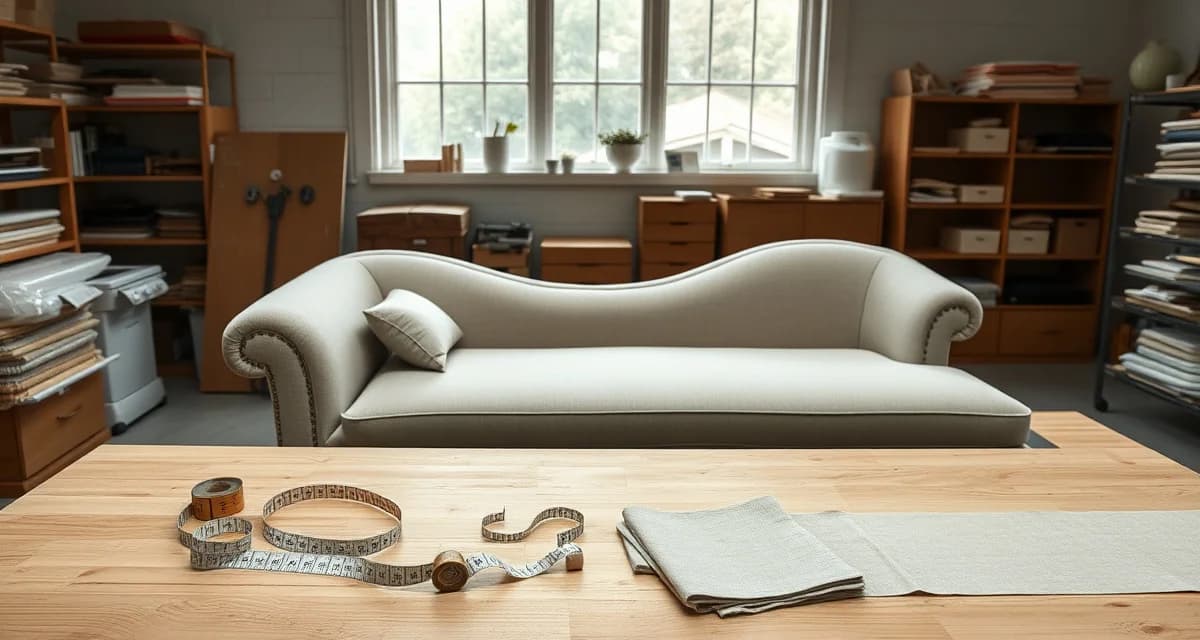
Fabric Yardage Calculator for Chaise Lounges: Long and Complex
Chaise lounges are one of the most underestimated pieces in upholstery. The fabric yardage calculator chaise lounge shops actually need has to account for the extended length, the rolled arm curves, and the back pitch. Most tools don't do any of that. The result? A common shortfall of 2-4 yards that stops jobs mid-way.
Chaises require 12-18 yards depending on arm style. That's a 6-yard swing. If you're using a generic calculator or a flat estimate, you're gambling on which end of that range you'll land.
TL;DR
- Accurate yardage calculation for chaise jobs prevents costly fabric shortfalls and over-ordering that erode margin.
- Pattern repeats are the most common source of yardage errors; always calculate each cutting zone separately, not as a flat percentage.
- Nap-direction fabrics (velvet, chenille, mohair) require 15-25% more yardage than the same job in plain fabric.
- Fabric width significantly affects yardage: the difference between 54-inch and 60-inch fabric can be 1-2 yards on the same piece.
- Always add a 10-15% buffer on plain fabric and 15-20% on patterned fabric to account for cutting waste.
- Entering measurements accurately at the quoting stage eliminates the need to reorder mid-job.
Why Chaises Get Miscalculated So Often
A chaise looks like a sofa with a long seat. It's not. The geometry is completely different.
The extended leg rest section has its own grain direction requirements. The rolled arms on a traditional chaise curve in three dimensions, not two. And the back pitch on most chaise styles is shallower than a standard sofa back, which changes how you lay out the back panel.
Spreadsheet templates fail here because they can't account for chaise arm curves and back pitch separately. You end up with one big rectangle estimate rather than a section-by-section calculation.
How Section-by-Section Calculation Works
The right approach treats a chaise as four distinct zones: the back, the seat, the arm, and the leg rest section.
Back Section
The back on a chaise is typically shorter in height than a sofa back but can have complex curvature depending on the style. Measure height at the tallest point, add seam allowance on all four sides, and account for any tufting.
Seat Section
The seat on a chaise is longer than any standard sofa cushion. For a T-cushion chaise, the seat section alone can run 3-4 yards. You also need to account for the deck fabric underneath loose cushions.
Arm Section
This is where the most errors happen. Rolled arms require you to cut bias-angled pieces that wrap the curve. A scroll arm on a chaise can use 0.75-1.25 yards more fabric than a track arm of similar size.
Leg Rest Section
The extended leg rest is essentially a third seat section. It needs top fabric, a front boxing panel, and a bottom dust panel. Shops that treat the leg rest as just "extra seat length" consistently underorder.
Yardage Ranges by Arm Style
| Arm Style | Typical Yardage (54" fabric) |
|---|---|
| Track arm | 12-13 yards |
| Flared arm | 13-14 yards |
| Rolled arm | 14-16 yards |
| Scroll arm | 15-18 yards |
| No arm (lounge style) | 10-12 yards |
These ranges assume a solid fabric with no pattern repeat. Add 2-4 yards for any pattern with a repeat over 13 inches.
Fabric Width Makes a Big Difference
Most residential upholstery fabric runs 54 inches wide. But some performance fabrics and many outdoor fabrics come in 60-inch widths. A 60-inch fabric can reduce your chaise yardage by 1-2 yards depending on how the pieces lay out.
If you're using fabric-specific yardage tools that adjust for width, make sure the chaise setting is active, not a generic sofa template.
Pattern Repeats on a Chaise
Long pieces like chaises amplify pattern repeat waste. A 13-inch repeat that adds 1.5 yards to a standard sofa can add 2.5 yards to a chaise because the leg rest section creates an additional repeat-matching point.
For large-scale patterns (18 inches and above), budget an additional 3-5 yards over the solid fabric estimate. For velvet or directional fabrics, add a minimum of 10% to whatever the base calculation shows.
Learn more about how to handle specific fabric types and their waste factors when planning a chaise job.
FAQ
How many yards to reupholster a chaise lounge?
Most chaise lounges require 12-18 yards of 54-inch fabric, depending on arm style and configuration. Track arm and armless chaises sit at the lower end. Scroll arm and heavily rolled chaises sit at the upper end. Always add extra for pattern repeats or directional fabrics on top of the base calculation.
Do rolled arms add extra yardage on a chaise lounge?
Yes. Rolled arms can add 1.5-3 yards compared to a track arm chaise of the same size. The curved geometry requires bias-cut pieces that don't nest efficiently on the fabric roll, creating more waste. Scroll arms are the most yardage-intensive arm style for chaise lounges.
What fabric width is best for a chaise lounge?
A 60-inch wide fabric is generally better for chaise lounges because the longer seat and leg rest sections can be cut with fewer seams. You'll typically save 1-2 yards compared to 54-inch fabric. However, not all fabrics come in 60-inch widths, so verify availability before speccing the fabric to a client.
Should I add a buffer to calculated yardage?
Yes. A 10-15% buffer is standard on plain fabric to account for cutting waste and minor errors. On patterned fabric, use 15-20% above the pattern-adjusted calculation. For COM fabric that cannot be reordered if you run short, some upholsterers increase the buffer to 20-25%. The cost of a modest buffer is far lower than the cost of sourcing additional fabric after cutting has begun.
Sources
- National Upholstery Association
- Association of Master Upholsterers and Soft Furnishers (AMUSF)
- Upholstered Furniture Action Council (UFAC)
- Furniture Today (trade publication)
Get Started with StitchDesk
Getting yardage right on chaise jobs is the difference between a profitable quote and an expensive reorder. StitchDesk's fabric calculator accounts for all the variables that cause errors: pattern repeat by zone, nap direction, fabric width, and cushion configuration. Start a free trial and see how accurate yardage calculation affects your bottom line.