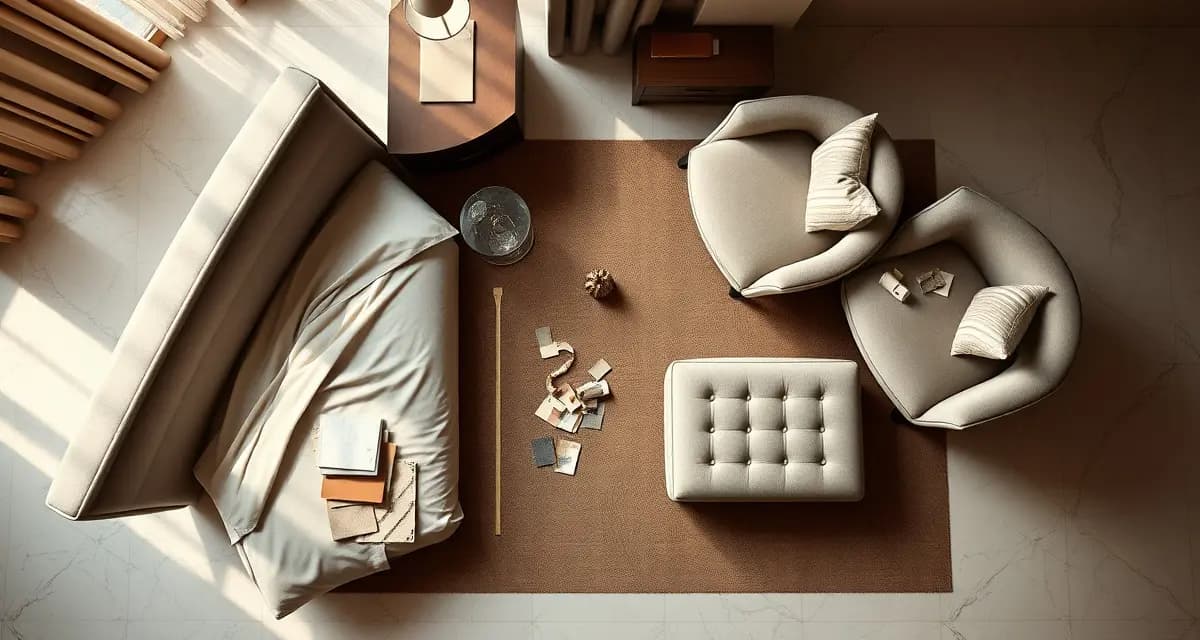
Hotel Room Furniture Fabric Yardage: Headboards Chairs and Ottomans
Hotel room reupholstery projects are some of the most systematic commercial work an upholstery shop can land. Every room is essentially identical: same headboard, same accent chair, same ottoman (or minor variations across a couple of room types). The calculation is done once per room type, verified on a sample, and scaled to the full property.
Hotel projects spanning 50 to 200 rooms are not uncommon, and a per-room calculation error multiplies to thousands of yards at that scale.
TL;DR
- Commercial upholstery jobs require fabric with 100,000+ double rubs; standard residential fabric fails quickly in high-traffic environments.
- Contract commercial work typically involves larger yardage quantities, tighter deadlines, and more formal invoicing requirements than residential work.
- Quoting commercial jobs accurately requires understanding the difference between residential and commercial fabric cost and lead time.
- Fire-retardant fabric specifications are common requirements in commercial contracts and must be verified before ordering.
- Multi-location restaurant and hotel chains often require documentation of fabric specification and sourcing for procurement records.
- Commercial clients expect professional invoicing, deposit terms, and written contracts rather than informal arrangements.
Per-Room Furniture Package
A standard hotel room has 1 to 3 upholstered pieces, depending on hotel category:
Budget and midscale hotels:
- Upholstered headboard (typically queen or king)
- That's often it
Upper midscale and upscale hotels:
- Upholstered headboard
- One or two accent chairs with or without ottoman
Luxury hotels:
- Upholstered headboard (often custom with button tufting)
- Multiple accent chairs
- Ottoman(s)
- Possibly upholstered bench at foot of bed
- Occasionally window seat or reading chair
The per-room yardage depends on which of these pieces the hotel contract includes. Get the room type specification in writing before calculating.
Per-Piece Yardage Reference for Hotel
Queen headboard, flat style: 2 to 2.5 yards
Queen headboard, channel-tufted: 3 to 4 yards
King headboard, flat style: 2.5 to 3 yards
King headboard, button-tufted (deep): 5 to 7 yards
Standard accent chair, no ottoman: 4 to 5 yards
Standard accent chair with ottoman: 6 to 8 yards combined
Upholstered bench, 54-inch at foot of bed: 2 to 2.5 yards
Window seat cushion, 60-inch: 2 to 3 yards
For a typical upscale hotel room with king flat headboard + accent chair + small ottoman:
- King flat headboard: 2.5 to 3 yards
- Accent chair: 4 to 5 yards
- Small ottoman: 1.5 to 2 yards
- Per room total: 8 to 10 yards
For a 100-room hotel at 9 yards per room: 900 yards. At $30/yard commercial fabric, that's a $27,000 fabric order. A 5 percent per-room error is 45 yards, $1,350.
Scaling to Full Floor or Property
The most common hotel contracting structure is a complete floor-by-floor project. A 10-floor hotel with 20 rooms per floor = 200 rooms. This is a project that needs:
- Per-room type calculation verified on physical sample
- Room type count across the property (how many standard kings, double queens, junior suites, etc.)
- Per-room-type yardage x room count for each type
- Single dye lot coordination for each fabric used
Step 4 is often the limiting factor. A 200-room hotel using the same headboard fabric needs 500 to 600 yards from one dye lot. Verify this with your fabric supplier before the contract is signed. If the supplier can't guarantee a single dye lot at that quantity, you need to know before committing.
Fabric Specification for Hospitality
Hotel furniture fabric must meet hospitality-grade specifications:
- Minimum 50,000 Wyzenbeek for guest room seating (100,000+ for public areas)
- Solution-dyed or colorfast, hotel rooms face notable cleaning with alkaline products
- Flame retardant, most jurisdictions require hotel furnishing fabrics to meet NFPA 260 or similar flammability standards
- Stain resistant, guest room chairs see body contact and occasional spills
For headboards specifically, flammability code compliance is typically required for commercial installation. Verify local code requirements and specify accordingly.
Frequently Asked Questions
How do I calculate fabric for hotel room reupholstery?
Identify all upholstered pieces in the room type specification, calculate per-piece yardage for each, sum to a per-room total. Multiply per-room total by room count for that room type. Add 10 percent buffer for commercial-scale projects. Verify single dye lot availability for the full order before committing to a timeline.
How much fabric for a hotel headboard?
A flat-style queen headboard needs 2 to 2.5 yards. A flat-style king headboard needs 2.5 to 3 yards. Channel-tufted versions add 50 to 80 percent more yardage than flat versions. Button-tufted luxury headboards can need 5 to 7 yards for a king. Always measure a physical sample headboard rather than estimating from general dimensions, hotel headboards vary considerably.
What is the best fabric for hotel furniture?
Contract-grade polyester fabric at 50,000+ Wyzenbeek rubs for guest rooms and 100,000+ for public areas. The fabric must meet applicable flammability codes for commercial installation (NFPA 260 or equivalent depending on jurisdiction). Solution-dyed or colorfast fabric for areas with cleaning exposure. Stain-resistant treatment is standard for hospitality specification.
What fabric specifications are required for commercial upholstery?
Most commercial specifications require a minimum of 100,000 double rubs (Martindale scale) for seating fabric. Fire retardancy to California Technical Bulletin 117-2013 (TB-117) is standard for commercial contract work in most states; some states require additional fire standards. Antimicrobial treatments are common requirements in healthcare settings. Always request and retain the fabric manufacturer's test documentation for any commercial project.
How do I quote a large commercial upholstery contract?
Large commercial contracts require a detailed scope of work, fabric specification list, yardage calculations by piece type, labor rate, and timeline. Break the quote into phases if the project is large. Include terms for schedule changes, fabric substitutions, and what happens if the client-specified fabric is unavailable. A written contract with scope, timeline, payment schedule, and warranty terms is essential for any commercial engagement over a few thousand dollars.
Related Articles
- Fabric Yardage Calculator for Barrel Chairs: Curved Seams Included
- Fabric Yardage Calculator for Club Chairs: T-Cushion and Tight Back
- Mid-Century Furniture Fabric Yardage: Tapered Legs and Thin Arms
Sources
- National Upholstery Association
- Upholstered Furniture Action Council (UFAC)
- Association of Master Upholsterers and Soft Furnishers (AMUSF)
- Business and Institutional Furniture Manufacturers Association (BIFMA)
Get Started with StitchDesk
Commercial upholstery contracts require precise quoting, reliable fabric tracking, and professional documentation that residential-focused tools often lack. StitchDesk handles commercial job management with the same tools it provides for residential work, with no special configuration required. Try StitchDesk free and see how it supports your commercial operations.