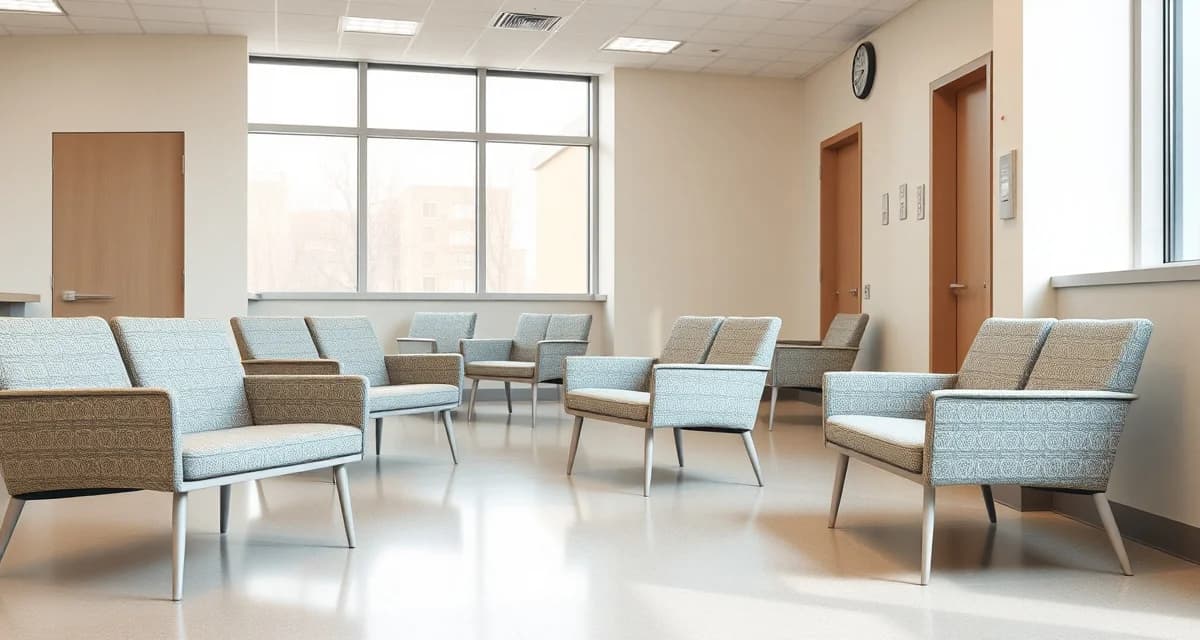
Hospital and Medical Waiting Room Chair Yardage at Scale
Medical waiting room contracts average 20 to 60 chairs per facility. Shops that can quote the entire project win over shops that can only price individual chairs, because facilities don't want to manage multiple vendors for the same room. If you can show up with a complete yardage calculation, a compliant fabric specification, and a per-project price, you're the only professional in the room.
This guide covers per-chair yardage, scale calculation methods, and the fabric compliance documentation that medical facilities require.
TL;DR
- Commercial upholstery jobs require fabric with 100,000+ double rubs; standard residential fabric fails quickly in high-traffic environments.
- Contract commercial work typically involves larger yardage quantities, tighter deadlines, and more formal invoicing requirements than residential work.
- Quoting commercial jobs accurately requires understanding the difference between residential and commercial fabric cost and lead time.
- Fire-retardant fabric specifications are common requirements in commercial contracts and must be verified before ordering.
- Multi-location restaurant and hotel chains often require documentation of fabric specification and sourcing for procurement records.
- Commercial clients expect professional invoicing, deposit terms, and written contracts rather than informal arrangements.
Medical Waiting Room Chair Specifications
Before calculating yardage, understand what you're working with. Medical waiting room chairs fall into two primary categories:
Standard waiting room chairs (sled-leg or ganged): Typically have a seat pad and upholstered inside back. Some models have upholstered outside backs and arms. These are the most common style in general medical offices, physical therapy clinics, and smaller hospital departments.
Bariatric waiting room chairs: Wider and reinforced. Typically 24-27 inches seat width vs 18-22 inches for standard. Bariatric yardage is 20-35% higher per chair than standard.
Lounge-style waiting chairs: Higher-end hospitals and patient lounges may have fully upholstered lounge chairs with arms, outside back, and higher-quality finish. These require more fabric per chair and different cleaning-specification fabrics.
Per-Chair Yardage for Standard Waiting Room Chair
A standard waiting room chair (inside back and seat pad only):
- Seat: 20 x 18 inches with 2-inch depth, boxing strip, and zipper or staple closure
- Seat panel + boxing: approximately 0.5-0.65 yards
- Inside back: 18 x 22 inches, attached to frame
- Back panel: approximately 0.35-0.45 yards
Total per chair (seat + back): 0.85-1.1 yards
For a chair with outside back added:
- Outside back panel: 18 x 24 inches
- Adds 0.3-0.4 yards
- Total with outside back: 1.15-1.5 yards
For arms added (pair):
- Each arm pad: 4 x 20 inches
- Pair adds 0.2-0.3 yards
- Total with outside back and arms: 1.35-1.8 yards
Scale Calculation by Room
For a waiting room with 30 chairs (standard configuration, seat and inside back):
- Per-chair yardage: 0.95 yards average
- Base yardage: 30 x 0.95 = 28.5 yards
- Waste factor (12% for commercial): 28.5 x 1.12 = 31.9 yards
- Round to nearest minimum order: 32-35 yards
For a 50-chair waiting room with outside back and arm pads:
- Per-chair yardage: 1.6 yards average
- Base yardage: 50 x 1.6 = 80 yards
- Waste factor: 80 x 1.12 = 89.6 yards
- Minimum order consideration: 90 yards, check for price break at 100 yards
If you're within 10-15% of a price break, the additional yards typically pay for themselves in the discount.
Healthcare Fabric Requirements
Medical waiting rooms require specific fabric certifications. Don't quote without confirming you can source compliant material.
Minimum requirements for most medical facilities:
- Rub count: 100,000 Wyzenbeek minimum
- Antimicrobial: EPA-registered antimicrobial treatment effective against common healthcare pathogens
- Bleach resistance: Must withstand 1:10 bleach solution cleaning (routine infection control cleaning)
- Cleanability rating: Must be W or WS
- Flame retardancy: California TB 117 at minimum; TB 133 for some facility types
For patient-contact areas (exam room chairs, treatment area seating):
- Fluid resistance required (vinyl or vinyl-backed fabric)
- Smooth or thermally welded construction preferred
- Type II vinyl per GSA standards is the typical specification
Documentation the facility will request:
- Material spec sheet with rub count test results
- Antimicrobial certification from the fabric manufacturer
- Flame test certification (TB 117 or applicable standard)
- Bleach resistance test data
Don't show up without documentation. Medical facility purchasing managers are required to verify specification compliance. If you can't provide the paperwork, you won't be approved as a vendor.
Bidding the Contract as a Project
Medical facility contracts are typically bid per project, not per chair. Your quote should include:
- Total fabric yardage with spec documentation
- Labor cost per chair x total chairs
- Phase installation schedule (most facilities can't close a waiting room, so you'll work in shifts or after hours)
- Warranty terms for workmanship
- Fabric warranty passthrough from the manufacturer (most medical-grade vinyls carry 5-year warranties)
Project-based bids win over per-chair bids because the facility is buying certainty. They know the total cost, the schedule, and the outcome.
Use the upholstery yardage guide for hospital chairs for detailed per-chair calculations by chair configuration. The commercial upholstery guide covers the full workflow for commercial project bidding and execution.
Frequently Asked Questions
How much fabric for hospital waiting room chairs?
A standard hospital or medical office waiting room chair with seat pad and inside back requires 0.85-1.1 yards of fabric per chair. Add 0.3-0.4 yards per chair for outside back coverage and 0.2-0.3 yards for arm pad pairs. A 30-chair waiting room with seat and inside back requires approximately 32-35 yards of compliant medical-grade fabric. For 50 chairs with full upholstery, budget 90-95 yards.
What fabric is required for medical waiting rooms?
Medical waiting room fabric must carry EPA-registered antimicrobial treatment, minimum 100,000 Wyzenbeek rub count, bleach resistance for 1:10 bleach cleaning protocols, and California TB 117 flame retardancy. Patient-contact seating requires fluid resistance, which typically means Type II vinyl or vinyl-backed fabric with welded or liquid-tight seam construction. Regular commercial fabric doesn't meet healthcare cleaning protocol requirements and fails quickly in medical environments.
How do I bid a medical facility reupholstery contract?
Contact the facility's purchasing or facilities management department directly. Request their fabric specification requirements before developing your quote. Obtain spec sheets for your proposed fabric and confirm compliance before submitting. Quote the project as a total rather than per-chair, include installation schedule options, and include fabric and workmanship warranty terms. Facilities bidding medical reupholstery contracts expect project-level proposals with documented specification compliance, per-unit quotes without documentation are typically disqualified.
What fabric specifications are required for commercial upholstery?
Most commercial specifications require a minimum of 100,000 double rubs (Martindale scale) for seating fabric. Fire retardancy to California Technical Bulletin 117-2013 (TB-117) is standard for commercial contract work in most states; some states require additional fire standards. Antimicrobial treatments are common requirements in healthcare settings. Always request and retain the fabric manufacturer's test documentation for any commercial project.
How do I quote a large commercial upholstery contract?
Large commercial contracts require a detailed scope of work, fabric specification list, yardage calculations by piece type, labor rate, and timeline. Break the quote into phases if the project is large. Include terms for schedule changes, fabric substitutions, and what happens if the client-specified fabric is unavailable. A written contract with scope, timeline, payment schedule, and warranty terms is essential for any commercial engagement over a few thousand dollars.
Related Articles
Sources
- National Upholstery Association
- Upholstered Furniture Action Council (UFAC)
- Association of Master Upholsterers and Soft Furnishers (AMUSF)
- Business and Institutional Furniture Manufacturers Association (BIFMA)
Get Started with StitchDesk
Commercial upholstery contracts require precise quoting, reliable fabric tracking, and professional documentation that residential-focused tools often lack. StitchDesk handles commercial job management with the same tools it provides for residential work, with no special configuration required. Try StitchDesk free and see how it supports your commercial operations.