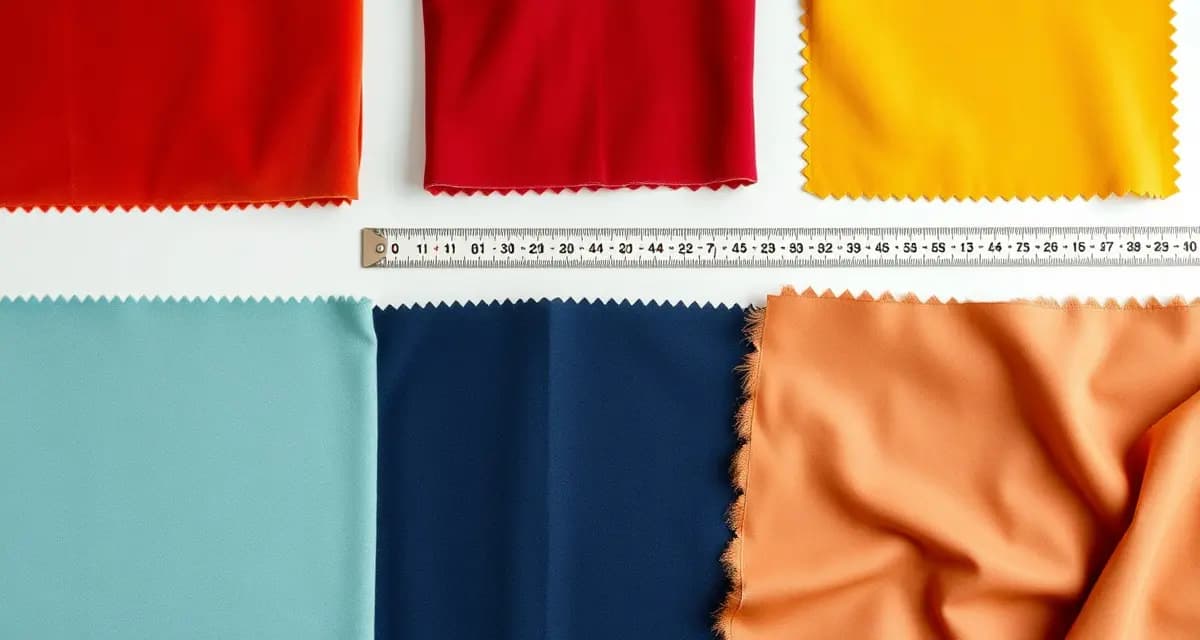
How Many Yards of Fabric for a Sofa: By Fabric Type
Velvet on a standard 3-cushion sofa needs 14-16 yards, compared to 12-14 yards for a solid flat-weave fabric. The difference comes from nap direction, every panel must run the same way, and that adds 10-20% to all velvet jobs. Large-pattern fabrics need even more: 18-22 yards for the same sofa when the repeat is 12 inches or larger.
Yardage depends on three factors: fabric type, the sofa's style and cushion count, and the pattern repeat if applicable. Here's the breakdown by material.
TL;DR
- Sofa Fabric Type yardage depends on fabric width, construction details, pattern repeat, and nap direction.
- Plain 54-inch fabric requires a baseline calculation plus 10-15% waste allowance for a standard sofa fabric type job.
- Patterned fabric adds 20-35% to base yardage depending on repeat size and the number of cutting zones that must align.
- Directional fabrics add 15-25% over plain fabric because layout optimization is restricted by nap direction.
- Always verify fabric width before finalizing yardage; COM fabric often comes in non-standard widths.
- Calculating yardage at the quote stage, not mid-job, eliminates reorders and protects your profit margin.
Yardage by Fabric Type: 3-Cushion Standard Sofa
| Fabric Type | Yardage Range | Why |
|---|---|---|
| Solid flat-weave (cotton, linen, chenille) | 12-14 yards | Standard layout, no repeat, no nap direction |
| Small pattern (repeat under 6") | 13-15 yards | Minor cutting waste for matching |
| Medium pattern (repeat 6-12") | 15-18 yards | Moderate repeat matching waste |
| Large pattern (repeat over 12") | 18-22 yards | Significant offset cutting and centering waste |
| Velvet | 14-16 yards | Nap direction adds 10-20% over solid yardage |
| Chenille with pile | 14-16 yards | Same nap direction consideration as velvet |
| Boucle | 13-15 yards | Slight extra for wider seam allowances |
| Performance fabric (Crypton, Revolution) | 12-14 yards | No nap, solid or small pattern, standard yardage |
| Outdoor/marine fabric | 12-14 yards | Same as solid; most outdoor fabrics are solids or small patterns |
These ranges are for a standard 3-cushion sofa with a T-cushion configuration. Your specific sofa may vary depending on the style, a Chesterfield with tufted back panels needs more fabric than a simple Lawson.
Leather: Hides, Not Yards
Leather is sold by the hide, not by the yard. A standard sofa requires 18-22 square feet of coverage, and individual hides average 45-55 square feet. That means 2-3 hides for most sofas, but always calculate by square footage required plus waste:
- Standard 3-cushion sofa: 18-22 square feet of usable coverage needed
- Add 20-25% for waste (skiving, edge trim, irregular hide shape)
- At 50 sq ft average per hide: 2 hides for most standard sofas, 3 hides for larger pieces or hides with more waste areas
Never quote a leather job by yardage calculation. Always work from hide count.
How Cushion Count Affects Yardage
Each additional cushion adds roughly 1-1.5 yards of fabric. A 4-cushion sofa with a large pattern might need 20-24 yards. A 2-cushion sofa in solid fabric might come in at 10-12 yards.
Count your cushions before estimating:
- Seat cushions (each): 2-3 yards
- Back cushions (each): 1.5-2 yards
- Throw pillows (if including): 0.5-1 yard each
Why Velvet Needs More Fabric
Velvet has a pile that runs in one direction. If you cut panels with the pile running different ways, some panels will appear lighter and some darker depending on the angle of light, a visible flaw once the piece is covered.
To prevent this, every panel is cut with the pile running in the same direction. On a large piece with many panels, this means you can't use the offcuts from one panel to fill in another if doing so would reverse the pile direction. The result is more waste than solid fabric, which is why velvet always needs more yardage.
The same logic applies to any fabric with a directional nap: chenille with pile, cut velvet, and some heavily textured weaves.
Pattern Repeat and Why It Costs Extra Yardage
When a fabric has a pattern repeat, each panel must be cut so the pattern aligns when the piece is assembled. A 12-inch repeat means each cut must start at the same point in the pattern as the previous one, any leftover fabric between the repeat start points is waste.
On a sofa with 10-12 major panels, a 12-inch repeat creates significant cumulative waste. That's why large-pattern sofas can require 6-8 more yards than the same sofa in solid fabric.
Related Articles
FAQ
How many yards of velvet for a sofa?
A standard 3-cushion sofa in velvet requires 14-16 yards. The extra yardage over solid fabric (which needs 12-14 yards) comes from nap direction requirements, every panel must run the same way, which limits how you can use offcuts and increases cutting waste by 10-20%. For a larger sofa with 4 seat cushions or a long-back design, budget 16-18 yards of velvet.
How many yards of patterned fabric for a sofa?
Pattern repeat determines yardage. Small repeats (under 6 inches) add only 1-2 yards over the base solid requirement, bringing a standard sofa to 13-15 yards. Medium repeats (6-12 inches) need 15-18 yards. Large repeats (over 12 inches) need 18-22 yards for the same sofa. This is why many upholsterers ask clients to confirm the repeat before finalizing a quote, the pattern can change the fabric cost by $200-600 on a sofa job.
How many hides of leather for a sofa?
Most standard 3-cushion sofas require 2-3 hides of leather. Individual hides average 45-55 square feet, and a sofa typically needs 18-22 square feet of usable coverage plus 20-25% for waste (irregular hide shapes, edge margins, skiving). For large sofas or leather with significant surface defects requiring more selective cutting, plan for 3 hides. Always calculate from square footage needed, not yard equivalents, leather hide waste behaves differently from cut-yardage fabric waste.
What is the biggest factor in yardage variation for this piece?
Pattern repeat is the biggest source of yardage variation. On plain fabric, the baseline calculation plus a 10-15% waste buffer is usually sufficient. Add a 13-inch pattern repeat and you may need 15-20% more. Add a 27-inch pattern repeat and the additional yardage can be 25-35% over the plain fabric calculation. Nap direction is the second-largest factor, typically adding 15-25% over plain fabric because layout optimization is restricted.
What should I do if I run short on fabric mid-job?
Stop cutting immediately when you realize you may run short. Calculate exactly how much additional fabric you need before contacting the supplier or client. If reordering from the same dye lot is possible, do so as quickly as possible because dye lots change. If a dye lot match is not available, contact the client before proceeding; visible dye lot differences on the same piece are unacceptable and must be disclosed. Document the situation and response in writing.
Sources
- National Upholstery Association
- Association of Master Upholsterers and Soft Furnishers (AMUSF)
- Upholstered Furniture Action Council (UFAC)
- Furniture Today (trade publication)
Get Started with StitchDesk
Getting yardage right on sofa type jobs is the difference between a profitable quote and an expensive reorder. StitchDesk's fabric calculator accounts for all the variables that cause errors: pattern repeat by zone, nap direction, fabric width, and cushion configuration. Start a free trial and see how accurate yardage calculation affects your bottom line.