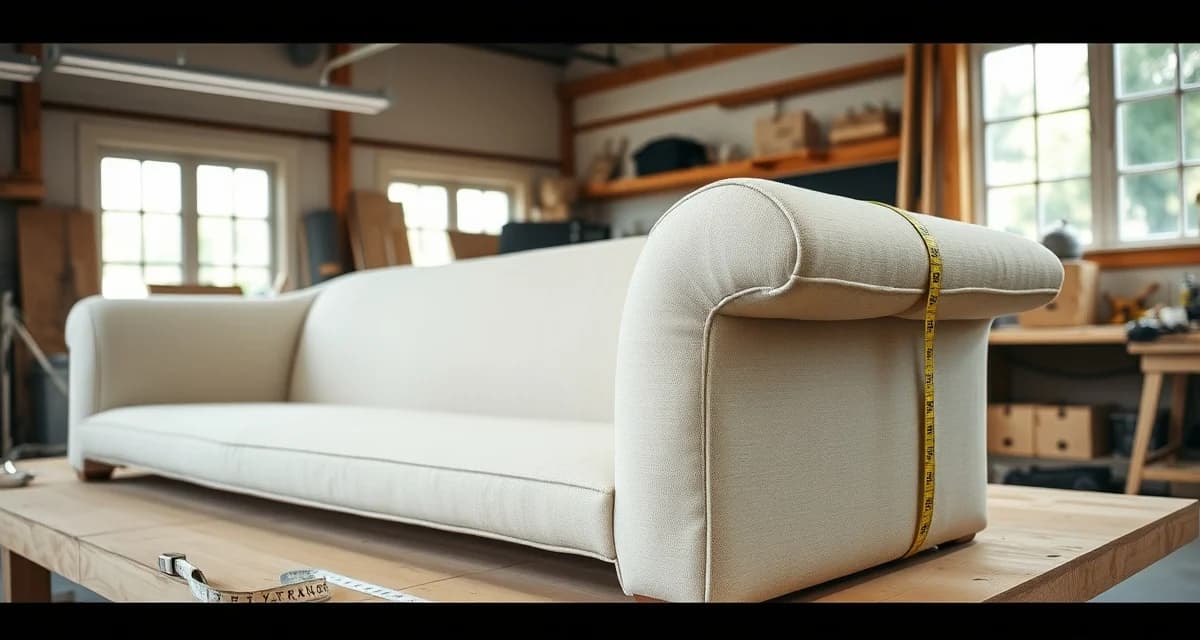
Lawson Sofa Fabric Yardage: The Standard Sofa Calculation Baseline
Every upholstery professional needs a reliable reference point. For sofa yardage, that reference point is the Lawson sofa. It's not the most common sofa style by name recognition, but it defines what "standard sofa construction" means in upholstery terms. When you hear "a 90-inch sofa takes about 14 yards," that's a Lawson estimate.
Once you know your Lawson numbers cold, you can calibrate every other sofa style against them. That's what professionals do. A Chesterfield is a Lawson plus rolled arms plus tufting. A camelback is a Lawson plus hump back waste. A Tuxedo is a Lawson with slightly different arm proportions. The Lawson is the baseline.
TL;DR
- Lawson Sofa yardage depends on fabric width, construction details, pattern repeat, and nap direction.
- Plain 54-inch fabric requires a baseline calculation plus 10-15% waste allowance for a standard lawson sofa job.
- Patterned fabric adds 20-35% to base yardage depending on repeat size and the number of cutting zones that must align.
- Directional fabrics add 15-25% over plain fabric because layout optimization is restricted by nap direction.
- Always verify fabric width before finalizing yardage; COM fabric often comes in non-standard widths.
- Calculating yardage at the quote stage, not mid-job, eliminates reorders and protects your profit margin.
What Is a Lawson Sofa?
The Lawson sofa is defined by its straight, squared-off arms that are lower than the sofa back. The back is flat and upright. The cushions are typically box-style, loose seat cushions and often loose back cushions. The profile is clean and rectangular, with no rolled arms, curved backs, or dramatic shaping.
This straightforward geometry is exactly what makes it the ideal baseline. There's no curve waste. No tufting calculation. No unusual panel shapes. The Lawson gives you the purest measurement of what standard flat panels cost you in yardage, which makes it the best comparison reference for any piece that deviates from that standard.
Lawson Sofa Yardage by Size
These figures assume 54-inch solid fabric, standard seam allowances, and typical tuck-in allowances.
| Sofa Length | Tight-Back | Pillow-Back |
|---|---|---|
| 72 inches (2 cushions) | 10-12 yards | 13-15 yards |
| 84 inches (2-3 cushions) | 12-14 yards | 15-18 yards |
| 90 inches (3 cushions) | 13-15 yards | 16-19 yards |
| 96 inches (3-4 cushions) | 14-16 yards | 18-21 yards |
| 108 inches (4 cushions) | 15-18 yards | 19-23 yards |
A 90-inch Lawson sofa uses 12 to 14 yards for a tight-back configuration, this is the number professional upholsterers use as their mental reference point for all sofa estimates.
At 60-inch fabric, reduce each range by 1 to 2 yards. The wider fabric makes the most difference on the inside back and outside back panels.
Why the Lawson Is the Professional Reference Point
When you're on the phone with a customer who's asking "roughly how much fabric do I need," you need a number you can give quickly. The Lawson baseline gives you that number, and then you can add premiums based on what you see when you look at the piece.
Here's how professionals use the Lawson baseline:
Chesterfield: Lawson + 4-6 yards (rolled arms + tufting)
Camelback: Lawson + 1-2 yards (hump back waste)
Tuxedo: Lawson baseline (similar construction, slight arm variations)
English rolled arm: Lawson + 1-2 yards (rolled arms without tufting)
Track arm: Lawson baseline or slightly under (flatter arm profile)
The Lawson isn't just a yardage estimate. It's a mental model for sofa construction that lets you quickly identify what's different about any sofa and price that difference accurately.
Panel Breakdown: Lawson Sofa
The Lawson's simple geometry means every panel is a rectangle or close to it.
Back:
- Inside back (full sofa width x back height + tuck-in)
- Outside back (full sofa width x back height, no tuck-in)
Arms (x2):
- Inside arm (arm depth x arm height + tuck-in at bottom)
- Outside arm (arm depth x arm height)
- Arm top cap (arm width x arm depth)
- Arm front (arm width x arm height)
Seat:
- Deck (full sofa seat width x seat depth, often in decking fabric)
- Front border/apron (full sofa width x border height)
Seat cushions (per cushion):
- Top face (cushion width + seam allowance x cushion depth + seam allowance)
- Bottom face (same)
- Front boxing (cushion width x boxing height)
- Side boxing (cushion depth x boxing height, x2)
- Zipper panel or back boxing (cushion width x boxing height)
Back cushions (per cushion, if pillow-back):
- Same set as seat cushions but typically shorter in depth
Welt: Calculate linear welt footage and convert to yardage
The cleanness of this panel list is the Lawson's advantage. Every panel is a rectangle. You can lay them out on a standard yardage calculation with minimal waste. That's what makes it the best baseline, it represents minimum necessary yardage for a given sofa size.
How to Measure a Lawson Sofa
Inside back: Measure the height from the seat deck to the top of the back, plus 4 inches for top tuck-in. Width from inner arm to inner arm.
Outside back: Same width. Height from bottom of back to top of back. No tuck-in needed.
Inside arm: Height from the seat deck to the top of the arm, plus 3 inches tuck-in allowance at the bottom. Depth from the arm front to the back rail.
Outside arm: Same depth as inside arm. Height from the bottom rail to the top of the arm.
Arm top cap: Width of arm from inside face to outside face. Depth from front edge to back rail.
Arm front: Width of arm. Height from bottom rail to top of arm.
Front border: Full sofa width. Height from deck to bottom of arm or skirt line.
Seat cushion face: Width of cushion (sofa seat width ÷ number of cushions, minus seam allowances where cushions meet). Depth of cushion.
Lawson vs Other Sofa Styles: Yardage Comparison
This table shows how much each style adds to or subtracts from the Lawson baseline at 90 inches / 3 cushions.
| Style | Yardage vs Lawson |
|---|---|
| Lawson tight-back | 13-15 yards (baseline) |
| Tuxedo | Similar to Lawson |
| Track arm | Lawson -0.5 to -1 yard |
| English rolled arm | Lawson +1-2 yards |
| Camelback | Lawson +1-2 yards |
| Chesterfield | Lawson +4-6 yards |
| Mid-century (exposed frame) | Lawson -2-3 yards |
The Lawson is not the cheapest to upholster in terms of labor (that's a simple platform or slipper chair), but it's the fabric-efficient standard for sofas with loose cushions and full coverage construction.
Pattern Matching on a Lawson Sofa
Because the Lawson has flat, aligned panels, it's actually an excellent candidate for precise pattern matching. The inside back, seat cushion faces, and front border all sit in a visual line from the viewer's perspective. Centering a pattern on the inside back and matching it through to the seat cushions requires planning, but the rectangular geometry makes the math clean.
For a Lawson with a 9-inch pattern, budget 1.5 to 2 yards of pattern waste over the solid fabric calculation. For a 12-inch pattern, budget 2 to 3 yards.
Using the Sofa Fabric Yardage Calculator
The sofa calculator includes the Lawson as one of its default style configurations. Enter your sofa dimensions and cushion count to get a panel-by-panel breakdown. For a complete guide to how different sofa styles affect yardage, the Sofa Reupholstery Yardage Guide covers all major sofa configurations with comparisons against the Lawson baseline.
How many yards for a Lawson sofa?
A 90-inch 3-cushion Lawson sofa in solid 54-inch fabric needs 13 to 15 yards for a tight-back configuration and 16 to 19 yards for a pillow-back. This is the professional reference estimate for standard sofa yardage.
What is a Lawson sofa?
A Lawson sofa has squared, low-profile arms (lower than the back height), a flat upright back, and box-cushion seating. It's defined by its clean, rectangular geometry. The Lawson is often described as the "standard" sofa because its proportions are common to many manufactured sofas across the 20th and 21st centuries.
Why is the Lawson sofa the standard for yardage estimation?
The Lawson's rectangular panels represent minimum fabric use for a fully-upholstered sofa of its size. There's no curve waste, no tufting pull, no unusual shaping. That makes it the most efficient baseline for comparison. Any sofa style that adds complexity adds yardage relative to a Lawson, so knowing the Lawson number tells you where you're starting from.
What is the biggest factor in yardage variation for this piece?
Pattern repeat is the biggest source of yardage variation. On plain fabric, the baseline calculation plus a 10-15% waste buffer is usually sufficient. Add a 13-inch pattern repeat and you may need 15-20% more. Add a 27-inch pattern repeat and the additional yardage can be 25-35% over the plain fabric calculation. Nap direction is the second-largest factor, typically adding 15-25% over plain fabric because layout optimization is restricted.
What should I do if I run short on fabric mid-job?
Stop cutting immediately when you realize you may run short. Calculate exactly how much additional fabric you need before contacting the supplier or client. If reordering from the same dye lot is possible, do so as quickly as possible because dye lots change. If a dye lot match is not available, contact the client before proceeding; visible dye lot differences on the same piece are unacceptable and must be disclosed. Document the situation and response in writing.
FAQ
Sources
- National Upholstery Association
- Association of Master Upholsterers and Soft Furnishers (AMUSF)
- Upholstered Furniture Action Council (UFAC)
- Furniture Today (trade publication)
Get Started with StitchDesk
Getting yardage right on lawson sofa jobs is the difference between a profitable quote and an expensive reorder. StitchDesk's fabric calculator accounts for all the variables that cause errors: pattern repeat by zone, nap direction, fabric width, and cushion configuration. Start a free trial and see how accurate yardage calculation affects your bottom line.