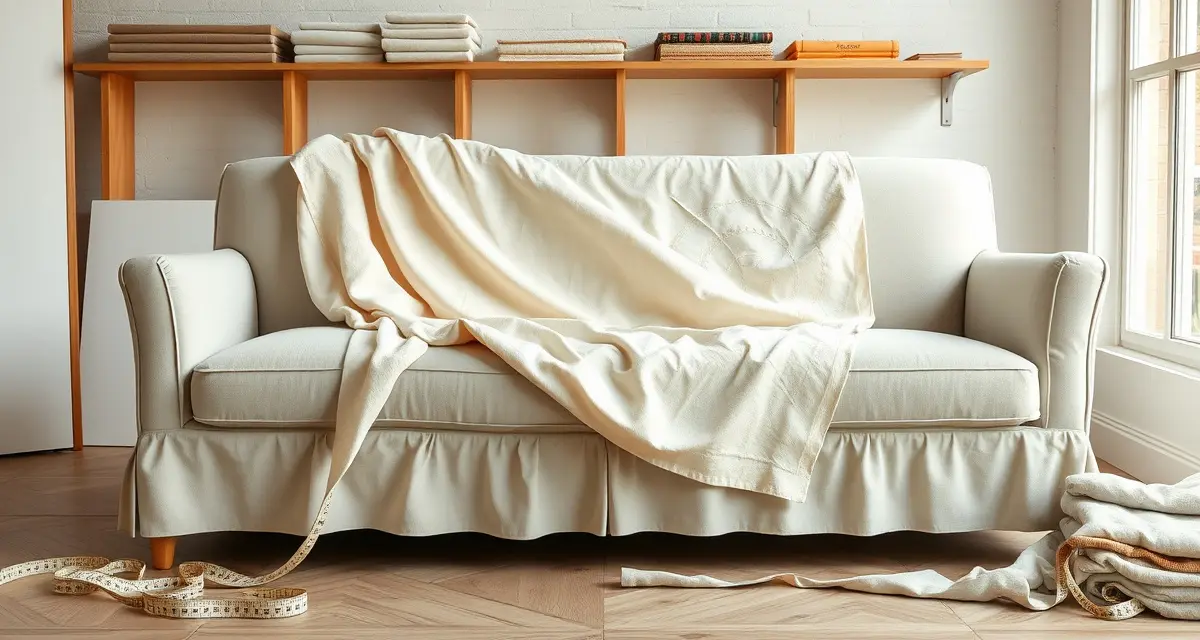
Skirted Sofa Fabric Yardage: Frame Yardage Plus Skirt in One Calculation
Shops that calculate skirt yardage separately from the sofa body often forget to combine them into one order. This sounds like a simple addition error, but in practice it happens because the skirt is calculated at a different stage of the quote, often as an afterthought at the end. You run the calculator for the sofa body, write down the number, price the labor, and then realize you forgot to add the skirt yardage to the total.
This guide covers how to calculate skirt yardage for each main skirt style and how to combine it with sofa body yardage for a single accurate order.
TL;DR
- For Sofa With Skirt yardage depends on fabric width, construction details, pattern repeat, and nap direction.
- Plain 54-inch fabric requires a baseline calculation plus 10-15% waste allowance for a standard for sofa with skirt job.
- Patterned fabric adds 20-35% to base yardage depending on repeat size and the number of cutting zones that must align.
- Directional fabrics add 15-25% over plain fabric because layout optimization is restricted by nap direction.
- Always verify fabric width before finalizing yardage; COM fabric often comes in non-standard widths.
- Calculating yardage at the quote stage, not mid-job, eliminates reorders and protects your profit margin.
The Three Main Skirt Styles
Each skirt style uses a different amount of fabric. They're not interchangeable in the yardage calculation.
Box pleat skirt: Fabric folds in a series of box pleats. Each box pleat requires 3x the pleat width in fabric. A 4-inch box pleat needs 12 inches of fabric per pleat. For a sofa with a 120-inch perimeter skirt run, a box pleat skirt uses approximately 2.5-3 times the linear run of the skirt perimeter.
Knife pleat skirt: All pleats face the same direction. Each knife pleat requires 2-2.5x the pleat width in fabric. Less fabric than box pleats but still considerably more than a gathered skirt in many configurations.
Gathered skirt: Evenly gathered across the full run. Typically requires 1.5-2x the finished length for adequate fullness. The simplest skirt to calculate.
Straight (banded) skirt: No pleats or gathering. Fabric runs flat from corner seam to corner seam. This is the lowest-yardage skirt option and is most common on contemporary-style sofas.
Calculating Skirt Length (The Perimeter)
Measure the skirt perimeter. On most sofas, the skirt runs on 3 sides (front and both sides) with the back either un-skirted or skirted to match. Confirm which sides the client wants skirted.
Example sofa: 84 inches wide, 36 inches deep
- Front: 84 inches
- Two sides: 36 inches each = 72 inches
- Total 3-side perimeter: 156 inches
Calculating Skirt Height
Measure from the bottom of the sofa frame (or wherever the skirt will attach) to the floor. This is typically 5-10 inches. Add 1 inch for header (where skirt attaches at top) and 1 inch for hem at bottom.
For a 7-inch floor clearance:
- Finished skirt height: 7 inches
- Cutting height: 9 inches (7 + 1 header + 1 hem)
Yardage by Skirt Style
Gathered skirt (156-inch perimeter, 9-inch cutting height):
- Fabric required: 156 x 1.75 (gathering ratio) = 273 inches linear fabric, divided by 54 inches fabric width = 5.06 cuts
- Each cut is 9 inches = 5.06 x 9 = 45.5 inches = 1.27 yards
- Skirt yardage: approximately 1.3-1.5 yards
Box pleat skirt (156-inch perimeter, 9-inch cutting height):
- Fabric required: 156 x 2.5 (box pleat ratio) = 390 inches linear fabric
- At 54-inch fabric: 7.2 cuts x 9 inches = 64.8 inches = 1.8 yards
- Skirt yardage: approximately 1.8-2.2 yards
Knife pleat skirt (156-inch perimeter, 9-inch cutting height):
- Fabric required: 156 x 2.0 (knife pleat ratio) = 312 inches linear fabric
- At 54-inch fabric: 5.8 cuts x 9 inches = 52 inches = 1.44 yards
- Skirt yardage: approximately 1.5-1.8 yards
Straight banded skirt (156-inch perimeter, 9-inch cutting height):
- Fabric required: 156 + 10% for corner seams = 172 inches
- At 54-inch fabric: 3.2 cuts x 9 inches = 28.8 inches = 0.8 yards
- Skirt yardage: approximately 0.8-1.0 yards
Combining Skirt and Body Yardage
Now the critical step: add the skirt yardage to the sofa body yardage for your total order.
A standard 3-cushion sofa body (with arms, back panels, seat cushions, and back cushions) typically requires 14-18 yards. Add skirt yardage on top:
| Sofa body | Straight skirt | Gathered skirt | Box pleat skirt | Total |
|---|---|---|---|---|
| 14 yards | +0.9 yards | +1.4 yards | +2.0 yards | 14.9-16 yards |
| 16 yards | +0.9 yards | +1.4 yards | +2.0 yards | 16.9-18 yards |
| 18 yards | +0.9 yards | +1.4 yards | +2.0 yards | 18.9-20 yards |
Order this combined total as a single fabric order from a single dye lot.
Pattern Matching on Skirted Sofas
If the fabric has a pattern, the skirt pattern needs to align with the sofa body panels it's adjacent to. The bottom of the sofa front panel and the top of the skirt front should have a consistent pattern relationship.
This requires:
- Cutting the skirt strips to start at the same point in the pattern repeat
- Adjusting skirt strip height to be a full multiple of the vertical repeat (if the repeat is 9 inches and the skirt cuts are 9 inches, you're fine; if the skirt needs 9.5 inches of cut height and the repeat is 9 inches, you need 18 inches per strip, doubling your skirt yardage)
For patterned skirted sofas, add 50-100% to your calculated skirt yardage for pattern matching waste.
Use the sofa skirt yardage calculator for precise skirt yardage by style. Then add to your sofa fabric yardage calculator output for the combined total order.
Frequently Asked Questions
How much fabric for a sofa with a skirt?
A skirted sofa requires the sofa body yardage (typically 14-18 yards for a standard 3-cushion sofa) plus the skirt yardage. Skirt yardage depends on style: a straight banded skirt adds 0.8-1 yard, a gathered skirt adds 1.3-1.5 yards, and a box pleat skirt adds 1.8-2.2 yards for a standard 3-side skirt run. Always calculate and add both elements as a single combined order from the same dye lot.
Does a pleated skirt take more fabric than a gathered skirt?
Box pleat and knife pleat skirts typically use more fabric than gathered skirts. A box pleat skirt uses approximately 2.5 times the finished skirt perimeter in fabric, while a gathered skirt typically uses 1.75 times. For a 156-inch perimeter skirt, a box pleat style uses roughly 0.5-0.7 yards more than gathered. Both use considerably more fabric than a straight banded skirt, which uses minimal excess beyond the linear perimeter.
What fabric is best for a skirted sofa?
Skirts work best with fabrics that drape well. Linen, cotton, cotton-linen blends, and medium-weight upholstery fabric with some body (not too stiff, not too limp) drape cleanly for pleated and gathered skirts. Very stiff fabrics (some jacquards, heavy brocades) make box pleats that hold their shape but may look bulky on gathered skirts. Velvet and similar pile fabrics work for formal skirted sofas when the skirt style is straight or box pleated, but gathered velvet is difficult to execute cleanly.
What is the biggest factor in yardage variation for this piece?
Pattern repeat is the biggest source of yardage variation. On plain fabric, the baseline calculation plus a 10-15% waste buffer is usually sufficient. Add a 13-inch pattern repeat and you may need 15-20% more. Add a 27-inch pattern repeat and the additional yardage can be 25-35% over the plain fabric calculation. Nap direction is the second-largest factor, typically adding 15-25% over plain fabric because layout optimization is restricted.
Sources
- National Upholstery Association
- Association of Master Upholsterers and Soft Furnishers (AMUSF)
- Upholstered Furniture Action Council (UFAC)
- Furniture Today (trade publication)
Get Started with StitchDesk
Getting yardage right on yardage for sofa with skirt jobs is the difference between a profitable quote and an expensive reorder. StitchDesk's fabric calculator accounts for all the variables that cause errors: pattern repeat by zone, nap direction, fabric width, and cushion configuration. Start a free trial and see how accurate yardage calculation affects your bottom line.