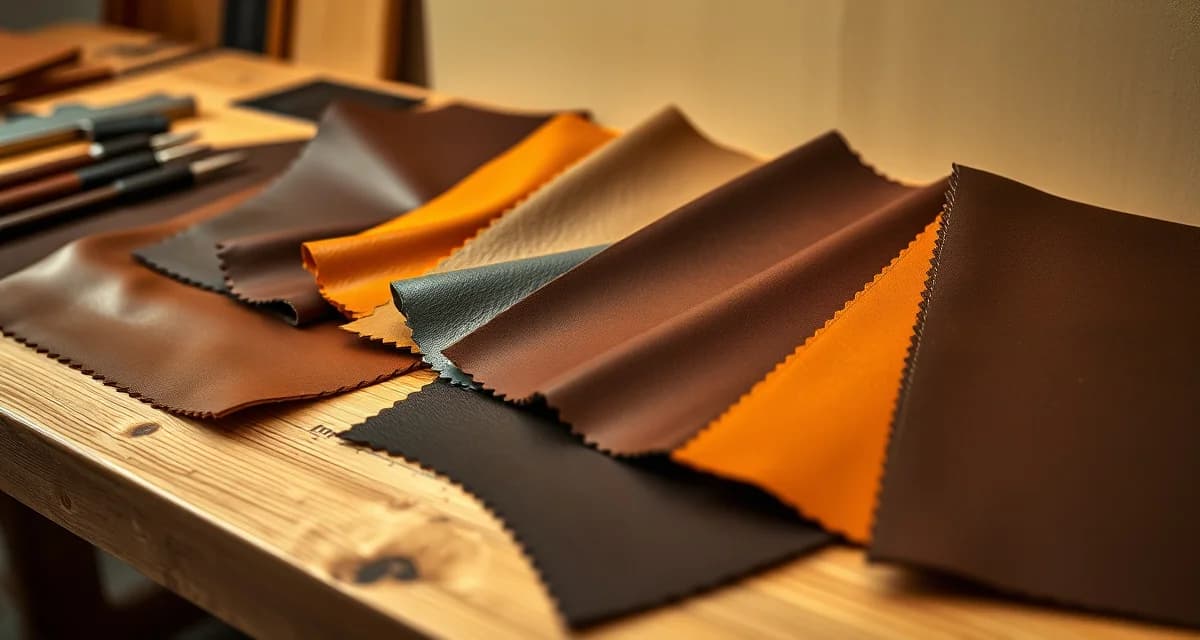
Leather Sofa Reupholstery Yardage: Hides Not Yards
If you came up in fabric upholstery and you're moving into leather work, the first thing to understand is this: you don't order leather by the yard. You order by the hide. And the conversion from yardage to hide count is not always obvious.
This matters because most sofas need 4 to 5 hides, and a single-hide error in either direction either costs you money on overstock or sends you scrambling for a reorder in a matching dye lot. Neither is fun.
Here's how to think about leather yardage correctly.
TL;DR
- Leather Sofa yardage depends on fabric width, construction details, pattern repeat, and nap direction.
- Plain 54-inch fabric requires a baseline calculation plus 10-15% waste allowance for a standard leather sofa job.
- Patterned fabric adds 20-35% to base yardage depending on repeat size and the number of cutting zones that must align.
- Directional fabrics add 15-25% over plain fabric because layout optimization is restricted by nap direction.
- Always verify fabric width before finalizing yardage; COM fabric often comes in non-standard widths.
- Calculating yardage at the quote stage, not mid-job, eliminates reorders and protects your profit margin.
Why Leather Is Different
A hide is not a neat rectangle. It's the shape of the animal it came from, a large, irregular oval with a relatively dense center and progressively softer, less usable area toward the legs, belly, and neck. The center of the hide (the "butt" section) is the densest, most consistent leather. The belly area is looser and stretchier, usually not suitable for seat cushions or other high-use surfaces.
Depending on the grade and source of the hide, you might only use 60 to 75 percent of the total hide area for primary upholstery surfaces. The rest gets used for secondary areas, welt, back panels, or it's waste.
A standard full-hide for furniture work runs roughly 45 to 55 square feet. Some hides go up to 60 square feet. Higher grades are often selected for consistent size and usable area, worth paying for on a sofa that you want to match well.
Converting Sofa Yardage to Hide Count
To convert your fabric yardage estimate to leather hides, you need to think in square feet rather than linear yards.
One yard of 54-inch fabric = 13.5 square feet.
So a 3-cushion sofa that would take 14 yards of 54-inch fabric represents roughly 189 square feet of coverage. If you're getting 55 usable square feet per hide (accounting for belly and brand loss), that's about 3.4 hides, which rounds to 4 hides with buffer.
In practice, most full-size sofas with cushions need 4 to 5 hides. Smaller loveseats: 3 to 4 hides. Sectionals can run 8 to 12 hides depending on configuration.
The StitchDesk leather upholstery yardage calculator handles this conversion directly, you input sofa dimensions and cushion count, and it outputs both square footage and estimated hide count based on the hide size you specify.
Choosing the Right Hide Size
Larger hides give you more flexibility in cutting. When you're working on sofa backs or cushion panels that need a single uninterrupted piece of leather, a smaller hide may not give you enough coverage without a seam. That seam may be structurally fine, but clients often expect smooth cushion faces.
If your sofa has seat cushions wider than 30 inches, make sure your hides are large enough to cut the cushion face from a single piece. A 45-square-foot hide may not get you there. A 55-square-foot hide usually does.
Talk to your supplier about average hide sizes in the grade you're ordering. Don't assume, ask for the typical size range and let that inform your hide count.
Grade and Color Consistency
When ordering multiple hides for the same job, they need to come from the same dye lot. Leather color can vary more between dye lots than fabric, and the variation is more obvious on leather because the material shows sheen differences in addition to color differences.
If you're working with an unusual color, bright teal, forest green, or any custom-dyed shade, order all the hides you need for the job at once. Coming back to reorder 6 weeks later almost never yields a perfect match.
For standard colors (black, cream, tan, cognac, navy), most major suppliers maintain consistent stock, but it's still worth confirming dye lot when you place your order.
Panel Placement on the Hide
Work from the center of the hide outward. Put your most visible, most load-bearing panels, seat cushion faces, inside back panels, front arms, in the dense center section. Use the shoulder and belly areas for the outside back, platform, and secondary surfaces.
For cushion boxing strips, belly area leather usually works fine since those panels aren't subject to the same compression loading. Welt can come from anywhere with consistent grain.
Map out your cuts on paper before you start. Leather doesn't forgive waste the way fabric does, you can't just buy another yard. You're waiting for another matching hide.
Frequently Asked Questions
How many leather hides for a sofa?
Most standard 3-cushion sofas require 4 to 5 full hides. A smaller 2-cushion sofa or loveseat typically needs 3 to 4. The variation depends on hide size (45 to 55 square feet is common), the sofa's dimensions, cushion count, and how much of each hide is usable. Always have your supplier confirm average hide size before you finalize your count.
How do I convert sofa yardage to leather hide count?
Multiply your fabric yardage by the fabric width in inches, then divide by 144 to get square feet. Take that square footage and divide by the usable area per hide (typically 60 to 75 percent of stated hide area). That gives you your minimum hide count, round up and consider adding one additional hide as a buffer on complex jobs.
What is the best leather for sofa reupholstery?
Full-grain leather is the most durable and develops the best patina over time, but it's expensive and requires careful handling during upholstery. Top-grain leather is the most common choice for professional furniture work, consistent surface, good durability, and easier to work with than full-grain. Avoid bonded or reconstituted leather for any upholstery job; it doesn't hold up to the stress of seaming and stapling.
What is the biggest factor in yardage variation for this piece?
Pattern repeat is the biggest source of yardage variation. On plain fabric, the baseline calculation plus a 10-15% waste buffer is usually sufficient. Add a 13-inch pattern repeat and you may need 15-20% more. Add a 27-inch pattern repeat and the additional yardage can be 25-35% over the plain fabric calculation. Nap direction is the second-largest factor, typically adding 15-25% over plain fabric because layout optimization is restricted.
Related Articles
Sources
- National Upholstery Association
- Association of Master Upholsterers and Soft Furnishers (AMUSF)
- Upholstered Furniture Action Council (UFAC)
- Furniture Today (trade publication)
Get Started with StitchDesk
Getting yardage right on leather sofa jobs is the difference between a profitable quote and an expensive reorder. StitchDesk's fabric calculator accounts for all the variables that cause errors: pattern repeat by zone, nap direction, fabric width, and cushion configuration. Start a free trial and see how accurate yardage calculation affects your bottom line.