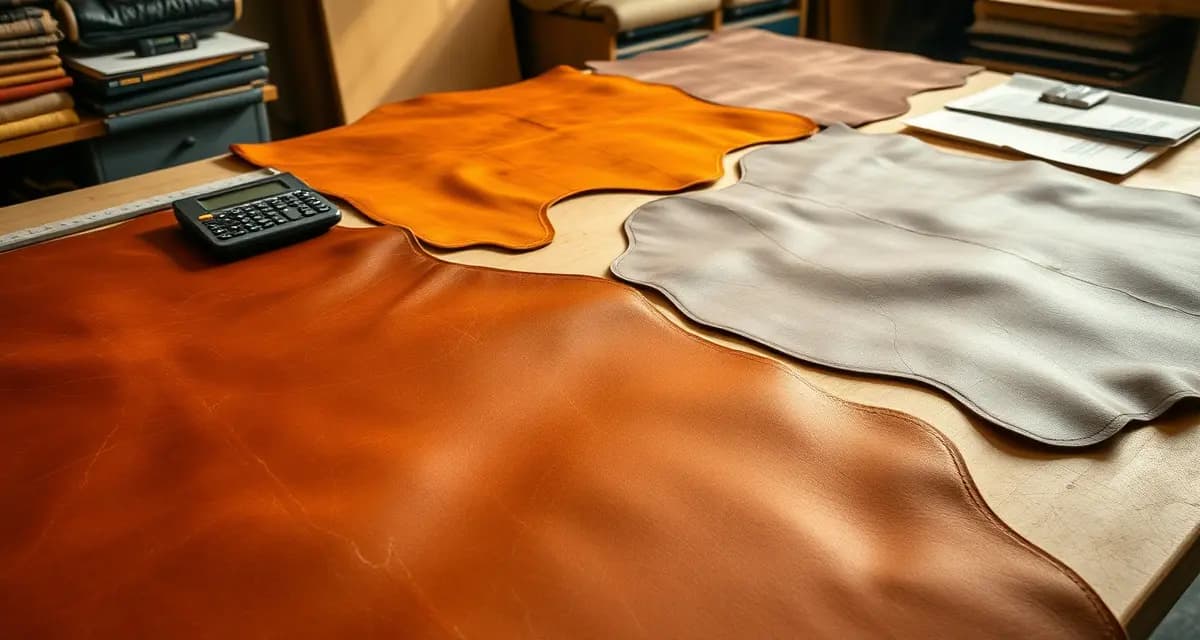
Leather Upholstery Yardage Calculator: Hides Not Yards Made Simple
Leather doesn't come in yards. It comes in hides. And leather hide waste averages 15-25% due to irregular shape. Shops that order by square footage alone overbuy or, more often, end up short on usable leather when they realize how much of each hide they can't actually use.
The leather upholstery yardage calculator that actually works converts your square footage needs into hide count, accounting for brand areas, belly areas, and the irregular perimeter shape of each hide. No standard FSM tool handles this conversion, and that gap causes expensive mistakes on leather jobs.
TL;DR
- Accurate yardage calculation for leather upholstery jobs prevents costly fabric shortfalls and over-ordering that erode margin.
- Pattern repeats are the most common source of yardage errors; always calculate each cutting zone separately, not as a flat percentage.
- Nap-direction fabrics (velvet, chenille, mohair) require 15-25% more yardage than the same job in plain fabric.
- Fabric width significantly affects yardage: the difference between 54-inch and 60-inch fabric can be 1-2 yards on the same piece.
- Always add a 10-15% buffer on plain fabric and 15-20% on patterned fabric to account for cutting waste.
- Entering measurements accurately at the quoting stage eliminates the need to reorder mid-job.
Why Square Footage Is the Wrong Way to Think About Leather
When you calculate fabric yardage, you're working with a rectangle. Fabric comes on a roll in a consistent width, and the math is relatively predictable.
Leather hides are not rectangles. Each hide is the shape of the animal's skin, wider in the middle, narrowing toward the legs and neck, with irregular edges. A full hide might be 50-55 square feet total, but the usable area after accounting for the edges, belly area, and blemish cuts is typically 40-45 square feet.
And the usable area isn't uniformly good. The center back of the hide (called the "bend") is the tightest, most consistent leather. The belly area is looser and stretchier. For furniture that requires consistent leather behavior, including sofa backs, cushion tops, and arm panels, you want pieces from the bend, not the belly.
Understanding Hide Zones
The Bend (Best Quality)
The center back section of the hide, running from shoulder to rump along the spine. This is the most uniform area with the tightest grain and most consistent thickness. Use this for visible flat panels: seat tops, back panels, cushion fronts.
The Shoulder
The upper front section of the hide. Generally good quality, slightly less consistent than the bend. Suitable for inside arm panels and other mid-visibility areas.
The Belly
The lower sides of the hide. Looser, stretchier, and often slightly wrinkled. Best used for less-visible areas: deck fabric replacement, dust covers, interior boxing panels on cushions.
The Edges and Legs
Irregular-shaped areas near the legs and perimeter. Often blemished or too thin. This is the primary source of waste.
Converting Square Footage to Hides
A hide-to-piece converter is the right tool for this. Here's the manual method:
- Calculate your total square footage needed (from your piece-by-piece layout)
- Add 20% for hide waste (irregular edges, belly pieces used on non-visible areas)
- Divide by 40 (conservative usable square footage per full hide)
- Round up to nearest whole hide
Example for a 3-cushion sofa:
- Base square footage: 120 sq ft
- Add 20% waste: 144 sq ft
- Divide by 40 sq ft per hide: 3.6 hides
- Order: 4 full hides
This is why the leather upholstery guide always recommends ordering one extra hide on any job larger than a loveseat. The cost of a short hide, including emergency sourcing and color matching a new batch, far exceeds the cost of the extra hide.
Hide Sizes and What They Cover
| Hide Size | Total Sq Ft | Est. Usable Sq Ft | Best For |
|---|---|---|---|
| Half hide | 20-25 sq ft | 16-20 sq ft | Dining chairs, ottomans |
| Small full hide | 35-45 sq ft | 28-36 sq ft | Accent chairs, club chairs |
| Standard full hide | 45-55 sq ft | 36-44 sq ft | Loveseats, sofas (2+ hides) |
| Large full hide | 55-65 sq ft | 44-52 sq ft | Large sofas, sectional sections |
Color Matching Across Hides
Even hides from the same dye lot can vary slightly in color. For a sofa that requires 3-4 hides, always request hides from the same batch number and inspect them together in natural light before cutting.
On visible joints where a seam runs between pieces from different hides, cut so that pieces from the same hide are always adjacent. Don't let the center back cushion and the outside arm come from different hides if they'll be visually close to each other.
Use the fabric yardage calculator in leather mode to get a recommended hide count and sequencing suggestion for multi-hide jobs.
FAQ
How do I calculate leather hides for a sofa?
Start by calculating the total square footage of all fabric pieces (each cut panel measured individually). Add 20% for hide waste due to irregular shape and belly areas. Divide by 40 square feet (conservative usable area per hide). Round up to the next whole hide. For a standard 3-cushion sofa, expect 3-4 full hides depending on cushion style and arm complexity.
What is the difference between a full hide and a half hide?
A full hide is the complete skin from one animal, typically 45-65 square feet total. A half hide is cut longitudinally along the spine, yielding two pieces of roughly 20-30 square feet each. Half hides cost less per piece but more per usable square foot because each half includes belly area from both sides. For large furniture, full hides are almost always more economical. Half hides are practical for dining chairs, small ottomans, and accent pieces.
How do I account for leather hide irregularities?
Build a 20% waste factor into your calculation for irregular edges and belly areas. When laying out your cut plan, sketch the hide shape and mark which panels will come from the bend (center), shoulder, and belly zones. Assign high-visibility panels to the bend zone first, then use shoulder leather for mid-visibility areas. Reserve belly leather for non-visible panels. Always order one extra hide on any job larger than two hides.
Should I add a buffer to calculated yardage?
Yes. A 10-15% buffer is standard on plain fabric to account for cutting waste and minor errors. On patterned fabric, use 15-20% above the pattern-adjusted calculation. For COM fabric that cannot be reordered if you run short, some upholsterers increase the buffer to 20-25%. The cost of a modest buffer is far lower than the cost of sourcing additional fabric after cutting has begun.
Sources
- National Upholstery Association
- Association of Master Upholsterers and Soft Furnishers (AMUSF)
- Upholstered Furniture Action Council (UFAC)
- Furniture Today (trade publication)
Get Started with StitchDesk
Getting yardage right on leather upholstery jobs is the difference between a profitable quote and an expensive reorder. StitchDesk's fabric calculator accounts for all the variables that cause errors: pattern repeat by zone, nap direction, fabric width, and cushion configuration. Start a free trial and see how accurate yardage calculation affects your bottom line.