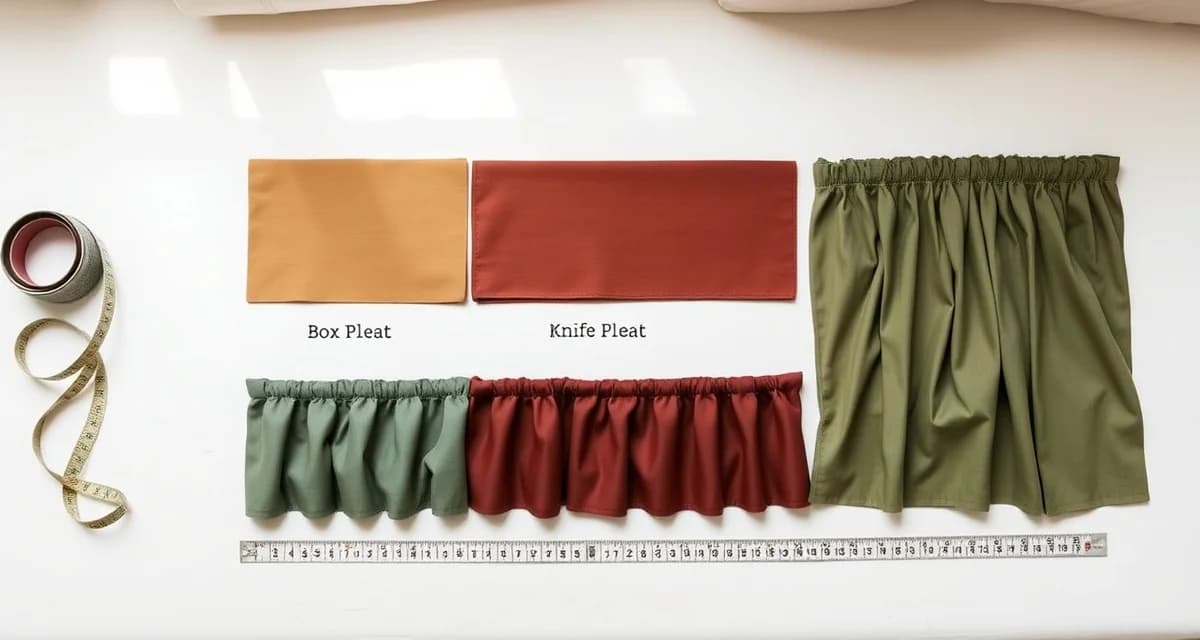
Sofa Skirt Fabric Yardage: Box Pleat Knife Pleat and Gathered
Sofa skirts look like a small detail from the outside. They're not. A gathered skirt on a standard sofa uses 4 to 5 yards of fabric, shops that estimate 2 yards have a 100 percent shortfall rate on this. Every time.
The reason is multiplication. Skirts use fabric multipliers based on how much extra material the pleat style requires. Gathered skirts need 2.5 times the linear inches of the skirt run. Knife pleats need 3 times. Box pleats need 2 times. These multipliers turn what looks like a few yards into a substantial fabric order.
TL;DR
- Sofa Skirt yardage depends on fabric width, construction details, pattern repeat, and nap direction.
- Plain 54-inch fabric requires a baseline calculation plus 10-15% waste allowance for a standard sofa skirt job.
- Patterned fabric adds 20-35% to base yardage depending on repeat size and the number of cutting zones that must align.
- Directional fabrics add 15-25% over plain fabric because layout optimization is restricted by nap direction.
- Always verify fabric width before finalizing yardage; COM fabric often comes in non-standard widths.
- Calculating yardage at the quote stage, not mid-job, eliminates reorders and protects your profit margin.
Understanding Skirt Multipliers
To determine skirt yardage, you need two inputs:
- Total linear inches of the skirt run (the perimeter of the sofa base that the skirt covers)
- The skirt style multiplier
Box pleat: Each pleat requires twice its visible width in fabric (the fold and return underneath). Multiplier: 2.0x. A box pleat sofa skirt on an 84-inch sofa (perimeter run of approximately 230 inches): 230 x 2.0 = 460 linear inches of fabric required.
Gathered skirt: Full gathers require 2.5 to 3 times the linear run length for full, flowing appearance. Multiplier: 2.5 to 3.0x. Same 230-inch perimeter: 230 x 2.5 = 575 linear inches minimum.
Knife pleat: Knife pleats are dense and require 3 times the linear run length. Multiplier: 3.0x. Same perimeter: 230 x 3.0 = 690 linear inches of fabric.
Converting Linear Inches to Yards
After applying the multiplier, divide by the fabric width to get the number of fabric strips needed, then multiply by the skirt drop length to get total yardage.
Example for a gathered skirt on an 84-inch sofa:
- Skirt drop height: 9 inches (plus 1 inch seam allowance at top, 1 inch hem = 11-inch cut width)
- Skirt perimeter: approximately 230 linear inches
- With 2.5x gather ratio: 575 linear inches needed
- Strips from 54-inch fabric: 575 ÷ 54 = 10.65 strips (round to 11)
- Each strip is 11 inches wide
- 11 strips x 11 inches = 121 inches of fabric length = 3.36 yards
Add 10 to 15 percent for seam finishing and matching: approximately 3.75 to 4 yards for the gathered skirt alone.
This is on top of the main sofa fabric calculation. The skirt yardage is in addition to your base sofa estimate, not included in it.
Why Skirt Yardage Gets Omitted
The most common error is treating the skirt as part of the base sofa calculation. It's not, it's an additional calculation that runs completely separately.
When you're pricing a sofa with a skirt, the calculation has two distinct components:
- Base sofa: inside back, outside back, arms, seat, cushions = 12 to 16 yards (depending on sofa size and style)
- Skirt: gathered, box, or knife pleat = 3 to 5 additional yards
Total for a skirted sofa: 15 to 21 yards. If you've been quoting skirted sofas at the same yardage as unskirted ones, you've been consistently underbidding your fabric cost.
Sofa Skirt Yardage Reference Table
These are approximate figures for an 84-inch 3-cushion sofa with a 9-inch skirt drop, in 54-inch solid fabric:
| Skirt Style | Fabric Multiplier | Approximate Skirt Yardage |
|-------------|------------------|--------------------------|
| Gathered (2.5x) | 2.5 | 3.75 to 4 yards |
| Gathered (3x) | 3.0 | 4.5 to 5 yards |
| Box pleat | 2.0 | 3 to 3.5 yards |
| Knife pleat | 3.0 | 4.5 to 5 yards |
For longer sofas (96 to 108 inches), add 0.5 to 1 yard to these estimates. For skirts with a pattern repeat, add the full pattern repeat per pleat group.
Adding a Skirt to a Sofa That Didn't Have One
Sometimes a client wants to add a skirt to a sofa that was originally designed without one. This is a legitimate alteration that also requires small frame modifications to create the attachment point for the skirt header.
From a fabric standpoint, calculate the skirt yardage the same way as any skirted sofa. Add the skirt fabric to the existing sofa fabric requirements. If you're recovering the whole sofa as well, the skirt yardage is a completely additive line item.
For detailed sofa yardage calculations including and excluding skirts, use the StitchDesk sofa reupholstery yardage guide alongside your skirt calculation.
Frequently Asked Questions
How much fabric for a sofa skirt?
It depends on the skirt style. For a gathered skirt on a standard 84-inch sofa: 3.75 to 5 yards of fabric depending on how full the gather is. For a box pleat skirt: 3 to 3.5 yards. For a knife pleat skirt: 4.5 to 5 yards. These figures are for the skirt only, add them to your base sofa fabric calculation.
What is the difference in yardage between box pleat and gathered skirts?
Box pleat uses approximately 2 times the linear run of the skirt for a multiplier of 2.0x. Gathered skirts typically use 2.5 to 3 times the linear run. On a standard sofa skirt run of 230 linear inches, that difference works out to approximately 1 to 1.5 yards of additional fabric for a gathered skirt over a box pleat. Knife pleat matches or exceeds gathered skirt yardage with a 3.0x multiplier.
How do I add a skirt to a sofa that didn't originally have one?
From a fabric standpoint, calculate the skirt yardage using the appropriate multiplier for your chosen pleat style, then add it to the sofa fabric estimate. From a construction standpoint, you'll need to create a header attachment point, either a separate fabric header tacked to the sofa base, or a modification to the base panel to provide a clean attachment surface. This is typically a small additional labor cost but well within standard upholstery capability.
What is the biggest factor in yardage variation for this piece?
Pattern repeat is the biggest source of yardage variation. On plain fabric, the baseline calculation plus a 10-15% waste buffer is usually sufficient. Add a 13-inch pattern repeat and you may need 15-20% more. Add a 27-inch pattern repeat and the additional yardage can be 25-35% over the plain fabric calculation. Nap direction is the second-largest factor, typically adding 15-25% over plain fabric because layout optimization is restricted.
What should I do if I run short on fabric mid-job?
Stop cutting immediately when you realize you may run short. Calculate exactly how much additional fabric you need before contacting the supplier or client. If reordering from the same dye lot is possible, do so as quickly as possible because dye lots change. If a dye lot match is not available, contact the client before proceeding; visible dye lot differences on the same piece are unacceptable and must be disclosed. Document the situation and response in writing.
Related Articles
Sources
- National Upholstery Association
- Association of Master Upholsterers and Soft Furnishers (AMUSF)
- Upholstered Furniture Action Council (UFAC)
- Furniture Today (trade publication)
Get Started with StitchDesk
Getting yardage right on sofa skirt jobs is the difference between a profitable quote and an expensive reorder. StitchDesk's fabric calculator accounts for all the variables that cause errors: pattern repeat by zone, nap direction, fabric width, and cushion configuration. Start a free trial and see how accurate yardage calculation affects your bottom line.