Dacron Batting and Polyester Wrap for Upholstery: When to Use It
Overwrapping foam with Dacron creates a round profile that reads as "softer" but reduces long-term cushion shape. That's the trade-off: Dacron wrap changes the visual profile of a cushion, and the thickness you choose determines whether that change is an asset or a liability for the specific piece.
Dacron batting (loose-fill or wrapped batting, typically polyester fiberfill) is used in upholstery to soften the transition between foam core and fabric, round the profile of cushions and arms, and provide a softer feel at the fabric surface. Getting the thickness right for the intended aesthetic is a professional specification decision.
TL;DR
- A well-managed upholstery shop tracks every job from intake to delivery with documented status at each stage.
- Fabric management, including ordering, receiving, storing, and allocating by job, is operationally the most complex part of running an upholstery shop.
- Client communication (status updates, completion photos, delivery scheduling) reduces inbound calls and increases repeat business.
- Shops that document their workflow can train new employees faster and maintain consistent quality during growth periods.
- Measuring key metrics (jobs per week, average ticket, fabric waste rate) is the foundation of informed business decisions.
- Professional shop management tools pay for themselves through reduced errors and faster quoting, typically within the first quarter.
What Dacron Batting Does
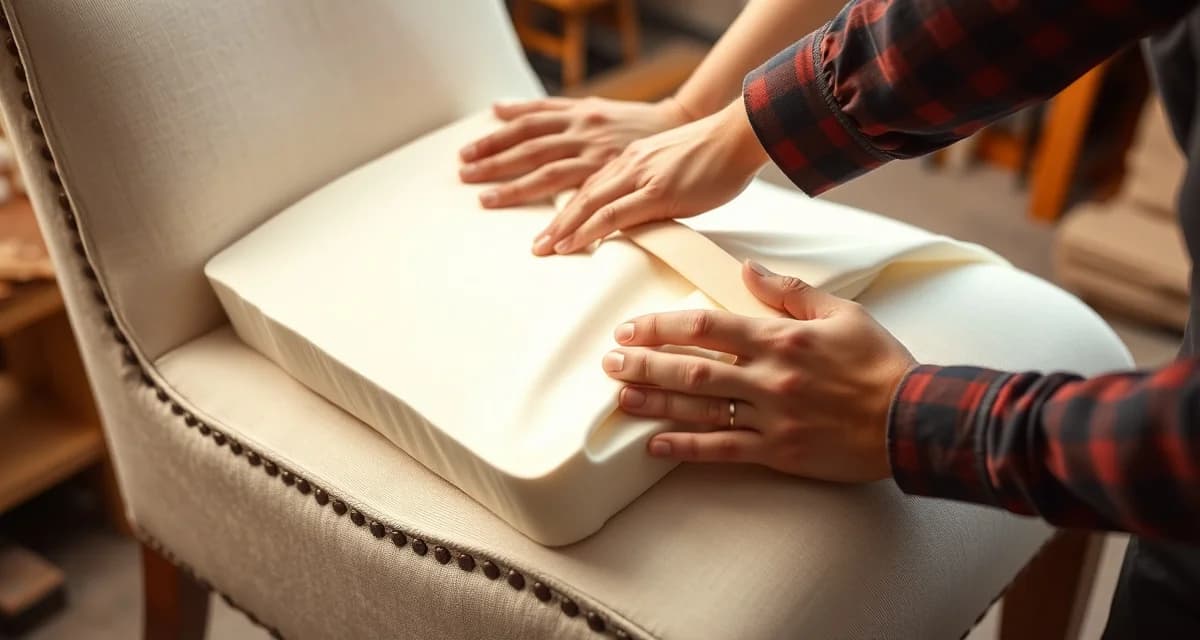
Dacron batting, a brand name that's become the generic term for polyester fiberfill batting in upholstery, serves several functions when wrapped around foam:
Visual profile: Dacron rounds the edges and corners of foam, softening the profile from angular to rounded. The thickness of the wrap determines how much rounding occurs.
Surface feel: Foam core under fabric feels firmer than the same foam wrapped in Dacron. The batting layer provides compression at the surface that many clients interpret as "softer."
Fabric smoothing: A thin Dacron layer under tight upholstery fabric helps smooth minor foam surface irregularities that might show through the fabric face.
Edge definition: Tightly wrapped Dacron can help define the edge of a cushion where the foam's cut edge might be too abrupt without softening.
Dacron Thickness Guide
The thickness you choose determines the visual character of the finished piece. Here are the standard options:
No Dacron wrap:
Best for: Contemporary, modern, architectural upholstery where sharp cushion edges and defined geometry are part of the design intent. Also for any fabric light or thin enough that Dacron underlayer would show as uneven texture.
Visual result: Clean, defined edges. Cushion appears structured and firm. Edges hold their profile precisely.
0.5-inch Dacron:
Best for: Residential pieces where slight edge softening is wanted without changing the overall cushion character. Arms, headboards, and any surface where the foam core would feel too abrupt at the surface.
Visual result: Slight rounding of edges. Surface feel slightly softer. Profile character largely maintained.
1-inch Dacron:
Best for: Traditional residential furniture where a rounded, "plumper" cushion appearance is expected. Sofas in traditional styles, wing chairs, and pieces where the round profile is part of the aesthetic.
Visual result: Noticeably rounder profile. Cushion reads as softer visually, even if the foam hardness hasn't changed. More traditional upholstery character.
Over 1.5 inches:
Use with caution. Thick Dacron wrap compresses significantly within 2-3 years and the cushion loses its defined shape faster than a moderately wrapped cushion. If the client wants a very soft look, higher-resilience foam at a lower ILD is a better long-term approach than very thick Dacron.
Application Techniques
Spray Adhesive Method
Lightly spray the foam surface with spray adhesive designed for foam. Apply the Dacron batting to the adhesive surface and smooth by hand. Trim excess batting at edges with scissors. The adhesive holds the batting in place during covering without permanently bonding it.
For cushions that are occasionally replaced or restuffed (removable cushion covers with foam inserts), light adhesive hold is preferable to no adhesive, it keeps the batting in position when the cushion insert is slid into the cover.
Wrapped Method (No Adhesive)
Wrap the Dacron continuously around the foam piece like a bandage, starting at one end and overlapping slightly as you progress. Secure the end with a few hand stitches or small patches of adhesive.
This method is faster than the adhesive method but produces a slightly less even distribution of the batting layer.
Top-Only Method
For some applications, seat cushions with defined top edges, headboards, applying Dacron to the top face only softens the sit surface without rounding the side edges.
When Not to Use Dacron
Tight, contemporary fabric work: If the fabric is a lightweight, smooth fabric and the design intent is a clean modern look, any Dacron layer shows as slight irregularity under the fabric.
Leather upholstery: Leather upholstery typically doesn't use Dacron wrap. The material cost of leather means clients expect a defined, clean profile. Leather hides foam surface irregularities well without the help of a batting layer.
Outdoor cushions: Dacron batting absorbs moisture and takes a long time to dry. For outdoor cushions, use outdoor-rated alternative batting or no batting at all with appropriate open-cell foam.
Dacron in Different Parts of the Piece
Seat cushions: 0.5-1 inch on top and bottom, no wrap on sides (the sides of a seat cushion don't bear contact).
Back cushions: 0.5 inch on face side and top, the face is what the back contacts and the top rounds the edge that's visible.
Arms: 0.5 inch on the arm cap (top of the arm) to round the edge that hands and objects contact.
Inside back panel: Thin batting (0.25-0.5 inch loose) between foam and fabric helps smooth the panel surface.
See the upholstery foam selection guide for how foam choice and Dacron work together. The how to reupholster sofa guide shows how batting is applied in the full sofa process.
FAQ
How do I use Dacron batting in upholstery?
Apply Dacron batting in the thickness appropriate for the piece's visual character: no wrap for contemporary pieces with sharp edges, 0.5-inch for slight softening, 1-inch for traditional rounded profiles. Secure with light spray adhesive or by wrapping continuously and securing the end. Apply to the foam faces that will make contact with the fabric, typically the top and face surfaces. Don't over-wrap: Dacron thicker than 1-1.5 inches compresses significantly within 2-3 years and causes the cushion to lose shape faster than a moderately wrapped cushion.
Does Dacron wrap make a difference on cushions?
Yes, in two ways: visual profile and surface feel. Dacron wrapping rounds the edges and corners of foam, changing the cushion from angular to rounded. A 1-inch wrap on a seat cushion produces a noticeably plumper, more traditional appearance than the same cushion without any wrap. At the surface, the batting layer adds softness under the fabric that the foam core alone doesn't provide. These are genuine differences that affect the finished piece's look and feel. The "right" amount is a specification decision based on the desired aesthetic.
How thick should polyester batting be for sofa cushions?
For traditional residential sofas with a rounded profile aesthetic: 1 inch on the top and bottom of seat cushions and the face of back cushions. For contemporary sofas with defined edges: no wrap or 0.5 inch on the top surface only. For any piece where long-term shape retention is the priority, stay at or under 1 inch, thicker batting compresses and the cushion loses its defined shape faster. If a very soft feel is the goal, the better approach is lower-ILD HR foam rather than very thick batting, which maintains the cushion's shape longer while achieving the soft feel through the foam specification.
How do I track multiple jobs at different stages simultaneously?
A job tracking system, whether paper-based or software-based, should give you a clear view of every active job's current stage at a glance. The minimum useful stages are: intake received, fabric ordered, fabric received, work in progress, quality check, ready for pickup/delivery, completed. Software that shows all active jobs on a single dashboard with current stage and due date eliminates the mental overhead of tracking multiple jobs manually.
Sources
- National Upholstery Association
- Association of Master Upholsterers and Soft Furnishers (AMUSF)
- Upholstered Furniture Action Council (UFAC)
- Furniture Today (trade publication)
Get Started with StitchDesk
A well-run upholstery shop is built on consistent processes, accurate information, and clear client communication. StitchDesk gives you the tools to manage all three from intake to delivery, without the overhead of paper systems or generic software that does not understand the trade. Start a free trial and see how StitchDesk fits your workflow.