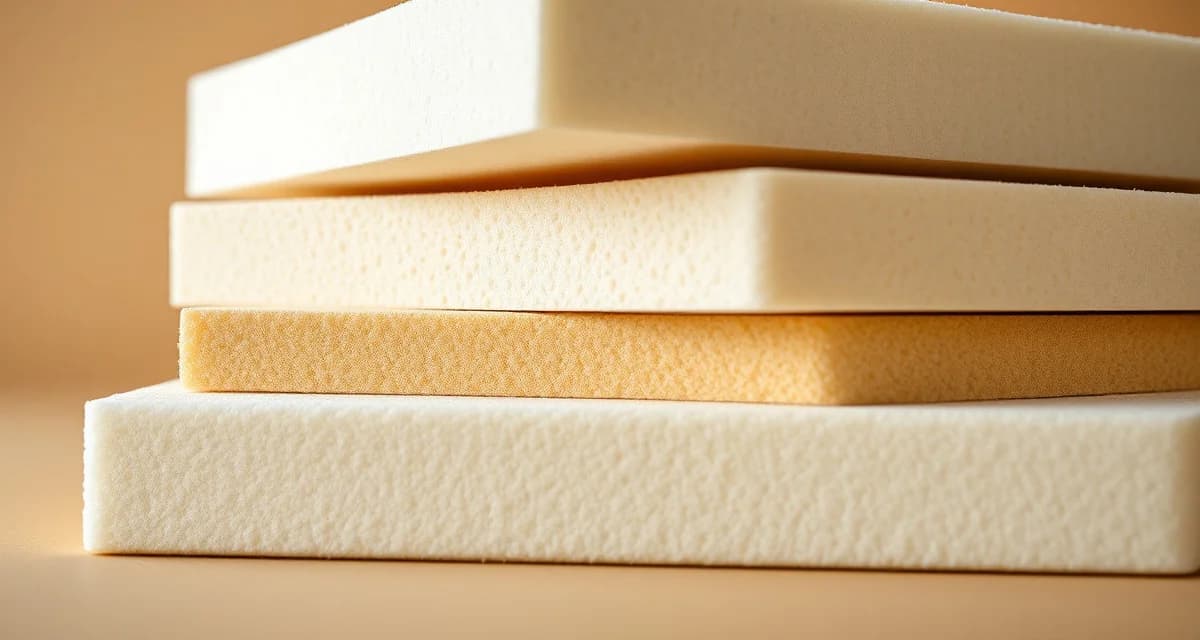
Upholstery Foam Types: HR Conventional and Memory Foam Compared
Using conventional foam in a seat cushion instead of HR foam compresses 30% within 2 years, visible sagging. That's not a quality failure in the upholstery work. It's a specification failure: using foam that wasn't engineered for the stress a seat cushion bears.
Foam selection is one of the decisions that most directly determines how a piece performs over its lifetime. The right foam for each application keeps cushions looking and feeling like new for 8-10 years. The wrong foam produces compression and sagging that clients notice and blame on the fabric or the shop.
TL;DR
- A well-managed upholstery shop tracks every job from intake to delivery with documented status at each stage.
- Fabric management, including ordering, receiving, storing, and allocating by job, is operationally the most complex part of running an upholstery shop.
- Client communication (status updates, completion photos, delivery scheduling) reduces inbound calls and increases repeat business.
- Shops that document their workflow can train new employees faster and maintain consistent quality during growth periods.
- Measuring key metrics (jobs per week, average ticket, fabric waste rate) is the foundation of informed business decisions.
- Professional shop management tools pay for themselves through reduced errors and faster quoting, typically within the first quarter.
How Foam Is Classified
Foam is classified by two numbers: density (weight per cubic foot, indicating durability) and ILD (Indentation Load Deflection, indicating firmness).
Density (D-value): Measures how much the foam weighs per cubic foot. Higher density = more material per cubic foot = more durable. A 1.5 lb/ft³ foam compresses faster than a 2.5 lb/ft³ foam under the same use.
ILD (Firmness): Measures how many pounds of force are needed to compress the foam 25% of its thickness. Lower ILD = softer feel. Higher ILD = firmer feel. A 25 ILD foam feels soft. A 40 ILD foam feels firm.
Durability (density) and firmness (ILD) are independent variables. You can have a soft foam that's highly durable (high density, low ILD) or a firm foam that compresses quickly (low density, high ILD).
Foam Types
HR Foam (High Resilience)
HR foam has a higher density and a more resilient cellular structure than conventional foam. When compressed (as in sitting), HR foam returns to its original shape more fully and more quickly than conventional foam. This return-to-shape characteristic is what gives HR foam its name.
Density: Typically 1.8-2.5 lb/ft³
ILD range: Available from 20 (soft) to 45 (firm)
Use for:
- Seat cushions on any furniture in regular use
- Chair seats
- Any cushion that bears body weight daily
HR foam is the correct specification for seat cushions. Using conventional foam in a seat produces visible sagging within 2 years under regular use because conventional foam doesn't recover as fully between compressions.
Conventional Foam (Standard Polyurethane)
Conventional foam is the baseline upholstery foam. Lower density than HR, adequate resilience for light-use applications, and significantly less expensive.
Density: Typically 1.2-1.8 lb/ft³
ILD range: Available from 18 (soft) to 50 (extra firm)
Use for:
- Back cushions that don't bear full body weight
- Arms and low-stress upholstered surfaces
- Headboards and decorative panels where sitting isn't the primary use
- Budget-conscious projects where the client understands the trade-off
Conventional foam in a back cushion performs acceptably for 5-8 years because back cushions see less compression force than seat cushions. In a seat cushion, conventional foam is not the right specification for anything beyond very light, occasional use.
Open-Cell Foam (Reticulated Foam)
Reticulated foam has a fully open-cell structure, the cell walls between air pockets have been removed, leaving only the skeletal cell structure. This creates foam that allows water to pass through completely rather than trapping it.
Use for:
- Outdoor cushions
- Marine cushions
- Any application where water drainage and rapid drying are required
Outdoor cushions with closed-cell foam absorb rain and take days to dry completely, creating mold conditions inside the cushion. Reticulated foam drains and dries in hours. It's not appropriate for indoor furniture because the skeletal structure doesn't provide the soft compression feel of intact-cell foam.
Memory Foam (Viscoelastic Foam)
Memory foam has a viscoelastic structure that deforms slowly under pressure and returns to shape slowly when pressure is removed. The slow deformation distributes pressure across a large contact area, which is why memory foam is used in mattresses and medical cushions where pressure point reduction matters.
Is memory foam appropriate for upholstery?
In most cases, no. Memory foam:
- Softens significantly at body temperature, changing the feel between when you first sit and after 5 minutes
- Absorbs heat, making it feel warm in summer
- Returns to shape slowly, which means a warm-room cushion looks indented until it recovers (minutes to hours depending on temperature)
- Doesn't maintain the cushion's designed profile as consistently as HR foam
For therapeutic seating (medical chairs, position-critical seating for users with specific needs), memory foam is sometimes appropriate. For standard residential or commercial upholstery, HR foam provides better long-term performance and a more consistent appearance.
The Right Foam for Each Application
| Application | Recommended Foam | Density | ILD |
|---|---|---|---|
| Sofa seat cushion | HR foam | 1.8-2.0 lb/ft³ | 28-35 |
| Chair seat cushion | HR foam | 2.0-2.5 lb/ft³ | 30-40 |
| Sofa back cushion | Conventional | 1.5-1.8 lb/ft³ | 25-35 |
| Headboard | Conventional | 1.5 lb/ft³ | 35-45 |
| Outdoor cushion | Reticulated (open-cell) | Standard reticulated | 25-35 |
| Arm pads | Conventional or HR | 1.5 lb/ft³ | 40-50 |
Dacron Wrap and Foam
A layer of Dacron batting (polyester fiberfill) over HR foam changes the visual profile of the cushion. Dacron adds softness at the immediate surface and rounds the cushion profile, making the edges less sharp-looking.
Dacron wrap thickness guide:
- No wrap: Modern, firm profile with sharp visible edges, appropriate for contemporary upholstery
- 0.5-inch Dacron: Slight softening at the surface, edges retain most of their definition
- 1-inch Dacron: Visibly rounder, softer-looking profile, appropriate for traditional residential pieces
Overwrapping (too thick Dacron) reduces cushion shape longevity, the batting compresses faster than HR foam and the cushion loses its defined form within a few years.
Related Articles
- Upholstery Staple Gun Guide: Manual Pneumatic and Electric Compared
- Automotive Upholstery Guide: Seats Headliners and Door Panels
- Automotive Upholstery Fabric Guide: Leather Vinyl and Alcantara
FAQ
What foam should I use for sofa cushions?
Use HR (high resilience) foam for seat cushions. HR foam at 1.8-2.0 lb/ft³ density with an ILD of 28-35 is the standard residential specification for sofa seats. The higher density and resilient cellular structure allow the foam to return to its original shape after compression, which is what prevents the sagging visible in cushions made with conventional foam. For back cushions, conventional foam at 1.5-1.8 lb/ft³ is acceptable, back cushions see less compression force and conventional foam performs adequately in that position for 5-8 years.
What is high resilience foam?
High resilience (HR) foam has a more resilient cellular structure than conventional polyurethane foam. When compressed under sitting pressure, HR foam springs back more fully and more quickly to its original shape. The "high resilience" classification indicates this return-to-shape characteristic, not just firmness. HR foam is classified by density (typically 1.8-2.5 lb/ft³, higher than conventional foam) and ILD (firmness). The combination of higher density and better resilience makes HR foam the appropriate specification for any upholstery application that bears body weight regularly.
Is memory foam good for upholstery?
For standard residential and commercial upholstery, memory foam is generally not the right choice. It softens significantly at body temperature, creating a feel that changes between sitting down and 5 minutes later. It retains heat, making furniture feel warm. It returns to shape slowly, so cushions look indented when warm rather than springing back immediately. For therapeutic applications, chairs for users with pressure-point concerns, medical seating, memory foam's slow compression and pressure distribution can be valuable. For typical upholstery, HR foam provides better long-term cushion performance and a more consistent appearance throughout the piece's life.
How do I track multiple jobs at different stages simultaneously?
A job tracking system, whether paper-based or software-based, should give you a clear view of every active job's current stage at a glance. The minimum useful stages are: intake received, fabric ordered, fabric received, work in progress, quality check, ready for pickup/delivery, completed. Software that shows all active jobs on a single dashboard with current stage and due date eliminates the mental overhead of tracking multiple jobs manually.
Sources
- National Upholstery Association
- Association of Master Upholsterers and Soft Furnishers (AMUSF)
- Upholstered Furniture Action Council (UFAC)
- Furniture Today (trade publication)
Get Started with StitchDesk
A well-run upholstery shop is built on consistent processes, accurate information, and clear client communication. StitchDesk gives you the tools to manage all three from intake to delivery, without the overhead of paper systems or generic software that does not understand the trade. Start a free trial and see how StitchDesk fits your workflow.