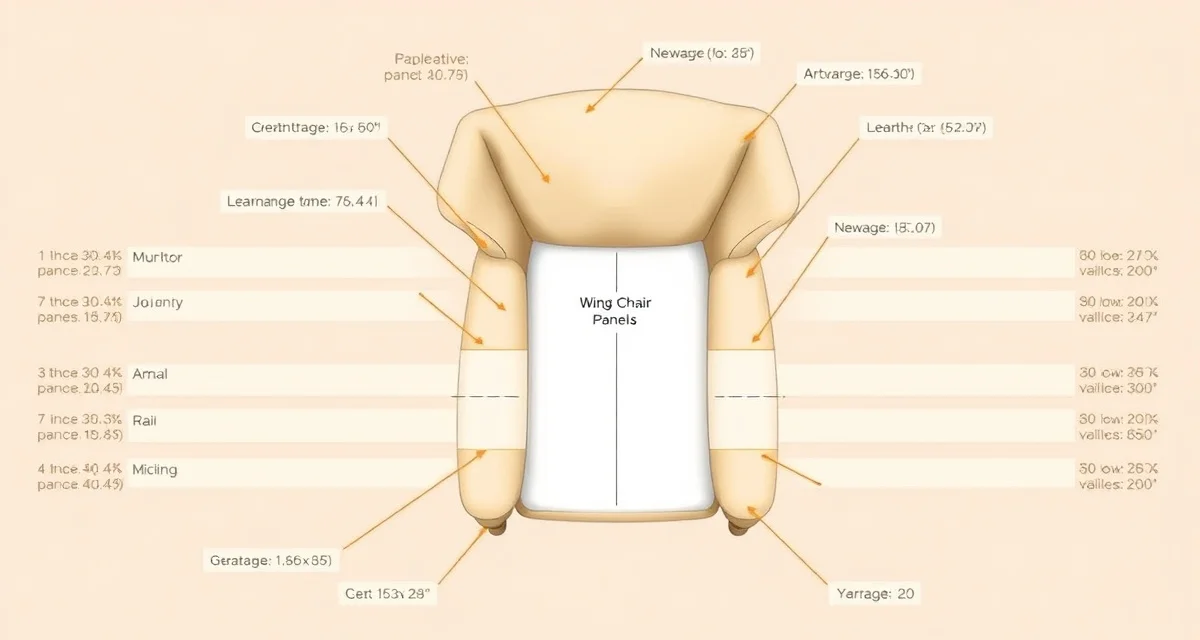
Wing Chair Reupholstery Yardage: All 16 Panels Accounted For
Wing chairs have more fabric panels than any other chair type. Shops using generic chair estimates run short 40% of the time on wing chairs, the highest error rate of any single chair category.
This guide gives you all 16 wing chair panels with yardage contribution so nothing gets missed.
TL;DR
- Wing Chair yardage depends on fabric width, construction details, pattern repeat, and nap direction.
- Plain 54-inch fabric requires a baseline calculation plus 10-15% waste allowance for a standard wing chair job.
- Patterned fabric adds 20-35% to base yardage depending on repeat size and the number of cutting zones that must align.
- Directional fabrics add 15-25% over plain fabric because layout optimization is restricted by nap direction.
- Always verify fabric width before finalizing yardage; COM fabric often comes in non-standard widths.
- Calculating yardage at the quote stage, not mid-job, eliminates reorders and protects your profit margin.
Why Wing Chairs Have So Many Panels
The wing itself is the defining feature and the main source of complexity. Each wing adds two panels: an inside wing surface and an outside wing surface. These aren't just flat rectangles, wings on traditional wing chairs curve forward, requiring shaped cuts.
Beyond the wings, a wing chair also has all the panels of a standard upholstered chair: inside and outside back, inside and outside arms, seat, and front border. Add the welt, and a wing chair with two wings and a pillow back can easily reach 16 distinct cut pieces.
The Complete 16-Panel Map
Wing panels (4 total):
- Left inside wing
- Left outside wing
- Right inside wing
- Right outside wing
Back panels (2-4):
- Inside back (may be one piece or pieced)
- Outside back
- Back cushion front (if pillow back)
- Back cushion rear (if pillow back)
Arm panels (4):
- Left inside arm
- Left outside arm
- Right inside arm
- Right outside arm
Seat and front (2-3):
- Seat top (or deck, if loose cushion)
- Seat cushion (if loose)
- Front border/boxing
Welt and finishing:
- Welt cording strips (approximately 0.5-0.75 yards of welt fabric)
Some traditional wing chairs also have a separate "scroll" piece at the front of each arm where the arm curves forward, bringing the total closer to 18 pieces.
Yardage by Panel Group
| Panel Group | Yardage Contribution |
|---|---|
| Wings (4 panels) | 1.5-2.5 yards |
| Inside/outside back | 2-3 yards |
| Arms (4 panels) | 2-3 yards |
| Seat and front | 1-1.5 yards |
| Back cushion (if pillow back) | 1-1.5 yards |
| Welt | 0.5-0.75 yards |
| Total range | 8-12 yards |
For a traditional wing chair in solid 54-inch fabric, expect 8-10 yards for a tight seat and back, or 9-12 yards for a T-cushion seat with pillow back.
The fabric yardage calculator wing chair should accept wing dimensions separately from the back panels, not lump them into a generic "chair back" field.
Wing Shape Complexity and Yardage Impact
Wings come in several shapes, and the shape affects how much fabric you need:
Straight wings: Run vertically without notable curve. The most efficient to cut. Inside and outside wing panels are near-rectangles.
Curved/swept wings: Curve forward and downward at the tip. The inside of the curve requires a shaped cut that wastes fabric at the curved portion. Add 10-15% to the wing panel yardage for curved wings.
Traditional rolled-tip wings: Curl at the tip. These require an additional small piece at the tip to complete the roll, adding complexity and a small amount of yardage.
How Much Extra Does Welting Add?
Welting on a wing chair runs along the outer edges of the wings, around the back, along the front of the arms, and often around the seat front. Total welt length on a fully welted wing chair can be 15-20 linear feet.
For standard straight-cut welt, figure 0.5 yards of fabric from a 54-inch bolt can yield approximately 15 feet of welt strips (cut at 1.5-inch width across the fabric width). For a 20-foot wing chair welt requirement, you need 0.6-0.75 yards of welt fabric.
If the welt is bias-cut (which looks better at corners and curves), add another 30%, so 0.8-1 yard for welt on a fully welted wing chair.
Matching Patterns on a Wing Chair
The biggest pattern matching challenge on a wing chair is the junction between the inside wing and the inside arm. On a traditional wing chair, the pattern must flow continuously from the inside arm, across the scroll at the front of the arm, and up into the inside wing without obvious misalignment.
This continuity requirement means you can't just cut wing and arm panels independently. The wing panel must be positioned relative to the arm panel so the pattern aligns at their joining seam.
For patterned fabric on a wing chair, add 25-40% to your solid fabric estimate depending on repeat size.
The wing chair reupholstery guide has a pattern layout diagram for the wing-to-arm junction.
FAQ
How many yards to reupholster a wing chair?
A standard wing chair needs 8-10 yards of 54-inch solid fabric for a tight seat and back configuration. With a T-cushion seat and pillow back, plan for 9-12 yards. Tufted versions add 1-2 yards depending on tufting extent. The high panel count, 16 or more distinct pieces, means wing chairs need considerably more fabric than generic "chair" estimates of 5-7 yards.
How much extra does welting add to wing chair yardage?
Straight-cut welt adds approximately 0.5-0.75 yards to wing chair yardage. Bias-cut welt adds approximately 0.8-1 yard. A fully welted wing chair has 15-20 linear feet of welt at all panel joints, wings, back, arms, and seat front. Budget the welt yardage separately from the main panel yardage to avoid missing it in your total.
What is the best fabric for a traditional wing chair?
Traditional wing chairs look best in fabrics with some visual weight, medium-to-heavyweight wovens, tapestry, or velvet. Cotton damask, wool tweed, and performance velvet are all classic choices. Avoid very lightweight fabrics (thin linen, loose-weave cotton) that won't hold their shape on the wing curves over time. If the client wants a high-use wing chair, a performance fabric in a classic pattern (small geometric, solid color) is the most practical choice.
What is the biggest factor in yardage variation for this piece?
Pattern repeat is the biggest source of yardage variation. On plain fabric, the baseline calculation plus a 10-15% waste buffer is usually sufficient. Add a 13-inch pattern repeat and you may need 15-20% more. Add a 27-inch pattern repeat and the additional yardage can be 25-35% over the plain fabric calculation. Nap direction is the second-largest factor, typically adding 15-25% over plain fabric because layout optimization is restricted.
Sources
- National Upholstery Association
- Association of Master Upholsterers and Soft Furnishers (AMUSF)
- Upholstered Furniture Action Council (UFAC)
- Furniture Today (trade publication)
Get Started with StitchDesk
Getting yardage right on wing chair jobs is the difference between a profitable quote and an expensive reorder. StitchDesk's fabric calculator accounts for all the variables that cause errors: pattern repeat by zone, nap direction, fabric width, and cushion configuration. Start a free trial and see how accurate yardage calculation affects your bottom line.