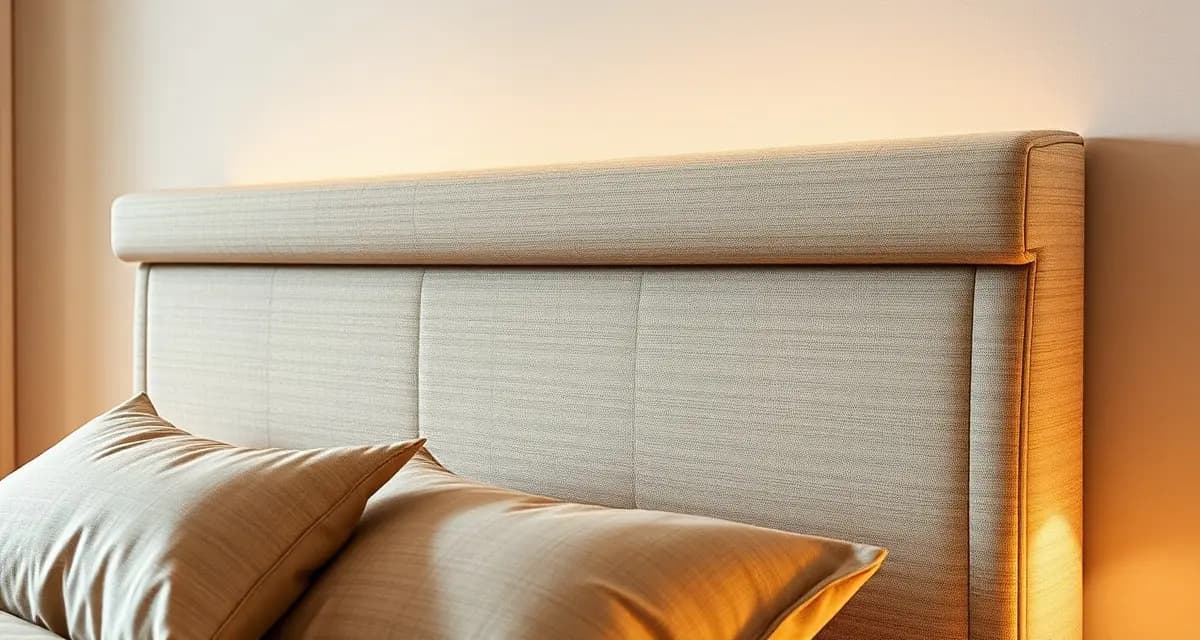
Murphy Bed Upholstery Fabric Yardage: Fold-Down Headboard Panel
Murphy bed headboard panels fold 365 or more times per year. Wrong fabric choice shows crease lines within months. The fold-down mechanism puts the headboard panel through a 90-degree rotation every time the bed is opened and closed. Fabric that doesn't have the elasticity and recovery to handle that repeated flexing will crease, crack, or delaminate.
This guide covers material selection for Murphy bed upholstery and yardage calculation for headboard and side panels.
TL;DR
- This guide covers the specific techniques, measurements, and decisions that determine quality outcomes in upholstery work.
- Planning and preparation before cutting begins is the most reliable way to avoid costly errors on any upholstery job.
- Fabric selection, yardage calculation, and structural assessment are the three decisions that most affect the final result.
- Experienced upholsterers develop consistent workflows that ensure quality and efficiency across every job type they handle.
- Documenting job details, material specifications, and client approvals protects both the shop and the client.
- The right tools, materials, and techniques for each job type make a measurable difference in quality and profitability.
Why Murphy Beds Need Specific Fabric
Most headboard reupholstery uses fabric that will never move again once installed. You can use velvet, brocade, tightly woven cotton, or any fabric that looks good and holds a staple. The headboard sits against the wall and stays there.
A Murphy bed headboard is different. It folds flat against the wall when the bed is stowed, then rotates 90 degrees to a horizontal position when the bed is opened. This motion:
- Bends the fabric along fold lines twice per cycle
- Compresses the fabric against the wall in the stowed position
- May stress the corners and edges where the panel meets the frame
After 365 cycles per year, that's 730 bends on a light-use Murphy bed, and 1,460+ on a guest bed that gets opened and closed twice daily.
Fabrics That Handle Fold Cycles Well
Vinyl and faux leather: The best performers for fold-cycle durability. Quality vinyl flexes without creasing, recovers fully, and doesn't show fold lines at normal ambient temperatures. Use vinyl rated for indoor flex applications (not marine or outdoor vinyl, which may be too stiff). Thickness matters: 35-40 gauge vinyl flexes better than 50+ gauge. Avoid very heavy vinyl designed for commercial seating, it's too stiff for repeated fold cycles.
Performance polyester: Tightly woven performance polyester has good elasticity and recovery. It handles fold cycles well as long as the weave isn't too open. Open-weave fabrics develop fabric distortion at fold lines over time. Look for performance polyester with a tight twill or plain weave construction.
Microfiber: Microfiber synthetics with a suede-like finish handle fold cycles well. The fine fiber structure distributes stress across many fibers rather than concentrating it at weave intersections. Microfiber doesn't crease visibly at fold lines in most applications.
Woven upholstery fabric (with caveats): Traditional upholstery fabric works for Murphy beds that aren't used intensively. If the bed folds less than once per day and the fabric has good recovery, standard upholstery fabric is acceptable. Boucle, thick chenille, and velvet are risky, nap fabrics show fold lines where the pile compresses and doesn't recover fully.
Fabrics to Avoid
Velvet: The pile compresses at fold lines and doesn't recover. Within months you'll see permanent crease lines where the headboard folds.
Natural linen without stretch backing: Natural fibers don't have the same recovery as synthetics. Unblended linen creases visibly at fold lines.
Very heavy brocade or jacquard: The weight and rigid weave structure of heavy decorative fabrics doesn't handle repeated flex well. They can delaminate at fold lines.
Any fabric with foam backing that's too thick: If you're padding the Murphy bed headboard (which many designs include), the foam thickness affects fold behavior. Foam over 1/2 inch may create visible lines at the fold hinge. Use 1/4-inch or 3/8-inch foam maximum for Murphy bed headboard padding.
Yardage Calculation for Murphy Bed Panels
Murphy bed headboard panels come in several configurations:
Integrated headboard panel (most common): A single panel that forms the visible surface when the bed is in use. For a queen Murphy bed, this panel is typically 62-66 inches wide and 20-30 inches tall.
Matching side panels: Some Murphy bed cabinets include decorative fabric panels on the sides of the cabinet. These are usually 12-18 inches wide and the full height of the cabinet (72-84 inches tall).
Framed panel (panel within a frame): Some Murphy bed designs have the fabric in a recessed frame rather than flush with the front face. This may add a few inches to each dimension for the reveal.
Yardage for a queen Murphy bed headboard:
- Panel dimensions: 64 x 26 inches
- Add 3 inches all around for wrap: 70 x 32 inches
- At 54-inch fabric: one panel per cut, with 22-inch offcut
- Linear yardage: 32 inches = 0.9 yards per panel
Yardage for two side panels (72 inches tall):
- Each panel: 16 x 72 inches
- Add 3 inches: 22 x 78 inches
- At 54-inch fabric: two 22-inch panels per cut width
- Linear yardage: 78 inches = 2.2 yards for both panels
Total for queen Murphy bed:
- Headboard: 0.9 yards
- Side panels (if included): 2.2 yards
- Waste factor 15%: add 0.45 yards
- Total: 3.1-3.6 yards
For the headboard yardage calculator, the headboard fabric yardage calculator can be adapted for Murphy bed panels by using the panel dimensions directly. The headboard yardage guide covers additional headboard configurations.
Frequently Asked Questions
How much fabric for a Murphy bed panel?
A queen Murphy bed headboard panel typically requires 0.9-1.2 yards for the headboard alone, depending on panel dimensions and how much wrap is needed. If the Murphy bed cabinet includes matching side panels, add 2-2.5 yards for both sides. Total for a full Murphy bed panel set is typically 3-4 yards. Always add 15% for waste on panel cutting.
What fabric doesn't crease for a Murphy bed?
Vinyl and faux leather are the best performers, they flex without creasing and recover fully after each fold cycle. Quality performance polyester and microsuede also handle repeated folding well. Avoid velvet (pile compresses at fold lines), natural linen (creases visibly), and any fabric with backing foam thicker than 3/8 inch (which creates visible fold lines at the hinge point). The key property is recovery: the fabric needs to spring back fully after being bent to 90 degrees.
How do I calculate yardage for a Murphy bed?
Measure the headboard panel width and height with a few inches extra on each side for the wrap to the back of the panel. If your Murphy bed includes side cabinet panels, measure each panel separately. Calculate each panel's cutting dimensions (finished dimensions plus wrap allowance), determine how many panels fit across your fabric width, and calculate linear yardage from there. Add 15% for waste and add all panel yardages together for your total order.
What are the most common mistakes to avoid in this type of work?
The most common mistakes are underestimating material requirements, starting work before the frame is fully assessed and repaired, and skipping the centering and alignment checks before cutting. Each of these is far more expensive to correct after cutting has begun than to prevent at the planning stage. Taking an extra 15-30 minutes at the assessment and planning stage pays dividends throughout the job.
How do I get the best results from a professional upholsterer?
Come to the consultation with clear measurements, photos of the piece, and an idea of the room's color scheme and intended use. Be specific about how the piece will be used: high traffic, pets, children, or outdoor exposure all affect fabric recommendations. Provide fabric samples or accept guidance on appropriate options for your use case. Approve the proof carefully and ask to see the fabric on the piece before final installation if you are uncertain about a pattern or color choice.
When should I consult a professional rather than doing the work myself?
Consult a professional when the piece has structural issues beyond simple fabric replacement, when the piece has significant financial or sentimental value, or when the fabric or technique (tufting, pattern matching, hand-tacking) requires skills you have not developed. A professional assessment before you begin is free at most shops and can prevent costly mistakes on a piece worth preserving.
Sources
- National Upholstery Association
- Association of Master Upholsterers and Soft Furnishers (AMUSF)
- Upholstered Furniture Action Council (UFAC)
- Furniture Today (trade publication)
Get Started with StitchDesk
Running a successful upholstery shop means getting the details right on every job. StitchDesk gives you purpose-built tools for quoting, fabric calculation, job tracking, and client communication, all in one place designed specifically for the trade. Start a free trial and see how StitchDesk supports quality work from intake to delivery.