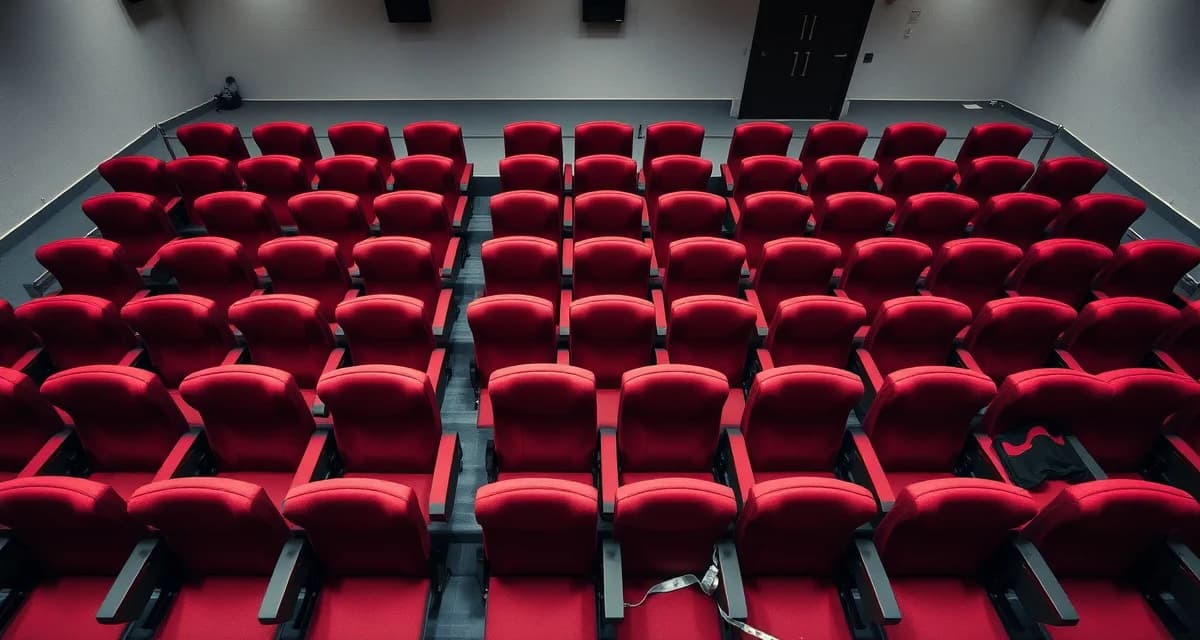
Theater and Auditorium Seat Fabric Yardage: Scale Projects Made Easy
Theater and auditorium seat reupholstery is a specialty commercial project that requires careful scale planning. A 200-seat theater has 200 identical seats, if your per-seat calculation is off by even 0.25 yards, you're 50 yards short on the full order. That's not a recoverable error once you've started cutting.
These projects are also lucrative and prestigious when done right. Getting comfortable with theater seat calculation opens a commercial revenue stream that most residential shops don't pursue.
TL;DR
- Commercial upholstery jobs require fabric with 100,000+ double rubs; standard residential fabric fails quickly in high-traffic environments.
- Contract commercial work typically involves larger yardage quantities, tighter deadlines, and more formal invoicing requirements than residential work.
- Quoting commercial jobs accurately requires understanding the difference between residential and commercial fabric cost and lead time.
- Fire-retardant fabric specifications are common requirements in commercial contracts and must be verified before ordering.
- Multi-location restaurant and hotel chains often require documentation of fabric specification and sourcing for procurement records.
- Commercial clients expect professional invoicing, deposit terms, and written contracts rather than informal arrangements.
Theater Seat Construction
A typical theater or auditorium seat has these fabric components:
Seat cushion: Fold-down seat, padded and fabric-covered. Usually a relatively thin cushion (2 to 3 inches) on a rigid spring or foam base. The visible surface is the top when unfolded; the underside (visible when folded up) is often a different, harder-wearing fabric.
Seat back panel: The padded back rest. Front face is face fabric; back face (what shows when empty rows are viewed from behind) may be face fabric or a secondary fabric depending on theater design.
Arm caps: Padded arm tops on each seat. Some theaters have shared armrests between seats; some have individual arms. Arm caps are a small yardage item per seat but multiply considerably at scale.
Optional: Seat front panel: Some theater seats have a decorative front panel below the seat cushion.
Per-Seat Yardage Calculation
For a standard theater seat in solid fabric, 54-inch width:
Seat cushion top: 20 x 18 inches = 0.25 yards
Seat cushion underside (if face fabric): 20 x 18 inches = 0.25 yards
Back panel front face: 20 x 22 inches = 0.3 yards
Back panel rear face: 20 x 22 inches = 0.3 yards
Arm cap top (per arm, 2 arms): 5 x 12 inches = 0.1 yards each = 0.2 yards total
Welt and trim: 0.1 yards
Total per seat: approximately 1.4 to 1.6 yards in solid fabric
For 200 seats: 280 to 320 yards base calculation. Add 10 percent buffer: 308 to 352 yards total order.
A 5 percent calculation error on this order is 14 to 18 yards. At $20/yard for commercial fabric, that's $280 to $360 of unplanned cost.
When Arm Configuration Affects Calculation
Theater seating arm configuration varies:
Individual seat arms (separate arm per seat): Two arm caps per seat. Standard calculation as above.
Shared center arm (between two seats): One arm cap per seat pair. Reduces arm cap yardage by 50 percent per seat.
No arms (auditorium bench-style): No arm cap yardage. Reduce total per-seat estimate by 0.2 yards.
Confirm arm configuration on a sample seat before calculating. Assuming individual arms when the seats have shared arms leads to notable over-ordering.
Ordering for Theater Projects
Theater projects have specific ordering requirements:
Single dye lot: Essential. 200 seats in the same row must look identical. Dye lot variation across separate orders will be visible at scale, especially under stage lighting designed to illuminate the audience.
Confirm supplier stock: Before agreeing to a timeline, verify your fabric supplier has the full quantity (including buffer) in a single dye lot in stock. Special orders for large quantities can take 6 to 10 weeks.
Lead time planning: Budget 10 to 14 weeks from contract to completion for a 200-seat project: 2 weeks for fabric sourcing confirmation, 2 to 4 weeks for production, plus installation scheduling.
Sample approval: Have a completed sample seat approved by the client before committing to the full order. A change-of-mind after 50 seats are done is extremely expensive.
The StitchDesk commercial upholstery guide covers the full commercial project management framework including sample approval workflows and timeline planning.
Frequently Asked Questions
How much fabric for theater seat reupholstery?
A standard theater seat with seat cushion, back panel, and arm caps typically requires 1.4 to 1.6 yards of fabric in solid 54-inch material per seat. For 200 seats, that's 280 to 320 yards base plus a 10 percent buffer for a total order of approximately 310 to 350 yards. Confirm the per-seat calculation on a sample seat before multiplying by total seat count.
How do I calculate fabric for 200 auditorium seats?
Calculate precise per-seat yardage on a physical sample, measure all panels (seat top, seat underside, back face, back reverse, arm caps) and sum them. Multiply by 200. Add 10 percent commercial buffer. Verify your supplier has the full order quantity in a single dye lot before placing the order. Document everything before starting production.
What fabric is best for theater seating?
Commercial-grade polyester or polyester-blend with 100,000+ Wyzenbeek double rubs for high-traffic auditoriums. The fabric must be compatible with cleaning products used by the facility's maintenance team. For upscale theaters, higher-pile fabrics like velvet or cut velvet add luxury but require more precise cutting and increase per-seat yardage by 20 to 30 percent. Solid colors or small-scale patterns are most practical at scale, large patterns add pattern repeat waste that multiplies across hundreds of seats.
What fabric specifications are required for commercial upholstery?
Most commercial specifications require a minimum of 100,000 double rubs (Martindale scale) for seating fabric. Fire retardancy to California Technical Bulletin 117-2013 (TB-117) is standard for commercial contract work in most states; some states require additional fire standards. Antimicrobial treatments are common requirements in healthcare settings. Always request and retain the fabric manufacturer's test documentation for any commercial project.
How do I quote a large commercial upholstery contract?
Large commercial contracts require a detailed scope of work, fabric specification list, yardage calculations by piece type, labor rate, and timeline. Break the quote into phases if the project is large. Include terms for schedule changes, fabric substitutions, and what happens if the client-specified fabric is unavailable. A written contract with scope, timeline, payment schedule, and warranty terms is essential for any commercial engagement over a few thousand dollars.
Related Articles
Sources
- National Upholstery Association
- Upholstered Furniture Action Council (UFAC)
- Association of Master Upholsterers and Soft Furnishers (AMUSF)
- Business and Institutional Furniture Manufacturers Association (BIFMA)
Get Started with StitchDesk
Commercial upholstery contracts require precise quoting, reliable fabric tracking, and professional documentation that residential-focused tools often lack. StitchDesk handles commercial job management with the same tools it provides for residential work, with no special configuration required. Try StitchDesk free and see how it supports your commercial operations.