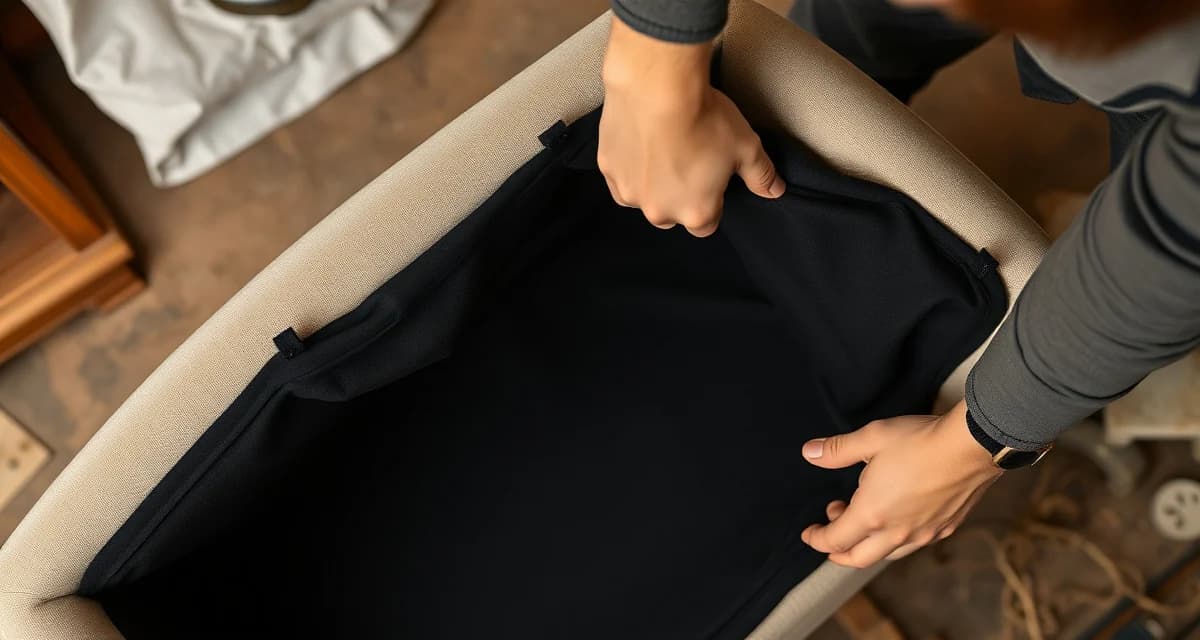
Cambric Dust Cover for Upholstery: When to Use It and How to Install
Cambric dust cover installation adds 10 minutes but signals professional-grade work that justifies premium pricing. The dust cover is the last step on most upholstery jobs and the one most likely to be rushed or skipped under time pressure. That's exactly why it matters so much, it's the detail that separates shops that do complete, professional work from shops that cut the last 10 minutes.
Clients look at the underside of their furniture when it's delivered. They look when they move it. They look when they vacuum around it. And when they see a neat, black cambric cover finished evenly with consistent stapling, it tells them everything they need to know about the care that went into the rest of the job they can't see.
TL;DR
- A well-managed upholstery shop tracks every job from intake to delivery with documented status at each stage.
- Fabric management, including ordering, receiving, storing, and allocating by job, is operationally the most complex part of running an upholstery shop.
- Client communication (status updates, completion photos, delivery scheduling) reduces inbound calls and increases repeat business.
- Shops that document their workflow can train new employees faster and maintain consistent quality during growth periods.
- Measuring key metrics (jobs per week, average ticket, fabric waste rate) is the foundation of informed business decisions.
- Professional shop management tools pay for themselves through reduced errors and faster quoting, typically within the first quarter.
What Cambric Is
Cambric is a lightweight, plain-weave black fabric (occasionally white or natural, but black is standard) used as the dust cover on the underside of upholstered furniture. It's applied over the exposed frame bottom, covering the webbing, spring ties, and raw edges of the upholstery fabric that would otherwise be visible from below.
The fabric isn't structural, it doesn't hold anything in place or add support. Its function is aesthetic and protective: it prevents dust accumulation inside the frame, protects the webbing from pet interaction (some animals scratch at exposed webbing from underneath), and provides a finished, professional appearance to the underside.
When to Install a Cambric Dust Cover
Install cambric on any piece where the underside of the seat will be visible or accessible:
- Sofas and chairs that sit on legs (visible underside)
- Ottomans and benches with open leg structures
- Any piece that will be lifted and moved regularly
- Any piece in a rental or hotel environment where clients inspect furniture
A piece with a skirted base that completely covers the underside may not require cambric, though many shops install it anyway as a quality standard.
Cutting Cambric
Cut cambric to a size approximately 1 inch smaller than the outer dimensions of the bottom frame on all sides. This setback from the frame edge gives the cambric a clean border and makes installation easier.
Cut straight edges, cambric frays easily, and an uneven cut edge is visible in the finished installation. Use a straight edge and rotary cutter for the cleanest result.
Installation Process
Step 1: Fold the Edges
Fold the cambric edges under approximately 1/2 to 3/4 inch on all four sides. This fold eliminates the raw edge from view and creates a stiffer, more stable attachment edge.
Press the folds lightly with your hand to crease them. You don't need an iron, the fabric is thin enough to hold a hand-pressed fold during installation.
Step 2: Position on the Frame
Place the folded cambric on the underside of the frame with the folded edges facing up toward the frame. Center it within the frame opening, leaving an approximately even border on all sides.
Step 3: Staple the First Side
Begin at one side (the back or the side furthest from you). Staple through the folded edge into the bottom of the frame rail, starting at the center of the side and working outward. Space staples 2-3 inches apart. The staples go through the fold into the frame, two layers of fabric, then the frame.
Don't complete the full perimeter before moving on, start with one side, then move to the opposite side.
Step 4: Pull and Staple the Opposite Side
Pull the cambric taut across to the opposite frame rail. The taut pull removes any slack from the center. Staple the opposite side the same way: center first, then outward.
Taut cambric doesn't sag. Slightly slack cambric sags within weeks of delivery and looks noticeably less professional.
Step 5: Complete the Remaining Two Sides
Staple the remaining two sides, mitering the corners for a clean fold. The miter at the corner is a simple diagonal fold that removes fabric bulk from the corner area.
Step 6: Corner Finishing
At each corner, fold the cambric neatly, a diagonal fold similar to a hospital corner, and staple through the corner fold. The goal is a corner that lies flat without puckering or visible excess fabric.
Staple Spacing Consistency
Consistent staple spacing is what makes a dust cover look professional or amateur. Staples spaced at irregular intervals, close together in some areas, far apart in others, read as careless even when the overall installation is technically sound.
Set a standard: 2-inch spacing throughout. Use a ruler or marked guide the first few times until consistent spacing becomes habitual.
Charging for Cambric
Cambric installation should be a line item in your upholstery quote, not an assumed inclusion. The reasons:
- It adds material cost (cambric fabric) and labor time (10-15 minutes per piece)
- It's a visible quality differentiator that justifies your pricing
How to present it in a quote: "Cambric dust cover: $15-25" (depending on your market and piece size). If a client asks why, "It finishes the underside professionally and prevents dust accumulation inside the frame" is a complete answer.
Some shops include it automatically and factor the cost into their base price. Either approach is fine. What matters is that the cambric goes on every job consistently, because the occasional piece that goes without it is the one that gets held up and inspected.
See the upholstery shop supplies guide for other finishing materials that complete a professional job. The how to reupholster sofa guide shows cambric installation in the full sequence.
Related Articles
FAQ
Why do upholstered sofas have a dust cover?
The cambric dust cover on the underside of upholstered furniture serves two functions: it prevents dust and debris from accumulating inside the frame where it's inaccessible for cleaning, and it provides a professional finished appearance to the underside of the piece. Without it, the underside shows exposed webbing, spring ties, and raw fabric edges, which is functional but looks incomplete to any client who looks at the bottom of their furniture. A neatly installed dust cover is the last step of professional upholstery work and one of the clearest signals of the care that went into the job.
How do I install a cambric dust cover?
Cut cambric approximately 1 inch smaller than the frame bottom on all sides. Fold the edges under approximately 3/4 inch on all four sides. Position centered on the frame underside. Staple the first side starting at center and working outward with 2-inch spacing. Pull taut to the opposite side and staple. Complete the remaining two sides, mitering corners for clean folds. Consistent staple spacing throughout is what separates professional installation from rushed installation. The whole process takes 10-15 minutes for most pieces.
Should I charge for cambric in my upholstery quote?
Yes. Cambric adds material cost and labor time, and it's a visible quality differentiator. Include it as a line item ($15-25 depending on piece size and your market) rather than absorbing the cost into your base price. When clients see it in the quote, it creates an opportunity to explain the professional standard it represents. Clients who understand what they're paying for value it more than clients for whom it's an invisible inclusion. Either way, install cambric on every job, the ones without it are the ones that generate the comparison when a more discerning client looks underneath.
How do I track multiple jobs at different stages simultaneously?
A job tracking system, whether paper-based or software-based, should give you a clear view of every active job's current stage at a glance. The minimum useful stages are: intake received, fabric ordered, fabric received, work in progress, quality check, ready for pickup/delivery, completed. Software that shows all active jobs on a single dashboard with current stage and due date eliminates the mental overhead of tracking multiple jobs manually.
Sources
- National Upholstery Association
- Association of Master Upholsterers and Soft Furnishers (AMUSF)
- Upholstered Furniture Action Council (UFAC)
- Furniture Today (trade publication)
Get Started with StitchDesk
A well-run upholstery shop is built on consistent processes, accurate information, and clear client communication. StitchDesk gives you the tools to manage all three from intake to delivery, without the overhead of paper systems or generic software that does not understand the trade. Start a free trial and see how StitchDesk fits your workflow.