Upholstery Stitches: Types and When to Use Each
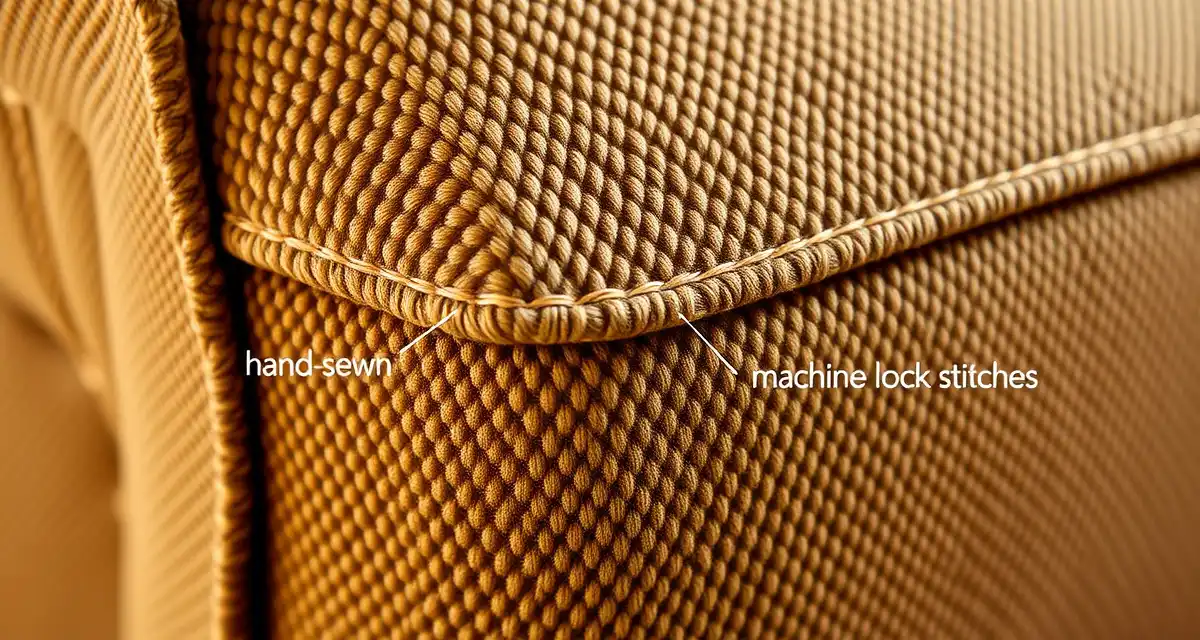
Hand-sewn blind stitches on cushion back seams are invisible from 2 feet, the mark of premium professional work. A machine lock stitch closes a seam quickly and holds under high tension, but it's visible on the surface. Knowing which stitch to use where is what separates work that looks professional from work that looks finished in a hurry.
This guide covers the primary upholstery stitches, what each produces, and when to use them.
TL;DR
- This guide covers the specific techniques, measurements, and decisions that determine quality outcomes in upholstery work.
- Planning and preparation before cutting begins is the most reliable way to avoid costly errors on any upholstery job.
- Fabric selection, yardage calculation, and structural assessment are the three decisions that most affect the final result.
- Experienced upholsterers develop consistent workflows that ensure quality and efficiency across every job type they handle.
- Documenting job details, material specifications, and client approvals protects both the shop and the client.
- The right tools, materials, and techniques for each job type make a measurable difference in quality and profitability.
Machine Stitches
Lock Stitch
The standard sewing machine stitch. Upper thread and bobbin thread interlock at each stitch point, creating a strong, even seam.
Use for: All structural seams, side panels, seat cushion boxes, arm covers, back sections. Anywhere the seam is under tension and needs to hold firmly.
What it produces: A consistent, strong seam that's visible on the stitch line but can be hidden inside the fabric or covered by welting.
When to choose it: Whenever the seam will be hidden inside the cover assembly or behind a welt cord. This is the majority of upholstery sewing.
Straight Stitch (without interlock)
A basic running stitch produced by some machines when bobbin tension is off or deliberately set for basting. Not used for structural seams.
Use for: Temporary basting of fabric panels before final stitching. Marks stitch lines through multiple layers before cutting.
What it produces: An easily removed temporary stitch that holds fabric in position.
When to choose it: When you need to test fit a panel before committing to the final seam. Pull the basting out, adjust, and re-stitch.
Zigzag Stitch
A machine stitch that alternates left and right with each stitch, producing a wider seam with slight stretch.
Use for: Seams in fabric that will be under tension and benefit from slight give, outdoor fabric, some synthetic blends, areas around curve work. Also used to finish raw seam edges on woven fabrics that ravel.
What it produces: A seam with more flexibility than a lock stitch and better raw edge control.
When to choose it: Curves, seams in stretch fabric, and finishing raw edges on interior seams to prevent raveling during use.
Hand Stitches
Blind Stitch (Slip Stitch)
A hand stitch where the thread passes through a fold in the fabric and emerges a short distance away, with no visible thread on the surface.
Use for: Closing cushion back openings after inserting cushion fill. Closing zipper ends and finishing any hand-sewn closure where the seam must be invisible.
What it produces: A seam line that is not visible from the surface. The fold closes cleanly and the stitch is hidden inside the fold.
When to choose it: Anywhere you need a finished, invisible closure. Premium cushion work always uses a blind stitch for the hand-closed back seam, it's the detail that distinguishes professional cushion finishing from machine-closed backs. The upholstery sewing techniques guide shows the specific needle angle and stitch length for a tight invisible closure.
Running Stitch
A basic stitch passing through the fabric from front to back at regular intervals. Visible on both sides.
Use for: Attaching springs to webbing, stitching padding to burlap in traditional upholstery, temporary marking lines.
What it produces: A functional connection between two layers with visible stitch marks on both surfaces.
When to choose it: For functional internal connections not visible in the finished piece. Traditional buttoned and tufted upholstery uses running stitches extensively in the interior layer construction.
Catch Stitch (Cross Stitch)
A hand stitch that crosses back and forth creating an X pattern. Holds two layers together with flexibility.
Use for: Joining batting layers, attaching padding to frame, anywhere you need a secure but flexible attachment between layers.
What it produces: A flexible connection that holds without restricting movement of the layers.
When to choose it: When securing padding or batting that needs to conform to the shape of the piece during use. More flexible than a straight running stitch.
Stab Stitch
A hand stitch where the needle goes straight down and straight up through all layers, producing a very strong, almost invisible stitch from the side.
Use for: Attaching layers through thick padding, fixing loose weave areas at stress points, any through-layer connection that needs high strength.
What it produces: A strong stitch with minimal surface visibility from the front.
When to choose it: Through-layer work where a standard running stitch would pull through padding or batting layers.
Stitch Application by Location
| Location | Recommended Stitch |
|---|---|
| Structural seams (hidden) | Machine lock stitch |
| Welting/piping seams | Machine lock stitch with zipper foot |
| Cushion back closures (premium) | Hand blind stitch |
| Cushion back closures (practical) | Invisible zipper + machine stitch |
| Curved seams | Machine zigzag or lock stitch with notching |
| Padding attachment to burlap | Hand running stitch or catch stitch |
| Spring-to-webbing attachment | Hand running stitch |
| Decorative hand-finished edges | Hand stab stitch or catch stitch |
FAQ
What is a blind stitch in upholstery?
A blind stitch (also called a slip stitch) is a hand-sewn stitch where the thread passes through a fold in the fabric and emerges nearby with no visible thread on the surface. It's used to close cushion back openings and any hand-sewn seam where the stitching needs to be invisible in the finished piece. The needle enters inside a folded seam allowance, travels parallel to the fold for a short distance, exits, crosses to the opposite fold, enters again, and repeats. The result is a seam that holds securely but shows no stitch on either surface.
How do I do a hand-sewn upholstery closure?
For a blind stitch cushion closure, thread a curved or straight upholstery needle with matching thread and knot the end. Fold both edges of the opening inward along the seamline. Enter the needle inside one fold, travel 3/8 to 1/2 inch inside the fold, exit, cross to the opposite fold, enter inside that fold and travel the same distance, exit, and cross back. Pull the thread gently after each stitch to draw the folds together. Work from one end of the opening to the other, keeping stitches evenly spaced. Finish with a knot inside the fold.
What stitches do professional upholsterers use?
Professional upholsterers use machine lock stitches for all structural seams, they're fast, strong, and consistent. Hand blind stitches (slip stitches) for premium cushion closures where the seam needs to be invisible. Hand running stitches for attaching padding layers to burlap in traditional work. Catch stitches for flexible padding attachment. The distinction between professional and basic work often comes down to the cushion closures, machine-stitched backs are functional but visible; hand blind-stitched backs are the mark of careful finishing.
What are the most common mistakes to avoid in this type of work?
The most common mistakes are underestimating material requirements, starting work before the frame is fully assessed and repaired, and skipping the centering and alignment checks before cutting. Each of these is far more expensive to correct after cutting has begun than to prevent at the planning stage. Taking an extra 15-30 minutes at the assessment and planning stage pays dividends throughout the job.
How do I get the best results from a professional upholsterer?
Come to the consultation with clear measurements, photos of the piece, and an idea of the room's color scheme and intended use. Be specific about how the piece will be used: high traffic, pets, children, or outdoor exposure all affect fabric recommendations. Provide fabric samples or accept guidance on appropriate options for your use case. Approve the proof carefully and ask to see the fabric on the piece before final installation if you are uncertain about a pattern or color choice.
When should I consult a professional rather than doing the work myself?
Consult a professional when the piece has structural issues beyond simple fabric replacement, when the piece has significant financial or sentimental value, or when the fabric or technique (tufting, pattern matching, hand-tacking) requires skills you have not developed. A professional assessment before you begin is free at most shops and can prevent costly mistakes on a piece worth preserving.
Sources
- National Upholstery Association
- Association of Master Upholsterers and Soft Furnishers (AMUSF)
- Upholstered Furniture Action Council (UFAC)
- Furniture Today (trade publication)
Get Started with StitchDesk
Running a successful upholstery shop means getting the details right on every job. StitchDesk gives you purpose-built tools for quoting, fabric calculation, job tracking, and client communication, all in one place designed specifically for the trade. Start a free trial and see how StitchDesk supports quality work from intake to delivery.