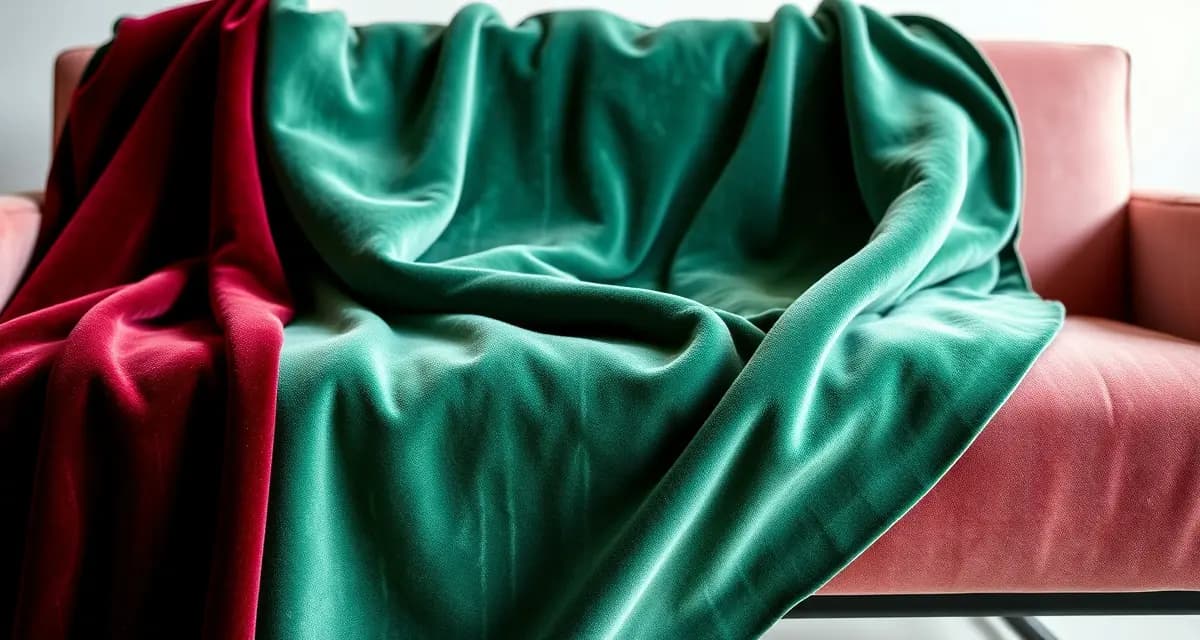
Velvet Sofa Fabric Yardage: Nap and Pattern Combined
Velvet is the one fabric that genuinely changes how you calculate yardage. Everything else, your chenille, your linen, your performance weaves, they mostly follow the same rules. Velvet has its own set, and if you ignore them, you're going to run short.
The nap direction requirement is the main factor. Every piece of velvet cut for a sofa has to run in the same direction, and it has to be the right direction (nap running down, in most cases). That single constraint can add 1 to 2 yards to a standard 3-cushion sofa calculation. And if you're dealing with patterned velvet, you're adding pattern repeat waste on top of the nap requirement. That's where things get genuinely hard.
Patterned velvet sofas require 25 to 40 percent more yardage than solid velvet of the same width and piece type. That's not a rounding error, that's yards.
TL;DR
- Velvet Sofa yardage depends on fabric width, construction details, pattern repeat, and nap direction.
- Plain 54-inch fabric requires a baseline calculation plus 10-15% waste allowance for a standard velvet sofa job.
- Patterned fabric adds 20-35% to base yardage depending on repeat size and the number of cutting zones that must align.
- Directional fabrics add 15-25% over plain fabric because layout optimization is restricted by nap direction.
- Always verify fabric width before finalizing yardage; COM fabric often comes in non-standard widths.
- Calculating yardage at the quote stage, not mid-job, eliminates reorders and protects your profit margin.
Understanding Nap Direction
Velvet pile has a direction. When you stroke it one way, it looks bright and reflective. The other way, it looks darker and more matte. Both looks can be intentional, but you can't have them mixed on the same piece. Cushion panels cut in different nap directions will look like different colors under the same light.
The standard approach is nap-down, meaning the pile faces away from you when you're sitting, a slightly richer, slightly deeper look. Some designers specifically request nap-up for the brighter sheen. Either is fine. The point is every panel on the sofa has to match.
This means you can't just cut around a piece of fabric the way you would with a solid woven. You have to orient every cut in the same direction, which eliminates some of the layout flexibility you'd otherwise have. That's the yardage hit.
On a 90-inch 3-cushion sofa, the nap direction requirement alone typically adds 1 to 1.5 yards over a comparable solid woven calculation.
When You Add a Pattern
Patterned velvet is genuinely the hardest calculation in upholstery. You have two constraints operating simultaneously:
- Every panel must run nap in the same direction
- Pattern elements must align across panels and across cushions
You can't rotate a cut to save a partial yard because that would change the nap direction. And you can't shift cuts to reduce pattern waste because that would misalign the motif. Both constraints apply at the same time, and they compound against each other.
A solid velvet sofa might need 15 yards. The same sofa in a patterned velvet with an 18-inch vertical repeat could need 20 to 21 yards. That additional yardage is expensive because patterned velvet usually starts at $40 to $80 per yard at trade pricing.
For the StitchDesk velvet yardage calculator, you input your sofa dimensions, the velvet pile direction, the pattern repeat dimensions (if any), and the calculator handles the compound constraint, it won't let you "save" yardage in a way that would break either the nap rule or the pattern alignment rule.
Nap Direction Reference for Sofa Panels
Here's how nap direction affects each panel on a standard 3-cushion sofa:
Seat cushion tops: All three must run in the same direction, typically so nap flows toward the back of the seat.
Seat cushion fronts and boxing: Run in the same direction as the top.
Back cushions: Each back cushion panel nap runs the same direction as the seats.
Inside back (tight back): Nap runs consistent with cushions, usually down.
Outside back: Same nap direction. This is easy to forget since it's rarely visible during layout.
Arms (inside and outside): Nap must match. On a sofa with tight arms, you have four arm panels that all need correct orientation.
Front rail and platform: Nap direction consistent with the rest.
Every one of these panels has to be laid out with nap running the same way. No exceptions.
Yardage Estimates by Sofa Type in Solid Velvet
These are ranges for solid velvet in standard 54 to 56-inch width fabric:
- 2-cushion tight-back sofa, 72 inches: 12 to 14 yards
- 3-cushion pillow-back sofa, 84 to 90 inches: 15 to 18 yards
- 3-cushion tight-back sofa, 84 to 90 inches: 13 to 15 yards
- 4-cushion sofa, 96 to 108 inches: 17 to 21 yards
- Chesterfield with deep tufting, 84 inches: 19 to 24 yards (tufting adds pull waste on top of nap requirement)
For patterned velvet, add 20 to 40 percent to these numbers depending on repeat size.
Checking Your Nap Direction Calculator
Use the nap direction fabric calculator before ordering. Input your sofa style and fabric width, and it will tell you the minimum yardage required to maintain consistent nap across every panel. If your supplier quote comes in considerably under that number, something is off, either the supplier is planning to cut nap in multiple directions (ask them directly) or the yardage estimate is wrong.
Frequently Asked Questions
How many yards of velvet for a sofa?
For a standard 3-cushion sofa in solid velvet, plan on 15 to 18 yards depending on sofa length, cushion count, and arm style. The nap direction requirement adds 1 to 1.5 yards over what you'd calculate for the same sofa in a non-directional woven fabric.
Does patterned velvet need more yardage than solid velvet?
Considerably more. When pattern matching is added to the nap direction constraint, you lose the ability to optimize your cutting layout in any direction. Patterned velvet typically requires 25 to 40 percent more yardage than solid velvet for the same sofa. This is not an estimate to round down on, the risk of running short is very real and very expensive.
What is the best velvet for sofa reupholstery?
For durability, polyester velvet holds up better than cotton velvet but doesn't have the same luxurious hand. For upscale residential work, a cotton-polyester blend gives you both durability and drape. Performance velvets (like Romo or Kravet's performance velvet lines) are worth recommending to clients with pets or kids, they're much easier to clean and maintain the look longer.
What is the biggest factor in yardage variation for this piece?
Pattern repeat is the biggest source of yardage variation. On plain fabric, the baseline calculation plus a 10-15% waste buffer is usually sufficient. Add a 13-inch pattern repeat and you may need 15-20% more. Add a 27-inch pattern repeat and the additional yardage can be 25-35% over the plain fabric calculation. Nap direction is the second-largest factor, typically adding 15-25% over plain fabric because layout optimization is restricted.
What should I do if I run short on fabric mid-job?
Stop cutting immediately when you realize you may run short. Calculate exactly how much additional fabric you need before contacting the supplier or client. If reordering from the same dye lot is possible, do so as quickly as possible because dye lots change. If a dye lot match is not available, contact the client before proceeding; visible dye lot differences on the same piece are unacceptable and must be disclosed. Document the situation and response in writing.
Sources
- National Upholstery Association
- Association of Master Upholsterers and Soft Furnishers (AMUSF)
- Upholstered Furniture Action Council (UFAC)
- Furniture Today (trade publication)
Get Started with StitchDesk
Getting yardage right on velvet sofa jobs is the difference between a profitable quote and an expensive reorder. StitchDesk's fabric calculator accounts for all the variables that cause errors: pattern repeat by zone, nap direction, fabric width, and cushion configuration. Start a free trial and see how accurate yardage calculation affects your bottom line.