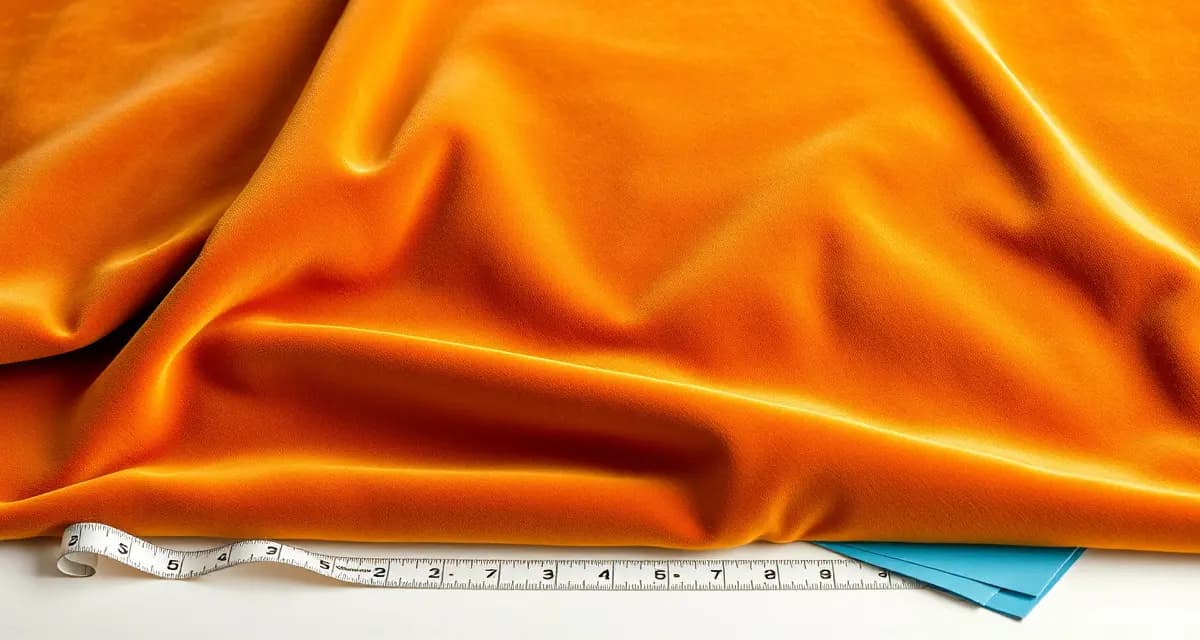
Nap Direction Fabric Calculator for Upholstery: Velvet and Pile Fabrics Done Right
Velvet runs one direction. Every piece on the same furniture needs to run the same direction. That single constraint can add 2–4 yards to a sofa order compared to cutting the same piece in plain fabric. Most plain-fabric yardage estimates don't account for this. If you just add "a bit extra" for velvet without calculating what directional cutting actually costs, you're guessing.
The nap direction calculator adjusts your cutting layout for directional pile fabrics, velvet, mohair, chenille, some microfibers, corduroy, and outputs the correct yardage. Not an estimate. Not a generic percentage. The actual yards needed when every piece runs from top to bottom (or bottom to top, depending on your shop's standard) without exception.
TL;DR
- This guide covers the specific techniques, measurements, and decisions that determine quality outcomes in upholstery work.
- Planning and preparation before cutting begins is the most reliable way to avoid costly errors on any upholstery job.
- Fabric selection, yardage calculation, and structural assessment are the three decisions that most affect the final result.
- Experienced upholsterers develop consistent workflows that ensure quality and efficiency across every job type they handle.
- Documenting job details, material specifications, and client approvals protects both the shop and the client.
- The right tools, materials, and techniques for each job type make a measurable difference in quality and profitability.
What Nap Direction Means in Cutting
On a plain fabric, a solid microfiber, a woven jacquard, a performance blend, you can rotate and flip panels to nest them efficiently on the bolt. A panel that's 22 x 30 inches can be cut horizontally across the fabric, or flipped so the 30-inch dimension runs vertically. You optimize for minimum waste.
On a nap fabric, you can't do this. Every panel must run in the same orientation. The pile direction, the way the velvet fibers lie, must be consistent across all visible faces of the piece. If the inside back runs pile-down and one arm runs pile-up, the sheen difference is visible from across the room.
That constraint eliminates your optimization options. You're now cutting every panel oriented the same way, which means you're leaving fabric on the cutting table between panels that don't nest together in that fixed orientation.
How Much Extra Does Nap Direction Cost?
It depends on the furniture piece, but here are real numbers:
Standard sofa (14–18 yards plain): Add 2–4 yards for velvet. The biggest single waste area is the seat cushions, on plain fabric you might cut all three cushion faces in a row horizontally. On velvet, they must run vertically, which means they're cut in a column along the bolt, with gaps between them.
Club chair (4.5–6 yards plain): Add 1–2 yards for velvet.
Wing chair (6–9 yards plain): Add 1.5–2.5 yards for velvet. The wing panels are particularly inefficient in a fixed direction.
Headboard (2.5–3.5 yards plain): Add 0.5–1 yard for velvet. The return panels need to run the same direction as the face, and they're usually cut with the grain running across the short dimension, less efficient than flipping for a plain fabric.
Dining chair set (6 chairs, 4.5–5.5 yards plain): Add 0.75–1.5 yards for velvet. Each seat pad must run the same direction, eliminating any creative nesting.
Which Fabrics Have Nap Direction
Always directional:
- Cut velvet (crushed velvet is less critical but still has a direction)
- Mohair
- Corduroy
- Faux fur
Usually directional:
- Woven velvet (not all, but most)
- High-density chenille (depends on weave)
- Some microfibers (the ones with a visible nap or sheen shift)
- Velvet-look polyester
Sometimes directional:
- Low-pile chenille (minimal sheen shift, some flexibility)
- Textured performance fabrics (check for sheen direction before quoting)
Not directional:
- Plain weaves
- Jacquards (unless they also have a pile)
- Leather and vinyl
- Most printed fabrics (the ink has no directionality)
When in doubt, hold a swatch and tilt it. If the color or sheen changes with angle, it's directional. Always treat it as directional in your yardage calculation. The cost of ordering too much is small. The cost of running short on a velvet reupholstery is a separate order, a delay, and a possible dye lot mismatch.
Pile Direction: Up or Down?
Industry convention varies. Some upholsterers run pile down (pile faces toward the floor) on seat backs and seating surfaces. Others run pile up. There's no universal standard. What matters is that your shop has a standard and you apply it consistently on every piece.
Running pile down: the fabric feels smoother when you stroke upward, looks slightly lighter. More common in traditional residential upholstery.
Running pile up: the fabric feels slightly rougher when you stroke upward, looks slightly deeper/darker. More common in some commercial applications.
For a matching set, sofa and chairs, for example, every piece must use the same pile direction or the color will look different across the set despite being from the same bolt.
The Calculator Process for Nap Fabrics
- Enter your furniture type and dimensions as normal.
- In the fabric section, toggle "Directional nap" to on.
- Select pile direction preference (pile up or pile down) if you want to standardize it in your job record.
- The calculator adjusts the cutting layout to require consistent orientation on all pieces.
- The output shows: plain-fabric yardage (what you'd need without the nap constraint) and nap-adjusted yardage side by side.
- The difference is labeled "Nap direction waste", a specific, calculable number.
This side-by-side output is useful when a client asks why their velvet sofa order is 3 yards more than the fabric website suggested. You can point to the specific waste number and explain it's not padding, it's what consistent nap direction costs on a piece with this many cutting zones.
Dye Lot and Nap: The Hidden Risk
On velvet and some chenilles, even two bolts from the same dye lot can have a slight pile sheen difference. If you run short and reorder, there's a real chance the new bolt has a different sheen angle than your original. This isn't a defect, it's a characteristic of pile fabrics.
The practical consequence: on velvet, always order with at least a 1-yard buffer beyond the nap-adjusted yardage. If you're working with an unusual or limited-run velvet, order a 1.5–2 yard buffer. The cost of an extra yard is small compared to the cost of a dye lot mismatch on an inside arm you cut last.
Related Articles
FAQ
What is nap direction in upholstery fabric?
Nap direction refers to the direction the pile fibers lie on fabrics like velvet, mohair, and chenille. The pile reflects light differently depending on the viewing angle, so if some panels of an upholstered piece have pile running one direction and others run the opposite direction, the piece will appear to have mismatched colors even from the same fabric. Nap direction must be consistent across all visible panels.
How much does nap direction affect fabric yardage?
On a standard sofa, nap direction adds 2–4 yards compared to plain fabric because you can't rotate panels to nest them efficiently. On a chair, add 1–2 yards. On a headboard with return panels, add 0.5–1 yard. The exact amount depends on the piece dimensions and how many cutting zones need consistent orientation. The nap direction calculator gives you the specific adjusted yardage rather than a percentage estimate.
Does velvet upholstery always need nap direction consideration?
Yes, for any application where you want visual consistency. Some upholsterers use crushed velvet (which has no fixed pile direction) for clients who want the velvet look without the nap constraints. Standard cut velvet, woven velvet, and mohair all have definite pile directions that must be handled consistently. If you're unsure whether a fabric is directional, hold it at different angles in light, a sheen shift means it's directional.
What are the most common mistakes to avoid in this type of work?
The most common mistakes are underestimating material requirements, starting work before the frame is fully assessed and repaired, and skipping the centering and alignment checks before cutting. Each of these is far more expensive to correct after cutting has begun than to prevent at the planning stage. Taking an extra 15-30 minutes at the assessment and planning stage pays dividends throughout the job.
How do I get the best results from a professional upholsterer?
Come to the consultation with clear measurements, photos of the piece, and an idea of the room's color scheme and intended use. Be specific about how the piece will be used: high traffic, pets, children, or outdoor exposure all affect fabric recommendations. Provide fabric samples or accept guidance on appropriate options for your use case. Approve the proof carefully and ask to see the fabric on the piece before final installation if you are uncertain about a pattern or color choice.
When should I consult a professional rather than doing the work myself?
Consult a professional when the piece has structural issues beyond simple fabric replacement, when the piece has significant financial or sentimental value, or when the fabric or technique (tufting, pattern matching, hand-tacking) requires skills you have not developed. A professional assessment before you begin is free at most shops and can prevent costly mistakes on a piece worth preserving.
Sources
- National Upholstery Association
- Association of Master Upholsterers and Soft Furnishers (AMUSF)
- Upholstered Furniture Action Council (UFAC)
- Furniture Today (trade publication)
Get Started with StitchDesk
Running a successful upholstery shop means getting the details right on every job. StitchDesk gives you purpose-built tools for quoting, fabric calculation, job tracking, and client communication, all in one place designed specifically for the trade. Start a free trial and see how StitchDesk supports quality work from intake to delivery.