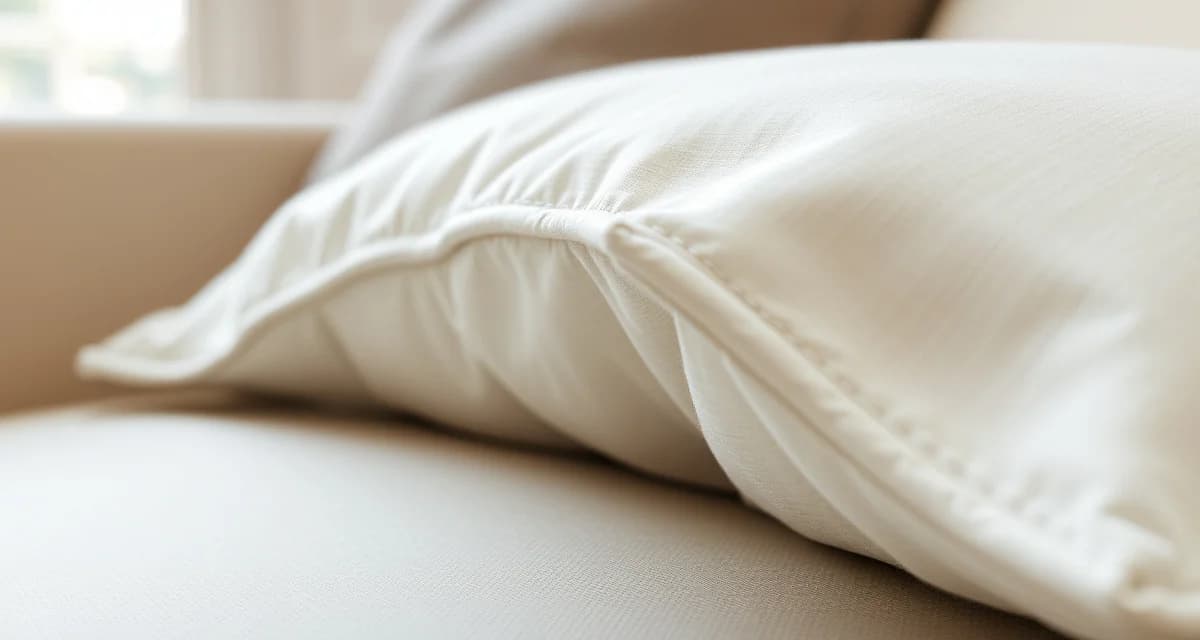
Welt and Piping for Upholstery: Straight Cut and Bias Cut Guide
Welt is the trim detail that separates work that looks finished from work that just looks done. Cut and sewn correctly, it sharpens every seam, defines cushion edges, and gives a piece the kind of visual structure that reads as quality from across the room. The difference between bias-cut and straight-cut welt isn't just a technical preference. It's visible at 3 feet, especially on curved edges and corners.
Bias-cut welt curves around corners more smoothly than straight-cut. That's the practical rule that drives the choice between the two methods. On straight seams and flat cushion fronts, straight-cut works fine and wastes less fabric. On curved backs, rolled arms, and any edge that turns more than 90 degrees, bias-cut is worth the extra yardage because the result looks like it belongs there rather than fighting the curve.
TL;DR
- This guide covers the specific techniques, measurements, and decisions that determine quality outcomes in upholstery work.
- Planning and preparation before cutting begins is the most reliable way to avoid costly errors on any upholstery job.
- Fabric selection, yardage calculation, and structural assessment are the three decisions that most affect the final result.
- Experienced upholsterers develop consistent workflows that ensure quality and efficiency across every job type they handle.
- Documenting job details, material specifications, and client approvals protects both the shop and the client.
- The right tools, materials, and techniques for each job type make a measurable difference in quality and profitability.
What Is Upholstery Welt?
Welt (also called piping or cording) is a fabric-covered cord sewn into seams to define them. It consists of two components: a fabric strip cut on either the straight grain or the bias, and a cotton or polyester cord that the fabric wraps around. The finished welt is sewn into seams with a zipper foot so the cord sits right at the seam line.
Double welt is a variation used to cover tack strips and exposed staple lines at the base of chair backs and along deck edges. It uses wider fabric and two parallel cords, producing a flat trim about 5/8 inch wide that's applied with hot glue rather than sewn into a seam.
Straight-Cut vs Bias-Cut Welt
Straight-cut welt is cut parallel to the fabric's selvage (lengthwise grain) or perpendicular to it (crosswise grain). It's faster to cut, wastes less fabric, and works well for straight seams. The limitation is that it resists bending. On a curve, straight-cut welt will pucker, pleat, or stand away from the seam line instead of hugging it.
Bias-cut welt is cut at 45 degrees to the fabric grain. This diagonal cut gives the strip elasticity in both directions, allowing it to stretch around curves without puckering. It uses more fabric because the diagonal cuts produce shorter strips that need more joining seams. It also requires more care to keep the cord centered during sewing.
The visible quality difference is most pronounced on three-panel cushion fronts, curved chair backs, and barrel chair arms. On those shapes, bias-cut welt lies flat and smooth at every point; straight-cut welt on the same curve shows subtle puckers that catch light and signal amateur work.
How to Cut Fabric Strips for Welt
For straight-cut welt, cut strips 1.5 to 2 inches wide depending on your cord diameter. A standard 3/32-inch cord takes a 1.5-inch strip; a 3/16-inch cord needs closer to 2 inches to wrap cleanly with enough seam allowance to sew.
For bias-cut welt, fold the fabric corner to corner to find the 45-degree line, then cut strips parallel to that fold. Join strips end-to-end with short diagonal seams (not butt seams) so the joining seams are also on the bias. This keeps the join from creating a visible lump in the finished cord.
Press all joining seams open before wrapping the cord. A lump in the strip creates a lump in the finished welt, and a lump in the welt creates a lump in the seam.
Filling and Sewing Welt
Fold the cut strip over the cord with the right side facing out. Using a zipper foot set tight against the cord, sew along the length of the strip. The stitching should run as close to the cord as possible without catching it. If the needle clips the cord, it creates a hard spot in the welt that won't bend.
Keep consistent tension on the fabric as you feed it. Bias strips want to stretch under the presser foot pressure; let them relax rather than pulling them through. Stretching a bias strip while sewing introduces twist that shows up as corkscrew welt.
Attaching Welt to Upholstery Seams
Pin or clip the welt to the right side of the fabric, with the cord facing inward and the raw edge aligned with the fabric edge. Sew the welt in place using the same zipper foot, stitching just inside the first sewing line. This "stitch in the ditch" approach ensures the finishing seam sits tighter to the cord than the attachment seam.
At corners, clip the welt seam allowance every 1/2 inch to allow it to turn. On inside corners, clip; on outside corners, notch. Without these clips, the welt will buckle at the corner rather than turning cleanly.
Joining the ends of welt is the step most beginners get wrong. Leave a 2-inch tail at the start, unsewn. When you come back around to the beginning, overlap the end over the tail, cut the cord ends to butt cleanly, and fold the finishing fabric under before sewing through. A visible join in the welt is a mark of rushed work.
Yardage Calculation for Welt
Welt yardage is calculated separately from your main fabric. Measure the total linear inches of seam that will receive welt, add 10% for joining seams and waste, then convert to the strip length needed from your fabric width. Use the welt cording yardage calculator before ordering to avoid running short.
For patterned fabrics, you'll need to decide whether to cut welt on matching grain or let it run off-pattern. Professional work on pattern fabric typically runs welt in a complementary solid. This avoids the impossible task of matching a pattern on a narrow bias strip.
For a complete look at upholstery seam techniques beyond welt, including sewn flat-fell seams and French seams for visible edges, that guide covers the full range.
Frequently Asked Questions
How do I make upholstery welt?
Cut fabric strips either straight-grain (parallel to selvage) or bias (at 45 degrees). Fold the strip over a cotton or polyester cord with right side facing out. Using a zipper foot positioned tight against the cord, stitch along the length of the strip as close to the cord as possible. Join strips with diagonal seams, pressing them open before sewing to prevent lumps. For most residential work, a 3/32-inch cord with a 1.5-inch fabric strip is the standard starting point. Adjust the strip width if your cord diameter is larger.
Should I use bias or straight-cut welt?
Use bias-cut welt on any seam that curves or turns. This includes curved chair backs, rolled arms, three-panel cushion fronts, and any edge that bends more than 90 degrees. Straight-cut welt works fine on straight seams like deck cushion edges and square back seams. The visible difference is real: bias-cut welt lies flat on curves while straight-cut puckers. The tradeoff is that bias-cut uses more fabric and takes longer to cut and join, so save it for where it makes a difference.
How do I sew welt onto upholstery seams?
Align the raw edge of the welt with the raw edge of your fabric, cord facing inward, right sides together. Sew the welt to the first fabric piece using a zipper foot. Then lay the second fabric piece over the first, right sides together, sandwiching the welt between them. Stitch again just inside the first seam line. This two-step process ensures the finished seam sits tight to the cord. At corners, clip the welt seam allowance every half inch to allow it to turn without buckling. Press the finished seam away from the welt so the cord sits at the edge.
What are the most common mistakes to avoid in this type of work?
The most common mistakes are underestimating material requirements, starting work before the frame is fully assessed and repaired, and skipping the centering and alignment checks before cutting. Each of these is far more expensive to correct after cutting has begun than to prevent at the planning stage. Taking an extra 15-30 minutes at the assessment and planning stage pays dividends throughout the job.
How do I get the best results from a professional upholsterer?
Come to the consultation with clear measurements, photos of the piece, and an idea of the room's color scheme and intended use. Be specific about how the piece will be used: high traffic, pets, children, or outdoor exposure all affect fabric recommendations. Provide fabric samples or accept guidance on appropriate options for your use case. Approve the proof carefully and ask to see the fabric on the piece before final installation if you are uncertain about a pattern or color choice.
Sources
- National Upholstery Association
- Association of Master Upholsterers and Soft Furnishers (AMUSF)
- Upholstered Furniture Action Council (UFAC)
- Furniture Today (trade publication)
Get Started with StitchDesk
Running a successful upholstery shop means getting the details right on every job. StitchDesk gives you purpose-built tools for quoting, fabric calculation, job tracking, and client communication, all in one place designed specifically for the trade. Start a free trial and see how StitchDesk supports quality work from intake to delivery.