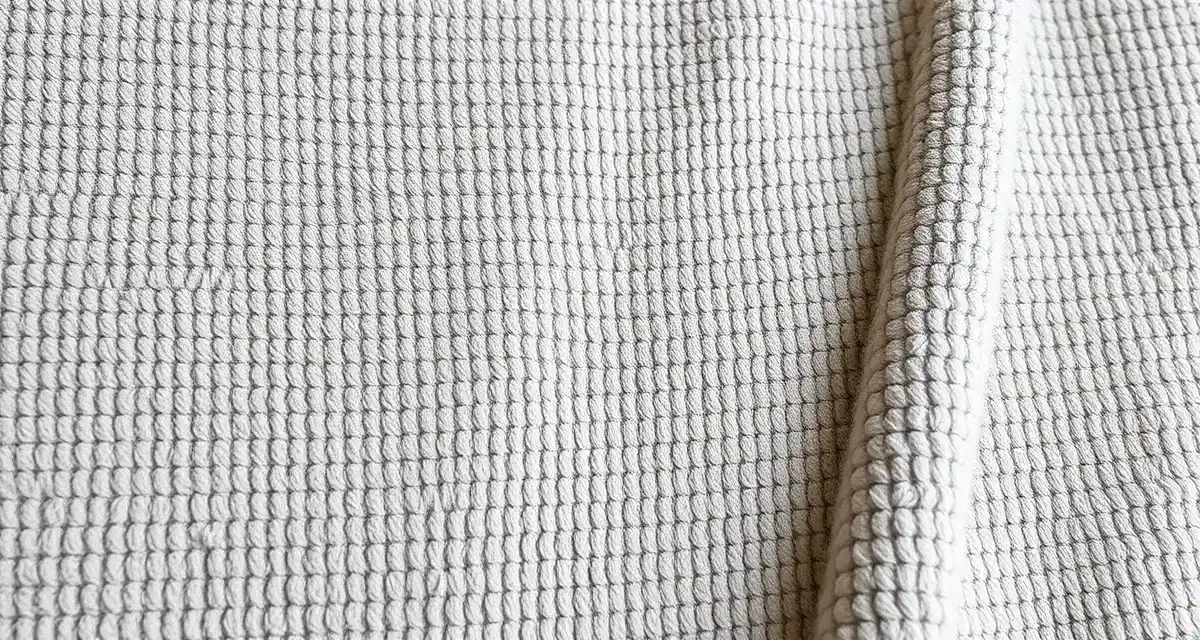
Chenille Pile Direction in Upholstery: Shading and Cut Direction Rules
Chenille pile compression at seams reduces seam life by 30% compared to correctly sewn pile-aware seams. That's not a cosmetic issue: it's a structural one that shows as seam failure and visible pile wear within 1-3 years on a daily-use sofa.
Most content on chenille pile direction focuses on the visual shading concern. That's real. But the compression issue is equally serious and less discussed. This guide covers both: how to cut chenille consistently to avoid color variation, and how to handle pile compression at seams.
TL;DR
- Chenille Pile Direction has specific performance characteristics that make it well-suited for certain applications and less suitable for others.
- Always check the double-rub count before specifying chenille pile direction for a particular use; ratings vary widely between products.
- The cleaning code (W, S, WS, X) for chenille pile direction determines what maintenance clients can safely perform and should be communicated at delivery.
- Pattern repeat, nap direction, and fabric width all affect yardage requirements and should be verified before calculating a quote.
- COM chenille pile direction from clients should be inspected for rub count, cleaning code, and width before acceptance.
- Proper installation technique for chenille pile direction differs from standard fabric; follow manufacturer guidance for any specialty material.
Chenille vs Velvet: Different But Similar
Chenille and velvet are both pile fabrics: they both have a surface texture that reflects light differently from different directions. But they're made differently, and those differences matter for how you handle them in the shop.
Velvet is a woven fabric with a cut pile. The pile is relatively uniform in height and direction, and the nap direction is consistent across the fabric.
Chenille is made from a twisted chenille yarn where the fibers radiate outward from a core. The pile isn't as precisely controlled as velvet: it can be slightly irregular in direction and height, especially on high-pile and chunky chenilles.
The practical implications:
- Chenille pile direction is usually present but less sharply defined than velvet
- Chenille shading (the color variation from viewing different directions) is real but often subtler than velvet
- Chenille pile compression at seams is more severe than velvet because the chunky yarn compresses irregularly
Identifying Chenille Pile Direction
The hand test works for chenille as it does for velvet: stroke the fabric in both directions. With the pile, it feels smooth. Against the pile, it feels slightly rougher and may look slightly different in color.
But unlike velvet, where the direction is always obvious, chenille can be ambiguous. Some chenilles, particularly densely woven ones, have barely perceptible pile direction. Others are quite directional.
The visual test: View the fabric at a low angle in natural or raking light. If the fabric has a perceptible pile direction, one direction will look darker (viewing against the nap) and one lighter (viewing with the nap). If you can't see any difference from two different angles, the chenille is relatively non-directional and you have more flexibility in cutting orientation.
The nap direction fabric calculator can help plan cutting layouts for directional chenille.
Cutting Consistently: The Protocol
Whether your chenille is strongly directional or subtly directional, establish a cutting protocol and follow it:
Step 1: Determine pile direction using the hand and visual tests.
Step 2: Mark an arrow on the bolt selvage showing the pile direction (pointing downward per standard convention).
Step 3: Plan all cut pieces to run in the same orientation as the arrow. If a piece would need to be rotated from this orientation to fit the cutting layout, find a different arrangement.
Step 4: Before cutting each piece, hold it in the intended orientation and check the arrow direction.
Step 5: After cutting, mark each piece immediately with a directional arrow before moving it from the cutting table.
Shade comparison shows chenille cut in same direction vs mixed direction on identical sofa pieces. The difference ranges from subtle (on dense, low-pile chenille) to considerable (on high-pile or loose chenille with a strong directional sheen).
Pile Compression at Seams: The Structural Problem
This is where chenille differs most from velvet in a practically important way. Chenille yarn, being twisted and fuzzy, compresses notably under pressure. At seams, the sewing machine foot and the stitching thread both apply pressure that flattens the pile in the seam zone.
On a standard seam with 3/8-inch seam allowance, the compression from the machine foot extends approximately 3/8 inch on each side of the stitch line, for a total affected zone of about 3/4 inch. On low-pile chenille, this is acceptable. On high-pile chenille, the compressed zone is visible as a flattened line parallel to the seam, reducing the apparent seam edge to a flat, compressed ridge.
Why This Reduces Seam Life by 30%
The compressed chenille pile at a seam has two problems:
- The yarn fibers at the compression point are stressed. Over time, this stress point becomes a point of failure where the fabric weakens faster than the surrounding areas.
- The compressed pile creates a visible line that gets more pronounced as the uncompressed pile on either side of the seam continues to wear normally. The seam looks progressively worse with use.
The Solution: Wider Seam Allowance and Pre-Compression
Wider seam allowance: On mid-to-high pile chenille, use 1/2-inch seam allowance instead of 3/8 inch. This gives more fabric between the stitching and the visible pile surface, reducing the visual impact of compression.
Pre-compression technique: Before sewing, press the chenille pile flat in the seam zone using a seam roller or the back of your fingernail. This distributes the compression before sewing rather than letting the machine do it inconsistently. The result is a more controlled, uniform compressed zone that's less visible in the finished piece.
Reduced presser foot pressure: If your machine allows it, reduce presser foot pressure slightly when sewing chenille. Lower pressure = less compression of the pile during sewing. Test on a scrap piece first to ensure you're still getting a clean stitch.
Chenille on Different Furniture Types
High-Use Sofas
On everyday sofas, chenille pile compression at seams will accelerate with heavy use. The seat cushion seams, which get body weight applied to them daily, should use the widest practical seam allowance. Add welt or piping to high-stress seams: the welt protects the seam edge and prevents the compressed zone from becoming a visual focal point.
Statement Chairs and Low-Use Pieces
For accent chairs and decorative pieces with lower use frequency, compression is less critical. Standard seam allowances are acceptable on low-pile chenille for these applications.
Outdoor Chenille
Outdoor chenille (UV-resistant versions) has all the same pile direction and compression concerns as indoor chenille, plus the outdoor stress factors. Use marine-grade thread and wider seam allowances for any outdoor chenille application.
FAQ
Does chenille have a pile direction in upholstery?
Yes, most chenille has a pile direction, though it's often less sharply defined than velvet. The direction is detectable by running your hand across the fabric: one direction is smooth (with the pile), one is slightly rougher (against the pile). Strongly directional chenilles show visible shading (color variation) when pieces are cut in different orientations. Even subtly directional chenilles benefit from consistent cutting orientation as a best practice.
How do I prevent chenille shading on a sofa?
Establish the pile direction before cutting anything and maintain the same orientation for every piece. Use the hand test and raking light test to confirm direction. Mark an arrow on the bolt selvage and check every piece against it before cutting. After cutting, mark each piece with a directional arrow before moving it from the table. Before sewing, lay all pieces face-up and view them in raking light, any inconsistency is visible and fixable before sewing. Catching direction errors before sewing is free; catching them after completion costs $300-600 in remakes.
What is the correct seam allowance for chenille?
For low-pile chenille: standard 3/8-inch seam allowance is acceptable. For mid-pile chenille: use 1/2-inch seam allowance to account for pile compression. For high-pile or chunky chenille: use 5/8-inch seam allowance. Wider seam allowances don't eliminate pile compression at seams, but they move the stitch line farther from the visible pile surface, making the compressed zone less visible in the finished piece. For high-stress seams (seat cushion edges, arm front seams), add welt or piping to protect the seam edge regardless of pile height.
How durable is this fabric for everyday residential use?
Durability depends on the specific product's double-rub count. For everyday residential use, look for a minimum of 15,000 double rubs for light use and 30,000+ for heavy residential use. Always check the manufacturer's specification rather than the fabric category alone, as durability varies significantly within any fabric type depending on construction and finishing.
How do I care for upholstery covered in this fabric?
Follow the cleaning code on the fabric label: W (water-based cleaners safe), S (solvent-based cleaners only), WS (either), or X (vacuum only). For spot cleaning, always test in an inconspicuous area first. Blot spills immediately rather than rubbing, which spreads the stain and can damage the fabric structure. Provide clients with a written care card at delivery specifying the cleaning code and any special maintenance recommendations.
Sources
- National Upholstery Association
- Association of Master Upholsterers and Soft Furnishers (AMUSF)
- Upholstered Furniture Action Council (UFAC)
- Furniture Today (trade publication)
Get Started with StitchDesk
Helping clients choose the right fabric is a core part of the job, and having accurate yardage calculations and fabric records at hand makes those conversations faster and more confident. StitchDesk keeps fabric data, yardage calculations, and client records in one place so you spend less time on paperwork and more time on the work itself. Try StitchDesk free.