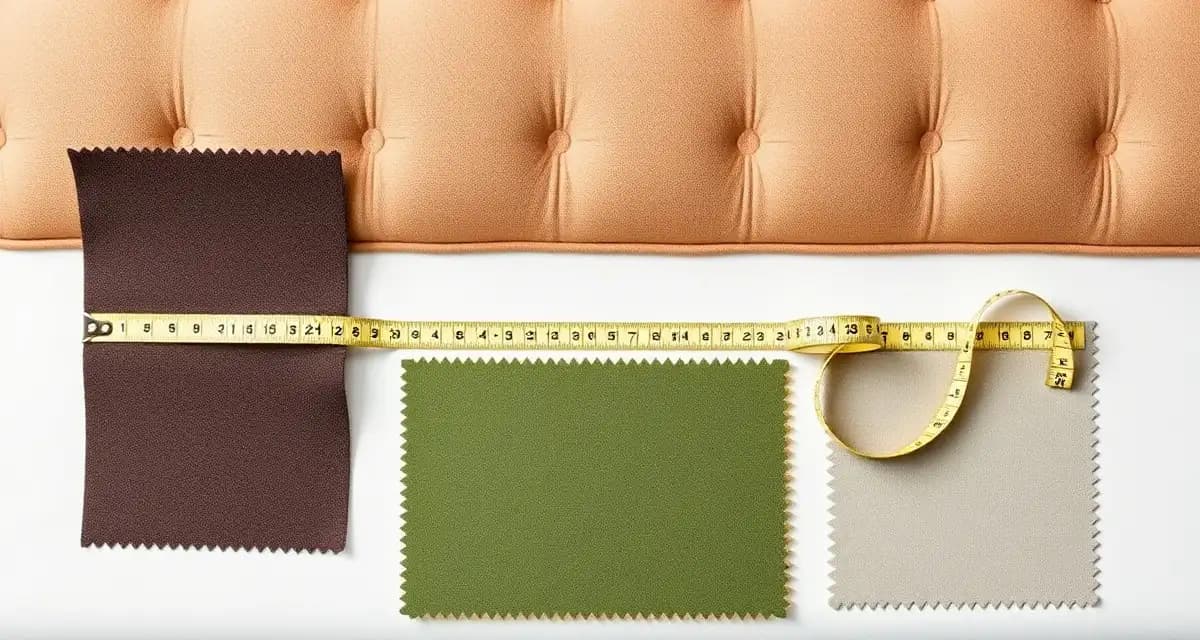
Fabric Yardage Calculator for Benches: Hall Bench to Window Seat
A 48-inch bench with welting needs up to 2.5 yards of fabric. Estimating by eye causes consistent shortfalls, not because the bench is complicated, but because welting yardage gets forgotten until you're already cutting, and bench length varies enough that the range (1.5–4 yards) is too wide to guess reliably.
Benches are one of the most variable pieces in upholstery. A small bedroom bench at 36 inches is a 10-minute job, material-wise. A 72-inch window seat with a boxed cushion, piano hinge lid, and matching welting is a substantial material order. The calculator handles the full range with a linear foot input that scales automatically.
TL;DR
- Accurate yardage calculation for bench jobs prevents costly fabric shortfalls and over-ordering that erode margin.
- Pattern repeats are the most common source of yardage errors; always calculate each cutting zone separately, not as a flat percentage.
- Nap-direction fabrics (velvet, chenille, mohair) require 15-25% more yardage than the same job in plain fabric.
- Fabric width significantly affects yardage: the difference between 54-inch and 60-inch fabric can be 1-2 yards on the same piece.
- Always add a 10-15% buffer on plain fabric and 15-20% on patterned fabric to account for cutting waste.
- Entering measurements accurately at the quoting stage eliminates the need to reorder mid-job.
Bench Types and Their Yardage Profiles
Simple rectangular bench (no back): Seat top, side panels, welting optional. A 48-inch bench at 18 inches wide, 16 inches tall: 2–2.5 yards with welting.
Window seat bench: Often built-in, with a hinged lid for storage access. Seat top, front and side panels, usually no back since it's against a wall. 36-inch window seat: 1.75 yards. 60-inch: 2.5 yards. 96-inch: 3.5–4 yards.
Hall bench or entry bench: Typically 36–48 inches, legs, upholstered seat top only. 0.75–1.5 yards depending on whether you're covering just the seat pad or the full seat structure.
Bedroom bench (footboard bench): Usually 48–60 inches, some depth to the seat, sometimes a cushioned back. 2–3 yards for seat and back.
Dining banquette bench: Long, sometimes custom-built to a room. The calculator's linear foot input handles these. A 96-inch banquette with back cushion: 6–8 yards. A 120-inch banquette: 8–10 yards.
Church pew cushion / commercial bench: Long, flat, typically no welting to reduce cost. Calculate purely on seat surface area plus a 3-inch wrap-under.
The Welting Question
Welting adds more yardage than most people initially account for. On a 48-inch bench with welting on all top edges, front edge, two short ends, and back edge if it's floating, you have approximately 12 linear feet of welt cord to cover. At 2.5-inch-wide bias strips cut from the same fabric, 12 linear feet of welting uses about 0.4 yards.
That might not sound like much, but on smaller bench jobs it's a meaningful percentage of the total order. And if you're using a fabric with a directional nap or a pattern, welt cording cut on the bias adds another complexity, some fabrics don't work well on the bias (jacquards, for example, can develop a texture distortion).
The calculator asks whether welting is included and where (all edges, top edges only, front only). It adds the welting yardage as a separate line item so you can see exactly what it contributes to the total.
Pattern Repeats on Benches
Most bench work is in performance fabrics, leather, or vinyl, no pattern repeat to worry about. But when a client wants a bench to match a sofa or chair they're having done at the same time, or when they bring a designer COM fabric with a 13-inch stripe, the repeat becomes relevant.
For a bench, the key is where the pattern falls on the seat top. A centered stripe or medallion is expected by most clients. If the pattern isn't centered, they'll notice. Getting the centering right means starting your cut at the midpoint of the pattern, not the edge of the repeat, which can add up to half a repeat in waste depending on the pattern.
For long benches, you're typically cutting one continuous seat top panel. On a 60-inch bench with a 27-inch vertical repeat, you may need to order an extra repeat to guarantee the pattern placement you want. The calculator factors this in.
MGR Repair Shop Comparison
MGR Repair Shop is designed for electronics repair businesses. Job tracking for iPhones and laptops. There's no bench calculation, no upholstery yardage math of any kind. It handles repair tickets and customer billing for a completely different industry. Shops that use it for upholstery (some do, because it's cheap) are manually adding notes to estimate fabric and running the yardage math separately. That's two tools and two chances to make an error.
StitchDesk integrates the yardage calculation directly into the quote and job ticket. One entry, one number, one quote to the customer.
How to Use the Calculator
- Select "Bench" as the furniture type.
- Choose bench type from the style dropdown.
- Enter bench length, depth, and seat height.
- Specify if the bench has a back panel (and its height).
- Input fabric width.
- Add pattern repeat details if applicable.
- Toggle nap direction for velvet or directional fabrics.
- Select welting options: all edges, top only, none.
- For storage lid: specify lid dimensions separately.
- Review total yardage output and zone breakdown.
The linear foot input means you can add the exact bench length without rounding to the nearest standard size. A 53-inch bench is a 53-inch bench. The calculator scales proportionally.
Related Articles
FAQ
How many yards for a 4-foot bench?
A 48-inch (4-foot) bench with a simple flat seat and welting on the top edges needs 2–2.5 yards of 54-inch plain fabric. If it has a padded back panel, add 0.5–0.75 yards. If it's a storage bench with a hinged lid and you're covering the front and side panels as well, you're closer to 3 yards. Pattern repeat adds to all of these numbers.
Does welting add to bench fabric yardage?
Yes. Welting for a 48-inch bench adds approximately 0.3–0.5 yards depending on how many edges get welted. Welting is cut on the bias from the same fabric, and the bias cut is inherently less efficient than a straight cut from the bolt. On a bench with welting on 3 or 4 edges, plan for an additional 0.4–0.5 yards over the base fabric calculation.
What width fabric works best for bench reupholstery?
54-inch fabric is standard and works well for most bench widths. For benches 18 inches or less in depth, 54-inch fabric allows you to cut side panels and end panels from the same row of cuts as the seat top, reducing waste. For very deep benches (24+ inches) or long window seats, 60-inch fabric can give you slightly more efficient cutting. Leather hides don't come in consistent widths, so bench calculations in leather should use the specific hide width you're working with.
What is the most common yardage mistake on this type of job?
The most common mistake is not accounting for pattern repeat offsets across all cutting zones. A single pattern repeat adds waste to every panel that must start at the same point in the repeat, and on a piece with 6-10 cutting zones, this adds up significantly. Using a flat percentage buffer instead of a zone-by-zone repeat calculation almost always underestimates yardage for patterned fabric.
How does fabric width affect yardage for this piece?
Fabric width has a direct impact on yardage for any upholstery piece. Standard 54-inch fabric is the baseline for most calculations. A 60-inch fabric can reduce yardage by 10-15%. A 48-inch fabric can increase yardage by 10-20%. Always confirm fabric width before finalizing yardage, especially with COM fabric, which often comes in non-standard widths that can invalidate a standard calculation.
Sources
- National Upholstery Association
- Association of Master Upholsterers and Soft Furnishers (AMUSF)
- Upholstered Furniture Action Council (UFAC)
- Furniture Today (trade publication)
Get Started with StitchDesk
Getting yardage right on bench jobs is the difference between a profitable quote and an expensive reorder. StitchDesk's fabric calculator accounts for all the variables that cause errors: pattern repeat by zone, nap direction, fabric width, and cushion configuration. Start a free trial and see how accurate yardage calculation affects your bottom line.