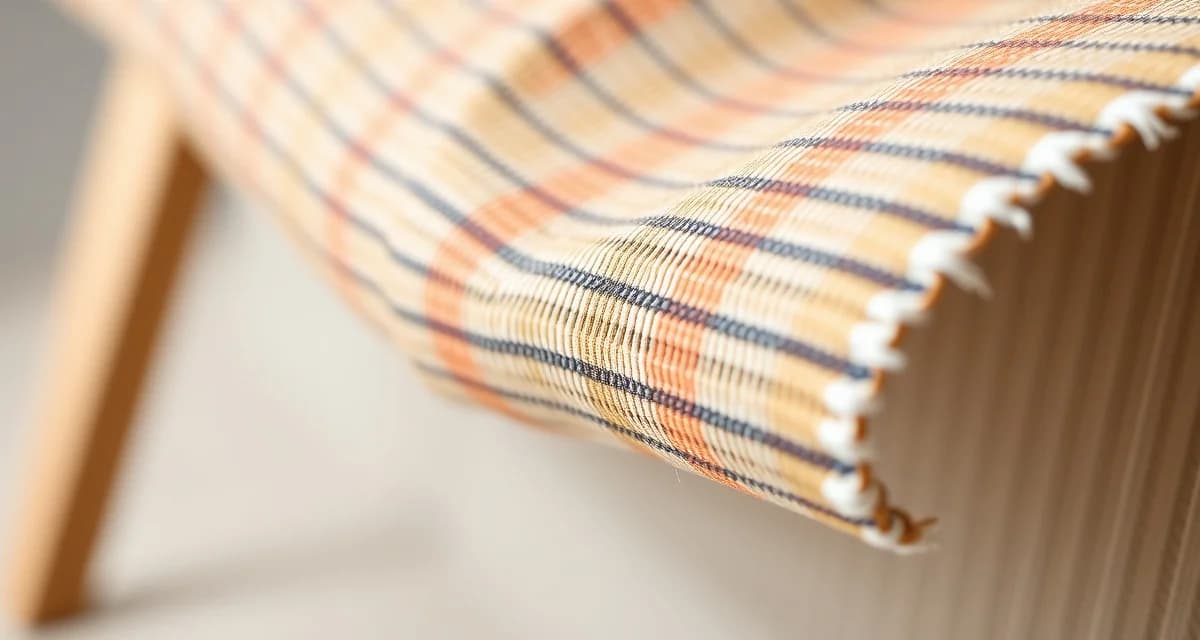
Warp vs Weft in Upholstery Fabric: Why Grain Direction Matters
Off-grain upholstery, weft-direction cutting on stress areas, reduces fabric life by 30-50% in high-use chairs. The warp threads (running the length of the fabric) are stronger and more stable than the weft threads (running the width). When you cut panels off-grain and place the weaker weft threads under load, the fabric wears and stretches faster than it would with correct grain orientation.
Understanding warp and weft is foundational to every fabric decision in upholstery.
TL;DR
- Understanding warp vs weft properties helps you select the right material for each client's specific use case and budget.
- Durability ratings (double-rub count) are the standard measure of upholstery fabric longevity: 15,000+ for light use, 30,000+ for heavy residential, 100,000+ for commercial.
- Fabric cleaning codes (W, S, WS, X) determine what cleaning methods are safe and should be communicated to every client at handoff.
- Pattern repeat, nap direction, and fabric width are the three variables that most affect yardage requirements on any piece.
- COM fabric should always be verified for rub count and cleaning code before acceptance.
- Fabric performance in real use depends on the application: a fabric rated for light residential use will fail quickly in high-traffic settings.
What Warp and Weft Mean
Warp threads run parallel to the selvage (the finished lengthwise edge of the fabric). They run the full length of the bolt. In weaving, the warp threads are held under tension on the loom while the weft threads are woven through them. Because warp threads are under continuous tension during manufacturing, they tend to be stronger, more tightly twisted, and more stable than weft threads.
Weft threads run perpendicular to the selvage, from edge to edge across the width of the fabric. They are woven through the warp. Weft threads typically have more give than warp threads, they stretch slightly when pulled.
The practical difference: warp direction has minimal stretch and maximum strength. Weft direction has slight stretch and somewhat less strength. Bias (45-degree diagonal) has the most stretch of all.
How Grain Direction Affects Upholstery Performance
When you cut panels for upholstery, the goal is to orient the warp direction (strong, stable) along the primary stress axis of each panel.
On a seat cushion, the stress comes from compression and the pull of a person sitting and standing. The warp should run front-to-back, so the strongest threads are running in the direction of the stress.
On a back cushion, the stress is mostly back pressure against the vertical surface. The warp should run vertically, so the strong threads are aligned with the load direction.
On inside arm panels, the stress runs both directions from client contact and the pull of the fabric under tension. The warp running top-to-bottom gives the most stable installation.
The Railroading Option
Some fabrics are "railroaded", installed with the warp running horizontally across the back of a sofa rather than vertically. This is done when a fabric without a top/bottom orientation needs to run the full width of a sofa back without a seam.
Railroading only works on fabrics that don't have a directional pattern or pile. Plain weaves, some textures, and fabrics without an up/down orientation can be railroaded safely. Velvets, most patterns, and any fabric with a directional texture cannot be railroaded without making the grain direction obvious in the finished piece.
Identifying Warp Direction
The selvage method: The selvage is always warp direction. Find the selvage edge of your fabric and any line parallel to it is warp direction. Cut parallel to the selvage for all panels that need to run warp-wise.
The stretch method: Hold a fabric sample and pull gently in both directions. The direction with less stretch is the warp. The direction with slight give is the weft. This works on most woven fabrics, though tightly woven fabrics have minimal stretch in either direction.
The thread count method: Look closely at the fabric face. Warp threads run in the same direction as the selvage (lengthwise). If you can distinguish thread orientation, the longer direction matches the warp.
Related Articles
- Upholstery Fabric Rub Count (Wyzenbeek): What It Means and Why It Matters
- AI Fabric Calculator for Upholstery Shops: What It Does and Why It Matters
FAQ
What is warp and weft in fabric?
Warp threads run the length of the fabric bolt, parallel to the selvage edges. They're the vertical threads held under tension during weaving. Weft threads run across the width of the fabric, woven through the warp. In practical terms, the warp direction is stronger and more stable (less stretch), while the weft direction has slightly more give. In upholstery, cut panels with the warp direction aligned to the primary stress axis of each surface for the best performance and durability.
Does warp or weft direction matter for upholstery?
Yes, significantly. Warp threads are stronger and more stable than weft threads. Cutting panels with the warp in the wrong direction, or cutting on the bias, places the weaker threads under load where the stronger ones should be. On high-use pieces like seat cushions and arm tops, off-grain cutting can reduce fabric life by 30-50%. For any panel under regular load, identify the warp direction first and cut so the warp runs parallel to the primary stress direction.
How do I find the warp direction of fabric?
Use the selvage: the selvage edge runs parallel to the warp threads, so any line parallel to the selvage is warp direction. If you don't have the selvage, hold a section of fabric and gently pull in both directions, the direction with less stretch is the warp. On most woven fabrics you can also see the thread orientation with close observation: warp threads run lengthwise, weft threads run across the width. When in doubt, cut parallel to the longest dimension of the bolt, which is always the warp direction.
How do I explain fabric choices to a client?
Start with use case: how the piece will be used, who will use it, and whether pets or children are factors. Then narrow by durability requirement (rub count) and cleaning preference (cleaning code). Once practical requirements are set, move to aesthetics: color, texture, pattern. Clients who understand why certain fabrics are recommended are more confident in their choices and less likely to question cost differences between options.
How do I verify fabric quality before accepting a COM order?
Check the fabric label or request a spec sheet from the supplier. Verify: double-rub count (for durability), cleaning code (for maintenance), width (for yardage calculation), and whether the fabric is dry-clean only or has any special handling requirements. For velvet or nap fabrics, confirm the nap direction and whether the fabric is prone to crushing. Document your findings in the job record before beginning work.
Sources
- National Upholstery Association
- Association of Master Upholsterers and Soft Furnishers (AMUSF)
- Upholstered Furniture Action Council (UFAC)
- Furniture Today (trade publication)
Get Started with StitchDesk
Helping clients choose the right fabric is a core part of the job, and having accurate yardage calculations and fabric records at hand makes those conversations faster and more confident. StitchDesk keeps fabric data, yardage calculations, and client records in one place so you spend less time on paperwork and more time on the work itself. Try StitchDesk free.