Yardage for Cushion-Only Reupholstery: Seats Backs and Throw Pillows
Cushion-only jobs are some of the highest-volume, fastest-turn work in residential upholstery. A client calls with a sofa frame that's perfectly fine but cushion covers that are worn, stained, or just out of style. They want new covers. They don't need the whole thing stripped and redone.
These jobs should be fast to quote. But if you don't have a solid cushion-only calculation workflow, you're either winging it on yardage or making the client wait while you work through a full sofa calculation just to arrive at the cushion numbers.
Cushion-only jobs are about 30 percent of residential volume for most shops. Getting this quote in 2 minutes on the phone wins the job. Making someone wait kills it.
TL;DR
- Upholstery For Cushions Only yardage depends on fabric width, construction details, pattern repeat, and nap direction.
- Plain 54-inch fabric requires a baseline calculation plus 10-15% waste allowance for a standard upholstery for cushions only job.
- Patterned fabric adds 20-35% to base yardage depending on repeat size and the number of cutting zones that must align.
- Directional fabrics add 15-25% over plain fabric because layout optimization is restricted by nap direction.
- Always verify fabric width before finalizing yardage; COM fabric often comes in non-standard widths.
- Calculating yardage at the quote stage, not mid-job, eliminates reorders and protects your profit margin.
Measuring for Cushion Covers
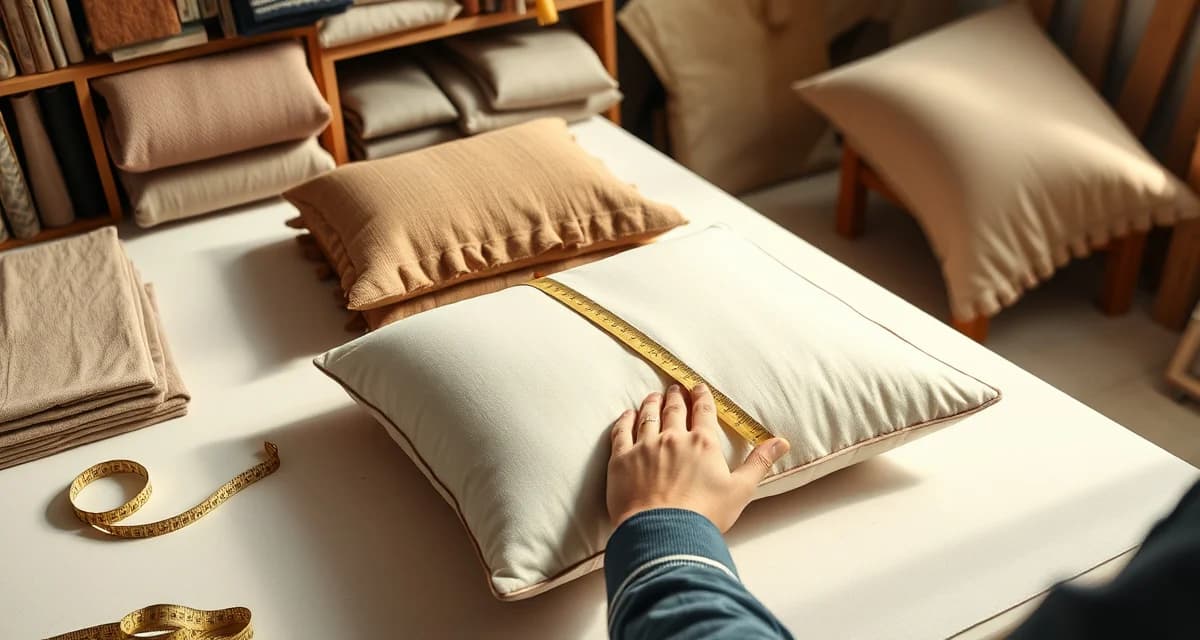
When you're calculating cushion-only yardage, you're working from cushion dimensions, not sofa dimensions. This is both simpler and more precise.
For each cushion, you need:
- Length (left to right across the front)
- Width (front to back)
- Thickness (height of the cushion, which determines boxing strip depth)
- Style: T-cushion or rectangular, knife-edge or box cushion
That's it. You don't need to measure arms, back panels, outside back, or any other sofa surface.
Box Cushion Yardage Calculation
A standard box seat cushion has these fabric components:
- Top face
- Bottom face (usually the same fabric)
- Boxing strip (wraps around the perimeter sides)
- Zipper panel (usually at the back of the boxing strip)
For a typical 26 x 24 x 5-inch box seat cushion in 54-inch fabric:
- Top and bottom: roughly 0.6 yards combined
- Boxing and zipper panel: roughly 0.3 yards
- Total per cushion: about 1 yard
For a larger 36 x 26 x 6-inch cushion:
- Total per cushion: about 1.5 yards
A 3-cushion sofa with seat and back cushions (6 total) in standard size: roughly 5.5 to 7 yards for cushion covers only. That's meaningfully less than the 13 to 16 yards for a full sofa reupholstery.
Use the StitchDesk sofa seat cushion yardage calculator for precise numbers based on your exact cushion dimensions.
Back Cushion Yardage
Back cushions for pillow-back sofas are usually knife-edge rather than box style, which simplifies the calculation. A knife-edge pillow has two face panels and no boxing strip.
For a typical 22 x 22-inch square back pillow: 0.5 to 0.6 yards each.
For a longer 24 x 30-inch lumbar-style back cushion: 0.75 to 0.85 yards each.
A 3-cushion sofa with three back cushions in standard size: roughly 1.5 to 2 yards for back cushions only.
Throw Pillow Yardage
Throw pillows are the fastest calculation in the shop. A standard 18 x 18-inch square knife-edge pillow takes 0.4 to 0.5 yards. A 20 x 20-inch pillow takes about 0.5 to 0.6 yards.
If the pillow has a flange or trim detail, add 0.1 to 0.15 yards.
For a set of 4 standard 18-inch throw pillows: 1.75 to 2 yards total.
Pattern Repeat for Cushion-Only Jobs
Pattern matching on cushions matters more than on almost any other upholstery application. When you have three seat cushions side by side, any misalignment in the pattern is immediately obvious.
For a centered or aligned pattern across all three seat cushions, plan your repeat waste per cushion, not per sofa. Each cushion needs the pattern to start at the same point, which means each one needs a full repeat at the start of the cut even if only a fraction of that repeat is used.
For a medium pattern repeat (12 inches), a set of three seat cushions might use 2 yards just in pattern waste, on top of the base yardage.
The StitchDesk sofa fabric yardage calculator has a cushion-only mode that lets you input individual cushion dimensions and calculates total yardage including pattern repeat waste.
Combining Seat and Back Cushion Orders
When a client wants all cushion covers redone, seat and back, it's almost always worth ordering all the fabric at once. Splitting into two orders risks a dye-lot mismatch if you reorder back cushion fabric later. Same applies for adding throw pillows after the fact.
Quote the full cushion package in one number. It's better for the client's budget visibility and better for your fabric consistency.
Frequently Asked Questions
How many yards for seat cushion covers only?
For a 3-cushion sofa replacing seat cushions only, plan on 3 to 4.5 yards of fabric in solid 54-inch material. Each standard box seat cushion needs roughly 0.9 to 1.25 yards depending on dimensions. Pattern fabric adds yardage for repeat waste, on a 12-inch repeat, add another 1.5 to 2 yards for three aligned cushions.
How do I calculate fabric for throw pillow covers?
A standard 18 x 18-inch knife-edge throw pillow needs 0.4 to 0.5 yards of 54-inch fabric. A 20 x 20-inch pillow needs 0.5 to 0.6 yards. For a set of 4 standard pillows, budget 1.75 to 2 yards total. If matching a sofa fabric pattern across multiple pillows, add yardage for the repeat.
Can I reupholster just the cushions on a sofa?
Absolutely, this is one of the most common residential jobs. If the sofa frame is structurally sound and the outer fabric is in good condition, replacing only the cushion covers can transform the look of the piece for a fraction of a full reupholstery cost. The calculation is based on cushion dimensions only, not sofa dimensions, so it's a simpler scope than a full job.
What is the biggest factor in yardage variation for this piece?
Pattern repeat is the biggest source of yardage variation. On plain fabric, the baseline calculation plus a 10-15% waste buffer is usually sufficient. Add a 13-inch pattern repeat and you may need 15-20% more. Add a 27-inch pattern repeat and the additional yardage can be 25-35% over the plain fabric calculation. Nap direction is the second-largest factor, typically adding 15-25% over plain fabric because layout optimization is restricted.
Sources
- National Upholstery Association
- Association of Master Upholsterers and Soft Furnishers (AMUSF)
- Upholstered Furniture Action Council (UFAC)
- Furniture Today (trade publication)
Get Started with StitchDesk
Getting yardage right on upholstery for cushions only jobs is the difference between a profitable quote and an expensive reorder. StitchDesk's fabric calculator accounts for all the variables that cause errors: pattern repeat by zone, nap direction, fabric width, and cushion configuration. Start a free trial and see how accurate yardage calculation affects your bottom line.