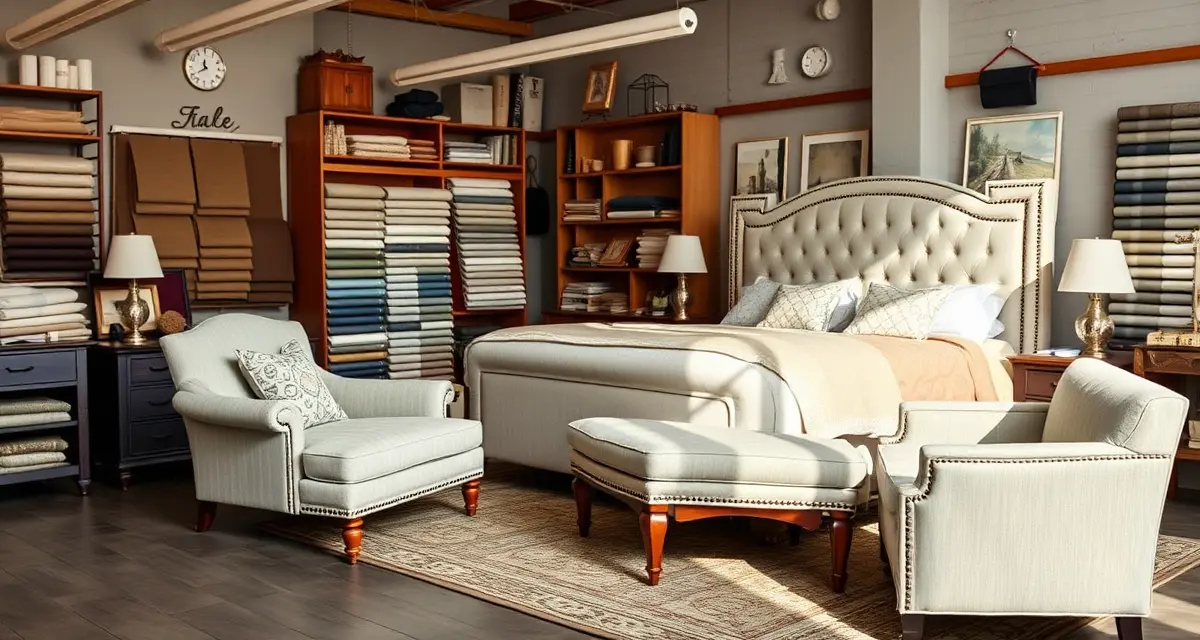
Bedroom Set Fabric Coordination: Headboard Chair Bench in One Order
Designers order bedroom sets together 70% of the time. That statistic matters for your shop because shops that can quote a complete bedroom set in a single call win those jobs consistently. Shops that can only quote one piece at a time lose to whoever can give the designer a confident, complete number.
Quoting a full bedroom set, headboard, accent chair, and bench, in one shot isn't complicated. But it requires knowing how each piece calculates and how to handle a shared fabric order that covers three different furniture types with different construction demands.
TL;DR
- This guide covers the specific techniques, measurements, and decisions that determine quality outcomes in upholstery work.
- Planning and preparation before cutting begins is the most reliable way to avoid costly errors on any upholstery job.
- Fabric selection, yardage calculation, and structural assessment are the three decisions that most affect the final result.
- Experienced upholsterers develop consistent workflows that ensure quality and efficiency across every job type they handle.
- Documenting job details, material specifications, and client approvals protects both the shop and the client.
- The right tools, materials, and techniques for each job type make a measurable difference in quality and profitability.
What a Full Bedroom Set Usually Includes
The core bedroom upholstery package that designers order together is typically:
- King or queen headboard (flat, channel-tufted, or diamond-tufted)
- Accent chair or slipper chair (often placed in a reading nook or corner)
- Bench at the foot of the bed (upholstered top, sometimes fully wrapped or on legs)
Some orders also include:
- Two matching bedside table stools
- Window seat cushion
- Dressing chair or vanity stool
The key word is "coordinating." These pieces don't need to be in identical fabric, but they typically use fabric from the same collection or palette. When they're in the same fabric, you're placing one order from one dye lot, that's where the planning advantage is.
Calculating Each Piece Separately
Headboard Yardage
Headboard yardage varies enormously by style and size. These figures are for solid 54-inch fabric:
Queen flat (no tufting): 2 to 3 yards
Queen channel-tufted: 3 to 4 yards
Queen diamond-tufted: 4 to 5 yards
King flat: 3 to 4 yards
King channel-tufted: 4 to 5 yards
King diamond-tufted: 5 to 6.5 yards
The back of the headboard also needs covering, either in the main fabric or a coordinating secondary fabric. If you're covering the back in main fabric, add 1 to 1.5 yards for a queen and 1.5 to 2 yards for a king.
Accent Chair Yardage
An accent chair in a bedroom is typically a slipper chair, barrel chair, or small occasional chair. These are smaller than full arm chairs:
Slipper chair (no arms): 3 to 4 yards
Small barrel chair: 4 to 6 yards
Small occasional arm chair: 4 to 6 yards
Papasan or lounge chair: 5 to 7 yards
Bench Yardage
The foot-of-bed bench varies by construction:
Simple upholstered top (no sides or wrap): 1.5 to 2.5 yards
Fully wrapped bench with fabric sides: 2.5 to 4 yards
Bench with tufted top: 3 to 5 yards
A standard 60-inch foot-of-bed bench in fabric-wrapped construction with simple top upholstery typically uses 2 to 3 yards. A tufted version adds 0.75 to 1.5 yards depending on button density.
Total Bedroom Set Yardage
Adding these together for a typical bedroom coordination package (queen, solid fabric):
| Piece | Yardage |
|---|---|
| Queen flat headboard (with back) | 4-5 yards |
| Slipper chair | 3-4 yards |
| Foot-of-bed bench (wrapped) | 2.5-4 yards |
| Total | 9.5-13 yards |
For a king headboard with diamond tufting, add 2 to 3 yards. For a chair with pattern fabric, add repeat waste. For a tufted bench, add 1 to 1.5 yards. Most complete bedroom sets land in the 10 to 15 yard range for a standard order.
Ordering All Pieces From the Same Dye Lot
This is the most important practical consideration in bedroom set coordination. When three pieces are in the same fabric, they must come from the same dye lot. If you order the headboard fabric, do the headboard, and then order chair fabric separately six weeks later, you risk a visible color difference even in the same colorway.
Best practice: Calculate all three pieces before any work begins. Place one order for the total yardage. If you're doing the work in phases (headboard first, bench a month later), that's fine, but the fabric should arrive together.
When calculating total order yardage, add a 10% buffer across the full order rather than 10% to each piece separately. On a 12-yard order, that's 1.2 extra yards. On a piece-by-piece basis, you'd be adding 10% three times, which over-buffers. One order, one buffer.
Pattern Matching Across Multiple Pieces
If all three pieces are in a patterned fabric, pattern consistency across the set is part of the product you're delivering. How you handle this depends on what the designer specifies.
Option A: Independent centering. Each piece gets the pattern centered on its most prominent panel (headboard center, chair seat/back, bench top). Pieces don't need to align with each other, they just need to be internally consistent and well-centered. This is the most common approach.
Option B: Coordinated alignment. The same repeat reference point is used across all pieces so the pattern is at the same position on each. This is rare and complex, and usually only matters for very specific pattern types (like a continuous stripe that a designer wants to read at the same height across all pieces).
For most bedroom sets, Option A applies. Budget pattern waste per piece individually:
- Headboard: 1 to 2 yards for a 9-inch repeat
- Chair: 1 to 1.5 yards
- Bench: 0.5 to 1 yard
Add these to your base total before placing the order.
Designer Communication: Quoting a Bedroom Set
When a designer calls with a bedroom set, they're looking for a single number and a single timeline, not three separate quotes. Here's how to structure the conversation:
Get the full scope first. Ask: headboard size and style, chair style, bench dimensions and construction. Don't quote until you have all three pieces specified.
Give one total yardage number. The designer needs to order or approve fabric. They need to know total yards, not per-piece breakdowns (though you should have those ready if asked).
Quote one delivery timeline. If you can do all three pieces within the same week, say that. If you're phasing the work, give a single completion date.
Confirm the fabric order together. If you're sourcing the fabric, place one order. If the designer is supplying fabric, give them the total in one number so they can place their order.
Bedroom Set Fabric Styles That Work Well Together
When pieces aren't in identical fabric, coordinated selection becomes part of the value you offer. Common approaches:
Same color, different texture: Headboard in velvet, chair in a woven performance fabric of the same color, bench in a leather or faux leather. The color story holds; the textures create visual interest.
Same pattern at different scales: A large-scale floral on the headboard, a smaller-scale version of the same pattern on the chair, a solid from the palette on the bench. This takes pattern coordination experience but reads beautifully.
Neutral throughout: All three pieces in the same solid or near-solid performance fabric. This is the easiest path and still creates a cohesive, high-end look when the fabric quality is good.
Using the Headboard Fabric Yardage Calculator
The headboard calculator handles flat, channel-tufted, and diamond-tufted styles at all bed sizes. For designer-facing guidance on coordinating multiple bedroom pieces, the Designer Client Management Guide covers quoting and communication for multi-piece orders.
How much fabric for a headboard and bench set?
A standard queen flat headboard (with back) and a foot-of-bed bench typically need 6 to 9 yards combined in solid 54-inch fabric. Add 3 to 4 yards for an accent chair if that's part of the same order. Tufting on the headboard or bench adds 1.5 to 3 yards depending on style.
How do I coordinate fabric across a bedroom reupholstery?
Calculate each piece individually, then order all fabric at once from a single dye lot. For patterned fabric, budget pattern repeat waste per piece and sum before ordering. If pieces are in different but coordinating fabrics, ensure the secondary fabric order is placed at the same time as the primary to avoid scheduling delays.
Can I match fabric across headboard and chair?
Yes, and it's common practice. The headboard and chair are typically calculated and ordered from the same yardage, then work proceeds in the order that fits your shop schedule. The key requirement is placing a single fabric order for both pieces at the outset, not ordering piece by piece as you reach each one.
What are the most common mistakes to avoid in this type of work?
The most common mistakes are underestimating material requirements, starting work before the frame is fully assessed and repaired, and skipping the centering and alignment checks before cutting. Each of these is far more expensive to correct after cutting has begun than to prevent at the planning stage. Taking an extra 15-30 minutes at the assessment and planning stage pays dividends throughout the job.
How do I get the best results from a professional upholsterer?
Come to the consultation with clear measurements, photos of the piece, and an idea of the room's color scheme and intended use. Be specific about how the piece will be used: high traffic, pets, children, or outdoor exposure all affect fabric recommendations. Provide fabric samples or accept guidance on appropriate options for your use case. Approve the proof carefully and ask to see the fabric on the piece before final installation if you are uncertain about a pattern or color choice.
When should I consult a professional rather than doing the work myself?
Consult a professional when the piece has structural issues beyond simple fabric replacement, when the piece has significant financial or sentimental value, or when the fabric or technique (tufting, pattern matching, hand-tacking) requires skills you have not developed. A professional assessment before you begin is free at most shops and can prevent costly mistakes on a piece worth preserving.
FAQ
Sources
- National Upholstery Association
- Association of Master Upholsterers and Soft Furnishers (AMUSF)
- Upholstered Furniture Action Council (UFAC)
- Furniture Today (trade publication)
Get Started with StitchDesk
Running a successful upholstery shop means getting the details right on every job. StitchDesk gives you purpose-built tools for quoting, fabric calculation, job tracking, and client communication, all in one place designed specifically for the trade. Start a free trial and see how StitchDesk supports quality work from intake to delivery.