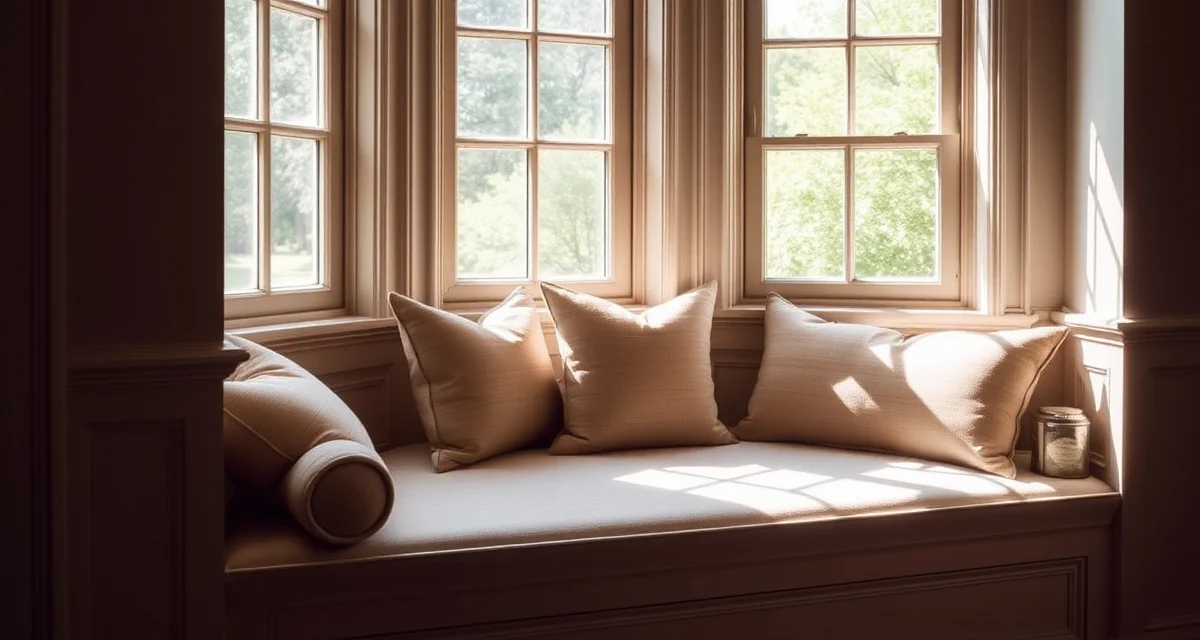
Window Seat Fabric Yardage: Cushion Seat and Side Returns
Window seats with two side returns need 1 to 2 yards more fabric than the same-length bench without returns. Generic bench calculators don't account for side returns at all. If your client has a built-in window seat with side panels, you'll under-order using a standard bench template.
This guide covers accurate yardage calculation for window seat cushions including side returns, optional back cushions, and the built-in vs freestanding differences that affect how you measure.
TL;DR
- For Window Seat yardage depends on fabric width, construction details, pattern repeat, and nap direction.
- Plain 54-inch fabric requires a baseline calculation plus 10-15% waste allowance for a standard for window seat job.
- Patterned fabric adds 20-35% to base yardage depending on repeat size and the number of cutting zones that must align.
- Directional fabrics add 15-25% over plain fabric because layout optimization is restricted by nap direction.
- Always verify fabric width before finalizing yardage; COM fabric often comes in non-standard widths.
- Calculating yardage at the quote stage, not mid-job, eliminates reorders and protects your profit margin.
Window Seat Configurations
Simple bench seat: A horizontal cushion with no side panels. This is the simplest calculation, essentially a standard bench cushion. Width x depth x thickness, plus seam allowance.
Window seat with side returns: The cushion wraps around the inside walls of the window alcove. Each side return is a separate flap of fabric that covers the wall-facing side of the seat. These returns add fabric, and they're the most commonly missed element in window seat calculation.
Window seat with back cushion: Some window seat installations include a back cushion that rests against the rear wall of the alcove. This is a second cushion to calculate, a back cushion is separate from the seat cushion.
Full window alcove treatment: Seat cushion + back cushion + side returns on all panels. This is the largest yardage scenario and the most complex to calculate.
Main Seat Cushion Yardage
Measure the seat cushion:
- Width: the full width of the window seat from wall to wall (for built-in) or end to end (for freestanding)
- Depth: front-to-back, from the front of the seat to the back wall or stop
- Thickness: the height of the cushion (typically 3-5 inches for comfort)
Top panel: Width + 1 inch x Depth + 1 inch
Bottom panel: Same as top
Front boxing strip: Width + 1 inch x Thickness + 1 inch
Back boxing strip: Width + 1 inch x Thickness + 1 inch (or this may be a return, not a boxing strip, depending on construction)
Example for a 72 x 22 x 4 inch window seat cushion:
- Top and bottom panels: 73 x 23 inches each
- Front boxing: 73 x 5 inches
- Back boxing: 73 x 5 inches
At 54-inch fabric, the 73-inch panels need to be pieced from two widths, or you can railroad the fabric (run it lengthwise rather than widthwise). Check fabric grain direction before deciding.
Without side returns, the total for this cushion is approximately 2.8-3.2 yards.
Side Return Yardage
Side returns cover the wall-facing ends of the window seat cushion. Each return has:
- A top face (the horizontal surface, continuous with the main seat or separate)
- A front face (the visible face at the window alcove end)
- Sometimes a bottom flap or tuck
Measure each side return:
- Return depth: how far the seat extends into the alcove on that side (typically 6-18 inches)
- Return height: the thickness of the cushion (matches main seat thickness)
For each side return panel:
- Front face: Return depth + 1 inch x Cushion thickness + 1 inch
- Top extension: Return depth + 1 inch x Cushion thickness + 1 inch (if cushion top covers the return)
For a 14-inch deep, 4-inch high side return:
- Front face: 15 x 5 inches
- Top extension: 15 x 5 inches
Per return: approximately 0.2-0.3 yards
Per pair of returns: approximately 0.4-0.6 yards
For larger returns (18+ inches deep), each return panel grows proportionally. Paired 18-inch returns add approximately 0.8-1.0 yards.
For the deepest returns on large window alcoves (24+ inches), paired returns can add 1.2-1.8 yards, confirming the 1-2 yard impact stated up front.
Back Cushion Yardage
If the window seat includes a back cushion against the rear wall:
- Width: same as seat width
- Height: typically 16-22 inches (determines back cushion yardage)
- Thickness: typically 3-5 inches (flatter than seat cushion for lean comfort)
Back cushion panels + boxing: approximately 1.5-2 yards for a full-width window seat back cushion.
Fabric Selection for Window Seats
Window seats often sit in direct or indirect sunlight for much of the day. Even if the window has glass UV protection, cumulative sun exposure over years can fade fabric that isn't UV-rated.
For window seats that receive direct sun: specify solution-dyed acrylic or UV-rated performance polyester. These maintain color considerably longer than standard interior upholstery fabric in sun-adjacent applications.
For window seats away from direct sun: standard interior upholstery fabric is appropriate. Choose based on durability (rub count) appropriate to how heavily the window seat is used.
For children's rooms or high-use window seats: performance fabric with stain resistance handles real-life use better than decorative fabrics.
The fabric yardage calculator for benches can be adapted for window seats by adding side return dimensions to the standard bench calculation. For the full bench reupholstery process, see the bench reupholstery guide.
Frequently Asked Questions
How much fabric for a window seat?
A simple window seat cushion (no side returns or back cushion) requires 2.8-3.2 yards for standard dimensions. Adding two side returns increases this by 0.4-1.8 yards depending on how deep the returns are. Adding a back cushion adds another 1.5-2 yards. A fully appointed window alcove seat with side returns and back cushion can require 5-7 yards total, compared to 3 yards for a plain bench cushion.
Do window seat side returns add a lot of yardage?
For shallow returns (6-10 inches deep), each pair of side returns adds 0.4-0.6 yards, a modest addition. For deep returns in wide window alcoves (18-24 inches deep), paired returns can add 1.2-1.8 yards, which is notable and frequently missed in standard bench calculations. Always measure and calculate returns separately rather than guessing or ignoring them.
What fabric is best for a window seat?
For window seats in direct or prolonged indirect sunlight, use solution-dyed acrylic or a UV-rated performance polyester to prevent fading. For shaded window seats, any durable interior upholstery fabric with a rub count appropriate to your client's use works well. For children's rooms or kitchen window seats, stain-resistant performance fabric is the practical choice. For living room or bedroom window seats with lower traffic, decorative fabrics like velvet, linen blends, or patterned cotton are popular.
What is the biggest factor in yardage variation for this piece?
Pattern repeat is the biggest source of yardage variation. On plain fabric, the baseline calculation plus a 10-15% waste buffer is usually sufficient. Add a 13-inch pattern repeat and you may need 15-20% more. Add a 27-inch pattern repeat and the additional yardage can be 25-35% over the plain fabric calculation. Nap direction is the second-largest factor, typically adding 15-25% over plain fabric because layout optimization is restricted.
What should I do if I run short on fabric mid-job?
Stop cutting immediately when you realize you may run short. Calculate exactly how much additional fabric you need before contacting the supplier or client. If reordering from the same dye lot is possible, do so as quickly as possible because dye lots change. If a dye lot match is not available, contact the client before proceeding; visible dye lot differences on the same piece are unacceptable and must be disclosed. Document the situation and response in writing.
Sources
- National Upholstery Association
- Association of Master Upholsterers and Soft Furnishers (AMUSF)
- Upholstered Furniture Action Council (UFAC)
- Furniture Today (trade publication)
Get Started with StitchDesk
Getting yardage right on yardage for window seat jobs is the difference between a profitable quote and an expensive reorder. StitchDesk's fabric calculator accounts for all the variables that cause errors: pattern repeat by zone, nap direction, fabric width, and cushion configuration. Start a free trial and see how accurate yardage calculation affects your bottom line.