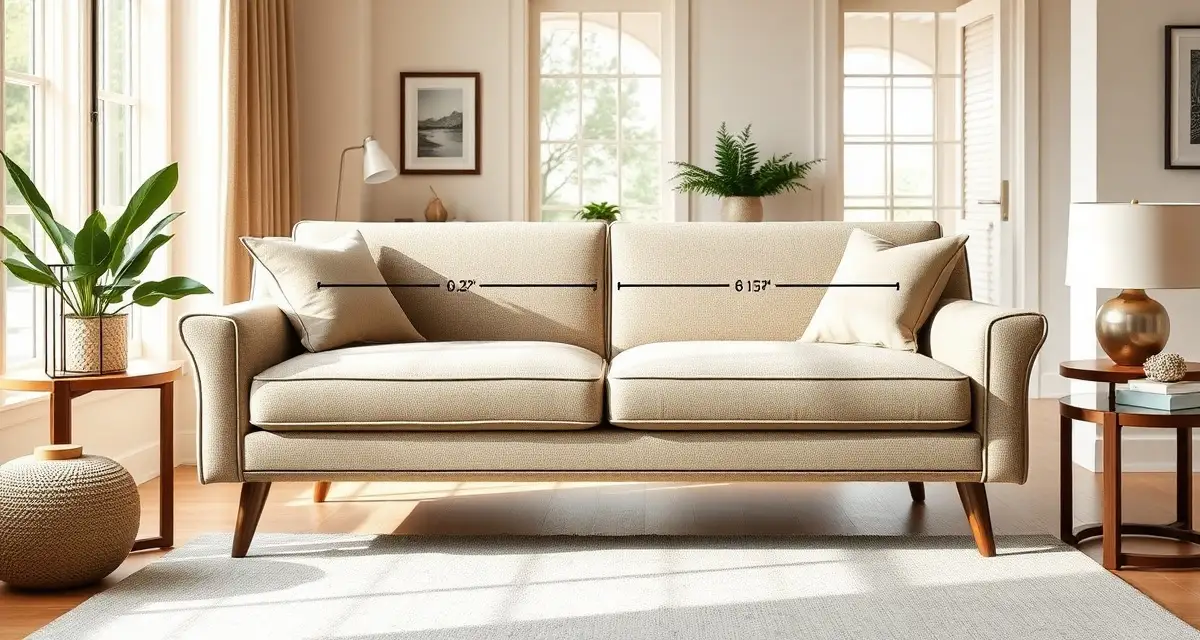
Settee Fabric Yardage Calculator: Small Sofa Big Style
A settee sits in an awkward middle ground for yardage calculation. It's too large to estimate like a chair, too narrow and short to use loveseat numbers, and too varied in style to have a single reliable estimate. Use the wrong reference piece and you'll be off by 2 to 3 yards.
The settee spans traditional Victorian carved-back pieces, upholstered hall benches with backs, and modern two-seat compact sofas. Each of those styles has different construction and genuinely different yardage requirements.
TL;DR
- Settee yardage depends on fabric width, construction details, pattern repeat, and nap direction.
- Plain 54-inch fabric requires a baseline calculation plus 10-15% waste allowance for a standard settee job.
- Patterned fabric adds 20-35% to base yardage depending on repeat size and the number of cutting zones that must align.
- Directional fabrics add 15-25% over plain fabric because layout optimization is restricted by nap direction.
- Always verify fabric width before finalizing yardage; COM fabric often comes in non-standard widths.
- Calculating yardage at the quote stage, not mid-job, eliminates reorders and protects your profit margin.
What Is a Settee?
A settee is typically defined as a small sofa or large loveseat, usually seating two people, ranging from about 48 to 72 inches wide. The term is most commonly associated with traditional and antique furniture: the Victorian settee, the hall settee, and various French and English period seating styles.
In contemporary furniture vocabulary, "settee" sometimes refers to a slim, bench-like piece for entryways or bedrooms that has a back and arms. In other cases it's used interchangeably with "loveseat" for a compact two-seat sofa.
The construction varies enough between these styles that you need to identify which type you're working with before you estimate.
Traditional Victorian Settee
The Victorian settee is often the most fabric-intensive version. These pieces typically have:
- An elaborately shaped or carved back (sometimes with a carved wooden crest rail and shaped inside back panels)
- Arms that may be partially exposed wood (bergere-style) or fully upholstered
- A tight upholstered seat or loose seat cushion
- Exposed carved legs (wood, not upholstered)
The shaped back is the key yardage driver. A straight-backed settee cuts cleanly. A shaped back with medallion or double-arched top profile requires careful templating and generates waste from the curved cutouts.
Victorian settee yardage (54-inch fabric): 6 to 10 yards
The wide range reflects the enormous variation in Victorian settee construction. A simple medallion-back settee runs closer to 6 yards. A deeply carved, multi-panel settee with tufted back sections and rolled arms can reach 10 yards or more.
Traditional Victorian settees with carved-back details use 20 to 30% more fabric than modern versions the same size.
Hall Settee / Entry Bench with Back
The hall settee is a narrow, often armless or partly-armed bench with a straight upholstered back. It's typically 48 to 60 inches wide and shallower from front to back than a traditional sitting room piece.
Hall settee yardage (54-inch fabric): 3 to 5 yards
The seat and back are the main panels. If there are arms, add inside arm, outside arm, and arm cap panels. Most hall settees have exposed wood legs and possibly an exposed wood apron, reducing yardage compared to a fully upholstered piece.
Modern 2-Seat Settee (Contemporary Style)
A modern settee that's essentially a compact 2-seat sofa calculates similarly to a loveseat at the smaller end of the size range.
Modern tight-back settee (48-60 inches): 7 to 10 yards
Modern pillow-back settee: 9 to 13 yards
For modern style settees without notable curved or shaped elements, use the loveseat calculation methodology. The settee is just the narrower end of the loveseat range.
Banquette-Style Settee (Upholstered Hall Piece)
Some bedroom and hall settees are essentially upholstered benches, long and narrow, with a padded seat and sometimes a padded back, but minimal arm structure. These are at the lower end of the yardage range.
Bench-style settee with back, 60 inches wide: 3 to 5 yards
Seat top, seat sides (if fully wrapped), and back panels are the main coverage. If the legs are wood and visible, they don't require fabric.
How to Identify Your Settee Type
Before calculating, answer these questions:
- Does the back have any curved or shaped profile? If yes, you need to template the back and account for shaped-cut waste.
- Are the arms fully upholstered or partially exposed wood? Exposed-wood arms reduce outside arm yardage.
- Are the legs and apron exposed wood? Most traditional settees have wood legs; modern styles vary.
- Is the seat a tight seat or a loose cushion? Loose cushions add boxing and zipper panel yardage.
- Does the back have any tufting or decorative detail? Button tufting adds 15 to 25% to back panel yardage.
Victorian Settee: Shaped Back Calculation
The shaped back on a Victorian settee is the most complex cutting element. A typical medallion back or double-arched back has:
- Curved or scalloped top profile
- Sometimes a carved or applied wood crest rail at the top
- Inside back panel shaped to the frame interior
- Outside back panel shaped to match
To calculate the back panel:
- Template the inside back shape on paper
- Measure the maximum height and width of the template
- Calculate the rectangular yardage for that maximum height × width
- Estimate shape waste: for a moderately shaped back, waste is typically 15 to 25% of the rectangular area
Example: Victorian settee inside back, maximum dimensions 60" wide × 28" tall
- Rectangle at 54-inch fabric: 1.75 yards
- Add 20% shape waste: 2.1 yards
- This is just the inside back panel
Fabric for Victorian and Antique Settees
Traditional settees call for traditional fabrics that suit their period:
Damask and brocade: The classic choice for Victorian and Georgian pieces. Large repeats are appropriate for the scale of a settee's back panel, but add pattern waste to your calculation.
Velvet: Appropriate for many Victorian styles. Adds nap direction waste.
Needlepoint or tapestry: Authentic for antique pieces but typically needs to be custom or sourced from specialty suppliers. Calculate as patterned fabric with a full repeat requirement.
Silk and silk-look: Appropriate for French period pieces (bergere-adjacent settees). Fragile; recommend for low-traffic display pieces only.
Pattern Matching on a Settee
The settee back and seat are the primary pattern display surfaces. For a patterned settee:
- Center the main pattern motif on the inside back
- Align the seat cushion to coordinate with the back motif position
- On a medallion-back Victorian settee, center the medallion at the back's focal point (typically the center-top of the decorative panel)
Pattern waste on a settee is proportionally similar to a chair but on a slightly larger surface. Budget 1 to 2 yards for a 9 to 12-inch repeat.
Using the Loveseat Fabric Yardage Calculator
For modern and contemporary settees, the loveseat calculator applies well, select the appropriate width and back style. For traditional Victorian or antique settees, the Antique Furniture Reupholstery Guide covers shaped-back calculation and period fabric considerations.
How many yards of fabric for a settee?
A hall or entry settee needs 3 to 5 yards. A traditional Victorian settee needs 6 to 10 yards. A modern 2-seat settee (essentially a compact loveseat) needs 7 to 13 yards depending on back style. The style and construction determine the yardage more than the size.
What is the difference between a settee and a loveseat?
In contemporary usage, the terms are sometimes used interchangeably. Traditionally, a settee refers to a smaller, often more formal or period-style piece, the Victorian parlor settee or hall settee. A loveseat is typically a modern, fully-cushioned two-seat sofa. In practice, a settee is often shallower, narrower, and more decorative in construction than a loveseat.
What fabric works best for a traditional settee?
Damask, brocade, velvet, and tapestry are the historically appropriate choices for period settees. Modern reproductions work well in high-performance woven fabrics that mimic traditional textures. For antique pieces being restored, matching the appropriate period textile both aesthetically and structurally is worth discussing with the client before selecting.
What is the biggest factor in yardage variation for this piece?
Pattern repeat is the biggest source of yardage variation. On plain fabric, the baseline calculation plus a 10-15% waste buffer is usually sufficient. Add a 13-inch pattern repeat and you may need 15-20% more. Add a 27-inch pattern repeat and the additional yardage can be 25-35% over the plain fabric calculation. Nap direction is the second-largest factor, typically adding 15-25% over plain fabric because layout optimization is restricted.
What should I do if I run short on fabric mid-job?
Stop cutting immediately when you realize you may run short. Calculate exactly how much additional fabric you need before contacting the supplier or client. If reordering from the same dye lot is possible, do so as quickly as possible because dye lots change. If a dye lot match is not available, contact the client before proceeding; visible dye lot differences on the same piece are unacceptable and must be disclosed. Document the situation and response in writing.
FAQ
Sources
- National Upholstery Association
- Association of Master Upholsterers and Soft Furnishers (AMUSF)
- Upholstered Furniture Action Council (UFAC)
- Furniture Today (trade publication)
Get Started with StitchDesk
Getting yardage right on yardage settee jobs is the difference between a profitable quote and an expensive reorder. StitchDesk's fabric calculator accounts for all the variables that cause errors: pattern repeat by zone, nap direction, fabric width, and cushion configuration. Start a free trial and see how accurate yardage calculation affects your bottom line.