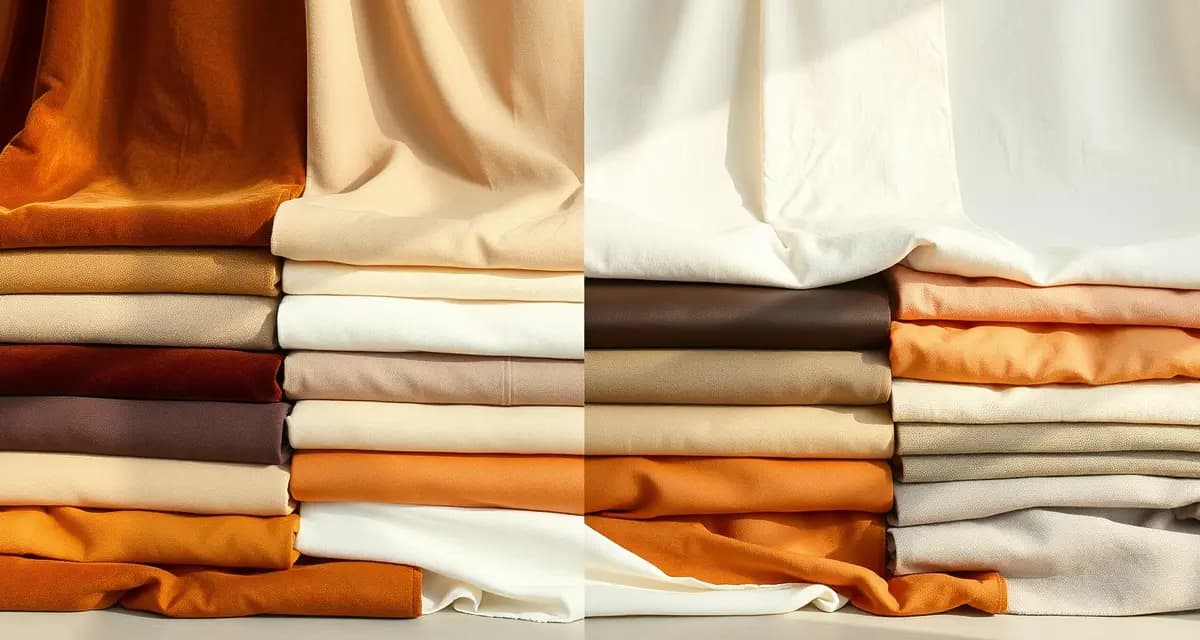
Upholstery Fabric Types: Complete Hub for Every Material
Upholstery shops that understand all fabric types close 30% more jobs because they can confidently advise on any material. When a client comes in with a velvet sample they love, a designer sends COM linen, and a restaurant wants a contract vinyl quote all in the same week, the shop that knows every fabric takes all three jobs. The shop that only knows one or two turns clients away.
This hub connects every fabric type guide, yardage calculator, and handling reference in the StitchDesk fabric library. Use it as a starting point for any fabric question, or navigate directly to the guide for the specific material you're working with.
TL;DR
- Understanding type hub properties helps you select the right material for each client's specific use case and budget.
- Durability ratings (double-rub count) are the standard measure of upholstery fabric longevity: 15,000+ for light use, 30,000+ for heavy residential, 100,000+ for commercial.
- Fabric cleaning codes (W, S, WS, X) determine what cleaning methods are safe and should be communicated to every client at handoff.
- Pattern repeat, nap direction, and fabric width are the three variables that most affect yardage requirements on any piece.
- COM fabric should always be verified for rub count and cleaning code before acceptance.
- Fabric performance in real use depends on the application: a fabric rated for light residential use will fail quickly in high-traffic settings.
Velvet
Velvet is the highest-risk fabric in upholstery, with the most demanding pile direction requirements. It's also one of the most visually impressive, when it's done right, a velvet piece stands apart from everything else in a room.
The key facts:
- Directional pile that must be consistent across every panel
- Multiple types: cut, crushed, printed, solution-dyed, performance
- 10-20% more yardage than comparable solid fabrics
- Requires daylight-balanced shop lighting for nap inspection
Full guide: Velvet Upholstery: The Complete Professional Guide
Yardage calculator: Velvet Fabric Yardage Calculator
Linen
Linen's natural texture and matte finish make it a consistent designer favorite. Its shrinkage behavior in humid conditions is the handling characteristic every professional needs to know before cutting their first linen job.
The key facts:
- Shrinks 3-5% without pre-shrinking, essential step before cutting
- Grain sensitivity requires on-grain cutting for flat, stable results
- Best for accent and occasional-use pieces, not high-traffic daily seating
- Natural fiber requires cotton or linen thread for best seam longevity
Full guide: Linen Upholstery: Professional Guide to Working with Natural Fiber
Yardage calculator: Linen Fabric Yardage Calculator
Cotton
Cotton is the most available upholstery fabric and the most misunderstood. Weight determines durability, plain weave cotton under 10 oz/yard wears out within 18 months on a high-use seat.
The key facts:
- Weight in oz/yard is the primary durability indicator
- Weave type matters: twill outperforms plain weave at the same weight
- Natural fiber, shrinks 2-4%, pre-shrink for best results
- Best for low to moderate residential use; blends for heavy use
Full guide: Cotton Upholstery Guide: Weave Weight and Wear
Yardage calculator: Cotton Fabric Yardage Calculator
Leather
Leather upholstery is one of the most rewarding categories to work in, and one of the most technically distinct from fabric work. Hide grades, hide-based yardage calculation, and skiving technique are all specific to leather.
The key facts:
- Grade determines durability: full grain, top grain, corrected grain, split, in that order
- Leather is sold by the hide, not the yard, requires different yardage calculation
- Skiving at seam edges prevents bulk at joins
- Never use pins, pin holes are permanent in leather
Full guide: Leather Upholstery Complete Guide: Grades Cuts and Technique
Vinyl
Vinyl is the dominant fabric in commercial, marine, and healthcare upholstery. Grade matters: contract vinyl, marine vinyl, and residential PU vinyl have very different performance profiles for different environments.
The key facts:
- Three main grades: contract, marine, residential PU, not interchangeable
- Marine vinyl requires UV inhibitor for outdoor longevity
- Never pin vinyl, use clips or tape
- Walking foot or Teflon foot prevents sticking during sewing
Full guide: Vinyl Upholstery Guide: Commercial Marine and Residential Applications
Yardage calculator: Vinyl Fabric Yardage Calculator
Performance Fabric
Performance fabrics are one of the fastest-growing categories in residential upholstery. They reduce stain callbacks by 90% and are increasingly specified by designers for family-friendly applications.
The key facts:
- Three engineering approaches: fiber-level, weave-level, surface treatment, with different durability profiles
- Crypton: fiber-level stain resistance, permanent through cleaning
- Revolution: bleach-cleanable, solution-dyed olefin fiber
- Sunbrella Indoor: UV stable, solution-dyed acrylic
- Nanotex: surface treatment on conventional fabric, degrades with cleaning
Full guide: Performance Upholstery Fabric: Complete Professional Guide
Outdoor Fabric
Outdoor fabric selection is where poor specification creates the most visible and fastest callbacks. Solution-dyed vs. piece-dyed is the most important distinction in outdoor fabric selection.
The key facts:
- Solution-dyed retains color for 5+ years; piece-dyed fades within 18 months outdoors
- Sunbrella (solution-dyed acrylic) is the benchmark outdoor specification
- Marine environments require UV inhibitor content, mold resistance, and temperature flexibility
- Outdoor jobs require UV-resistant thread, stainless hardware, and reticulated foam
Full guide: Outdoor Upholstery Fabric: Complete Professional Guide
Yardage calculator: Fabric Yardage Calculator for Outdoor Furniture
Boucle
Boucle is the number-one trending fabric in residential upholstery. Its loop structure creates specific seam requirements that most upholsterers learn about the hard way.
The key facts:
- Frays 40% more at seams than flat weaves, requires ¾ inch seam allowance minimum
- Loop structure requires shears, not rotary cutters, for clean edge cuts
- Interface high-stress seam areas on the reverse before cutting
- Durability: 30,000-50,000 double rubs, appropriate for moderate residential use
Full guide: Boucle Upholstery Guide: The Trending Fabric That Needs Care
Yardage calculator: Boucle Fabric Yardage Calculator
Chenille
Chenille is one of the most common residential fabrics. Pile compression at seams is the technical issue that causes early seam failure on chenille jobs, and the prevention is straightforward.
The key facts:
- Pile direction is subtle but present, confirm with hand-stroke test
- Trim pile from seam allowance area before sewing to prevent compression failure
- ⅝ to ¾ inch seam allowance for high-pile chenille
- Press seams with steam only, never direct iron on pile
Full guide: Chenille Upholstery Guide: Pile Compression and Pile Direction
Yardage calculator: Chenille Fabric Yardage Calculator
Jacquard
Jacquard fabric includes damask, brocade, tapestry, and complex woven patterns. It has the highest yardage complexity of any woven fabric due to repeat matching, centering requirements, and motif continuity across cushions.
The key facts:
- Large-scale jacquard (repeat over 12 inches) requires 25-40% more yardage
- Motif alignment of 1 inch off is visible from 6 feet
- Cut outside back panel first to establish centering reference for all other panels
- Inspect all cut pieces in assembled position under good light before sewing
Full guide: Jacquard Upholstery Guide: Pattern Alignment and Yardage Planning
Yardage calculator: Jacquard Fabric Yardage Calculator
Wool
Wool is experiencing a design renaissance. Plaid wool, herringbone, and boucle wool are increasingly specified by designers. Wool's shrinkage behavior and pressing sensitivity require specific handling.
The key facts:
- Shrinks 4-8% without pre-shrinking, pre-shrink with cool water, no agitation
- Pressing temperature is critical: wool iron setting (~300°F) with pressing cloth
- Plaid matching requires 20-40% extra yardage depending on repeat scale
- Natural resilience makes wool cushions recover better than many synthetics
Full guide: Wool Upholstery Guide: Natural Fiber with Special Requirements
Yardage calculator: Wool Fabric Yardage Calculator
Microfiber
Microfiber is one of the most widely used residential fabrics. The professional distinction is understanding suede-finish microfiber's pile direction, which most upholsterers overlook until they produce their first directional-color complaint.
The key facts:
- Two types: smooth (no direction) and suede-finish (directional pile)
- Suede-finish pile direction is visible as color difference under natural light at 6 feet
- Water-based cleaners create permanent rings on "S" coded suede microfiber
- High durability: 30,000-100,000+ double rubs depending on construction
Full guide: Microfiber Upholstery Guide: Suede and Smooth Handling
Yardage calculator: Microfiber Fabric Yardage Calculator
Patterned Fabric: Stripes, Plaids, and Florals
Pattern matching is one of the most significant drivers of extra yardage in residential upholstery. Three pattern types have distinct matching requirements:
Stripes: Horizontal, vertical, and railroaded stripe decisions each have cost and visual implications. Stripes in Upholstery guide
Plaids: Scale matters, small windowpane vs. large tartan require completely different approaches to centering and yardage. Plaids in Upholstery guide
Florals: Large-scale floral centering is a design decision with significant yardage implications. Florals in Upholstery guide
Choosing the Right Fabric for Any Job
The starting point for fabric selection is always the client's use situation:
- High traffic, children, pets: Performance fabric first (Crypton, Revolution), then vinyl if washability is the priority
- Designer COM job: Accept what's specified; apply appropriate handling protocols
- Outdoor application: Solution-dyed acrylic (Sunbrella), marine vinyl for wet environments
- Traditional residential aesthetics: Velvet, chenille, wool, jacquard depending on skill level and client expectations
- Budget-conscious residential: Cotton twill (12+ oz), smooth microfiber, or linen for accent pieces
See the upholstery fabric selection guide for the full decision framework, and the fabric yardage calculator for any fabric type or furniture piece.
Frequently Asked Questions
What types of fabric are used in upholstery?
Upholstery fabric spans three main categories: natural fibers (velvet, linen, cotton, wool), synthetics (vinyl, microfiber, performance fabric), and specialty (leather, outdoor, performance blends). Within each category, construction type and weight determine durability. Natural fibers require pre-shrinking and specific pressing techniques. Synthetics are more durable but vary significantly by grade, marine vinyl and contract vinyl have very different performance profiles. Performance fabric (Crypton, Revolution, Sunbrella Indoor) is a growing category that combines aesthetic variety with engineered stain and moisture resistance.
What is the most popular upholstery fabric?
In residential upholstery, performance fabric and microfiber are currently the most frequently specified for new jobs, driven by family-friendly demand. Velvet and boucle are the most searched trending fabrics in residential design. In commercial and marine upholstery, vinyl dominates for cleanability and durability. Historically, cotton, linen, and wool were the primary residential fabrics before synthetic alternatives became widely available. Today's residential fabric mix is highly varied, with performance fabric growing at the fastest rate as clients become more aware of its advantages over conventional fabrics.
How do I choose upholstery fabric for my project?
Choose fabric based on four factors: use intensity (how often the piece is used and by whom), environment (indoor, outdoor, marine, humid), aesthetic priority (natural, luxurious, casual, formal), and budget. High-traffic family seating with children and pets should use performance fabric or vinyl. Accent furniture in a low-traffic room can use any natural fiber. Outdoor furniture requires solution-dyed outdoor-rated fabric with UV-resistant thread and stainless hardware. Designer pieces should match the specification, then apply appropriate handling for whatever fabric is chosen. Budget determines the tier within each category, full grain vs. corrected grain leather, Crypton vs. Nanotex-treated, solution-dyed acrylic vs. polyester outdoor fabric.
How do I explain fabric choices to a client?
Start with use case: how the piece will be used, who will use it, and whether pets or children are factors. Then narrow by durability requirement (rub count) and cleaning preference (cleaning code). Once practical requirements are set, move to aesthetics: color, texture, pattern. Clients who understand why certain fabrics are recommended are more confident in their choices and less likely to question cost differences between options.
How do I verify fabric quality before accepting a COM order?
Check the fabric label or request a spec sheet from the supplier. Verify: double-rub count (for durability), cleaning code (for maintenance), width (for yardage calculation), and whether the fabric is dry-clean only or has any special handling requirements. For velvet or nap fabrics, confirm the nap direction and whether the fabric is prone to crushing. Document your findings in the job record before beginning work.
Sources
- National Upholstery Association
- Association of Master Upholsterers and Soft Furnishers (AMUSF)
- Upholstered Furniture Action Council (UFAC)
- Furniture Today (trade publication)
Get Started with StitchDesk
Helping clients choose the right fabric is a core part of the job, and having accurate yardage calculations and fabric records at hand makes those conversations faster and more confident. StitchDesk keeps fabric data, yardage calculations, and client records in one place so you spend less time on paperwork and more time on the work itself. Try StitchDesk free.